
South Florida HVAC Glossary, in plain English.
SEER2, tonnage, refrigerant, condenser — the words on your AC quote, explained without the jargon. Understand what your system does and what a technician means, so you can decide about your comfort with confidence.

The terms on your quote.
When a technician or a quote uses a word you do not know, it is hard to feel confident about the decision. These are the terms that come up most on a South Florida AC job — explained in plain language, no engineering degree required.
SEER2
The current rating for cooling efficiency, measured under realistic conditions. A higher SEER2 means the system produces the same cooling using less electricity — which, in our climate, means a lower bill.
Tonnage
A measure of an air conditioner’s cooling capacity, not its weight. One ton equals the cooling power of melting a ton of ice in a day. Homes need the right tonnage — too much or too little both waste energy.
Refrigerant
The fluid that absorbs heat inside your home and releases it outside, cycling continuously through a sealed loop. If a system is low on refrigerant, it has a leak — it should never simply run out.
Evaporator Coil
The indoor coil where refrigerant absorbs heat from your home’s air, cooling it. When it gets dirty or ices over, cooling suffers — a common source of weak, warm airflow.
Condenser
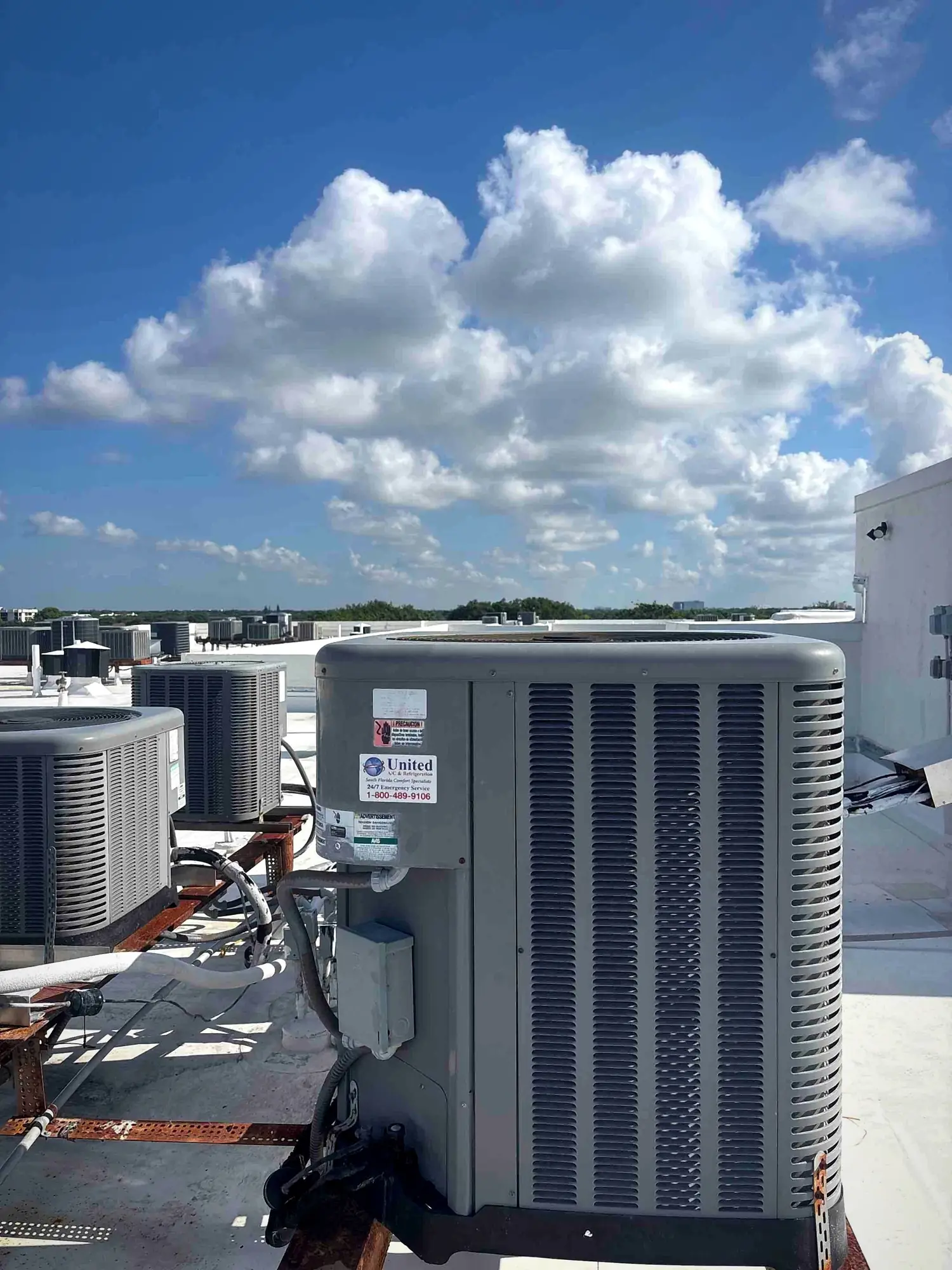
The outdoor unit that releases the heat pulled from inside. It contains the compressor and a fan, and near the coast, salt air is especially hard on it — a key reason coastal systems need extra care.
Heat Pump
A system that both cools and heats by moving heat rather than burning fuel. In reverse, it warms your home efficiently — ideal for South Florida’s rare cold snaps, with no furnace required.
See a term on your quote that is not here? Ask the assistant and it will explain it in plain English on the spot.
Understand the words,
own the decision.
When you understand what a technician is describing, you can tell a fair, accurate quote from a padded or vague one. Knowledge is the simplest protection against being oversold.
Knowing the vocabulary lets you ask the questions that actually matter — about efficiency, sizing, and what is really wrong — and get answers you can act on with confidence.
A good technician is happy to define any term and explain the why behind it. If someone makes you feel foolish for asking, that tells you something about who you are dealing with.
Plain-language answers for South Florida homeowners — and a real technician a message away.
More terms, plainly defined.
AFUE
Annual Fuel Utilization Efficiency — a heating-efficiency rating for fuel-burning systems. It matters less in South Florida, where heat pumps and straight-cool systems dominate and furnaces are rare.
Air Handler
The indoor part of a split system that moves conditioned air through your ducts. It houses the blower and, typically, the evaporator coil.
BTU
British Thermal Unit — a measure of heat energy. Cooling and heating capacity are often expressed in BTUs; 12,000 BTU per hour equals one ton of cooling.
Capacitor
A small component that gives the motors the jolt of energy they need to start and run. A failed capacitor is one of the most common — and least expensive — AC repairs.
Compressor
The heart of the system, located in the outdoor condenser. It pressurizes the refrigerant to move heat. A failed compressor is one of the most expensive repairs, which is why protecting it matters.
Condensate Line
The drain line that carries away the water your AC pulls from the air. It commonly clogs with algae, which can shut the system down or cause leaks — a frequent maintenance item here.
Ductless Mini-Split
A system that cools one or more rooms without ductwork, using an outdoor unit connected to indoor wall or ceiling units. Ideal for additions, garages, or rooms central air never reached.
Ductwork
The network of channels that distributes conditioned air through a home. Leaky or poorly designed ducts waste energy and hurt comfort, regardless of how good the equipment is.
HVAC
Heating, Ventilation, and Air Conditioning — the umbrella term for the systems that control a building’s temperature and air. In our climate, the cooling side does most of the work.
Inverter
Technology that lets a system run at variable speeds instead of simply on or off. Inverter systems ramp up and down smoothly, which improves efficiency, comfort, and quiet.
Thermostat
The control that tells your system when to run and to what temperature. Modern and smart thermostats add scheduling and remote control, and can improve efficiency when used well.
Tonnage
A measure of cooling capacity, not weight — one ton equals 12,000 BTU per hour. Correct tonnage for your home is essential; oversized and undersized systems both waste energy and reduce comfort.
This glossary grows over time. If a term you are looking for is not here, the assistant can define it and answer follow-ups instantly.
Glossary questions, answered plainly.
The assistant defines any HVAC term in plain English and answers your follow-ups — then books a visit if you need one.
What is the most important number on an AC quote?
Usually the SEER2 rating and the tonnage. SEER2 tells you how efficient the system is; tonnage tells you its cooling capacity. The right combination for your specific home — confirmed by an in-home assessment — matters more than any single big number.
Does higher tonnage mean better cooling?
No — bigger is not better. An oversized system short-cycles, controls humidity poorly, and wastes energy, while an undersized one never keeps up. Correct sizing for your home is what delivers comfort and efficiency.
Why do people say low refrigerant means a leak?
Because refrigerant circulates in a sealed loop and is never used up. If the level drops, it is escaping through a leak. The proper fix is to find and seal the leak, not to keep topping it off.
What is the difference between an AC and a heat pump?
A standard AC only cools. A heat pump uses the same technology but can run in reverse to heat as well, moving heat rather than burning fuel. In South Florida, a heat pump handles the rare cold snap efficiently without a furnace.
What is short-cycling?
When a system turns on and off rapidly instead of running in steady cycles. It stresses components, spikes the power bill, and often points to an oversized system or a fault worth diagnosing.
A term I need is not on this page. Now what?
Ask the assistant — it can define any HVAC term in plain English, whether or not it is listed here, and answer follow-up questions instantly.

Know the words, then decide.
The vocabulary should never be a barrier between you and a confident decision about your comfort. Ask the assistant to define anything — and book a real technician whenever you are ready.