
South Florida AC Repair, done right.
Every major brand, the exact price before any work, and same-day service across our Broward & South Palm Beach area whenever the schedule allows — tell the assistant what’s happening and dispatch calls you fast.

The problems we solve every day.
Florida runs systems hard, and the same failures show up in every neighborhood we serve. Here’s what they usually mean — and what we do about them.
Blowing warm air
Usually low refrigerant from a leak, or a compressor losing its grip. We find the cause instead of just topping it off.
Schedule AC Repair →Water leaking indoors
A clogged condensate drain line, nine times out of ten — South Florida algae loves them. We clear it and treat it to slow the regrowth.
Schedule AC Repair →Ice on the unit
Airflow starvation or a refrigerant problem. Running it frozen cooks the compressor — shut it down and let us look.
Schedule AC Repair →Tripping the breaker
An electrical fault — failing capacitor, shorted wiring, or a compressor drawing too hard. Stop resetting it; that’s how small problems become big ones.
Schedule AC Repair →Grinding or screeching noise
Motor bearings, a failing fan, or a loose component — mechanical noise becomes an expensive repair quickly when ignored.
Schedule AC Repair →Short cycling
Short cycling wears parts and spikes the power bill — often a thermostat, sensor, or an oversized system working against itself.
Schedule AC Repair →Smell something burning or see smoke? Shut the system off at the breaker — and if there’s any sign of fire, call 911 before you call anyone else.
Diagnosed, priced,
repaired — in that order.
A full-system diagnostic — electrical, refrigerant, airflow — not a glance and a guess.
You approve the number before a single tool comes out. It doesn’t move afterward.
Repaired with quality parts, run-tested against spec, and backed in writing.
On the road daily across Deerfield Beach, Pompano Beach, Boca Raton, Coral Springs, and Fort Lauderdale — and the rest of our Broward & South Palm Beach service area.
Repair it again, or replace it?
Some repairs are clearly worth making. Others put good money into a system at the end of its life. We tell you which is which — before you spend anything, on either path.
- The $5,000 rule gives you a first read in ten seconds
- If repair wins, we repair — no replacement pitch
- If the math says retire it, the in-home estimate is free
- Either way, the price comes before the work
The calculator is a rule of thumb; the free estimate is the real answer. No pressure lives on either path.
Your system’s age times the repair quote.
Not combinable with other offers · one per household · residential replacements only.
After the repair, in their words.
★★★★★ 4.7 on Google
Diagnosed it in twenty minutes, had the part on the truck, and the house was cooling before he left.
Quoted before the work started and charged exactly that when it was done. Rarer than it should be.
Braced for a big bill — it was a clogged drain line. In, out, honest, done.
The AC quit Friday night with family in town. A tech was in the driveway the next morning.
Third company we called about the short cycling — and the first one to actually find the cause.
They’ve kept our fifteen-year-old system alive without once pushing a new one. When it’s finally time, they’ve earned that sale.
Sample reviews for design review — the live site renders real verified Google reviews, with each reviewer’s real profile photo in the circle (initials when they don’t have one).
What a real diagnosis actually involves.
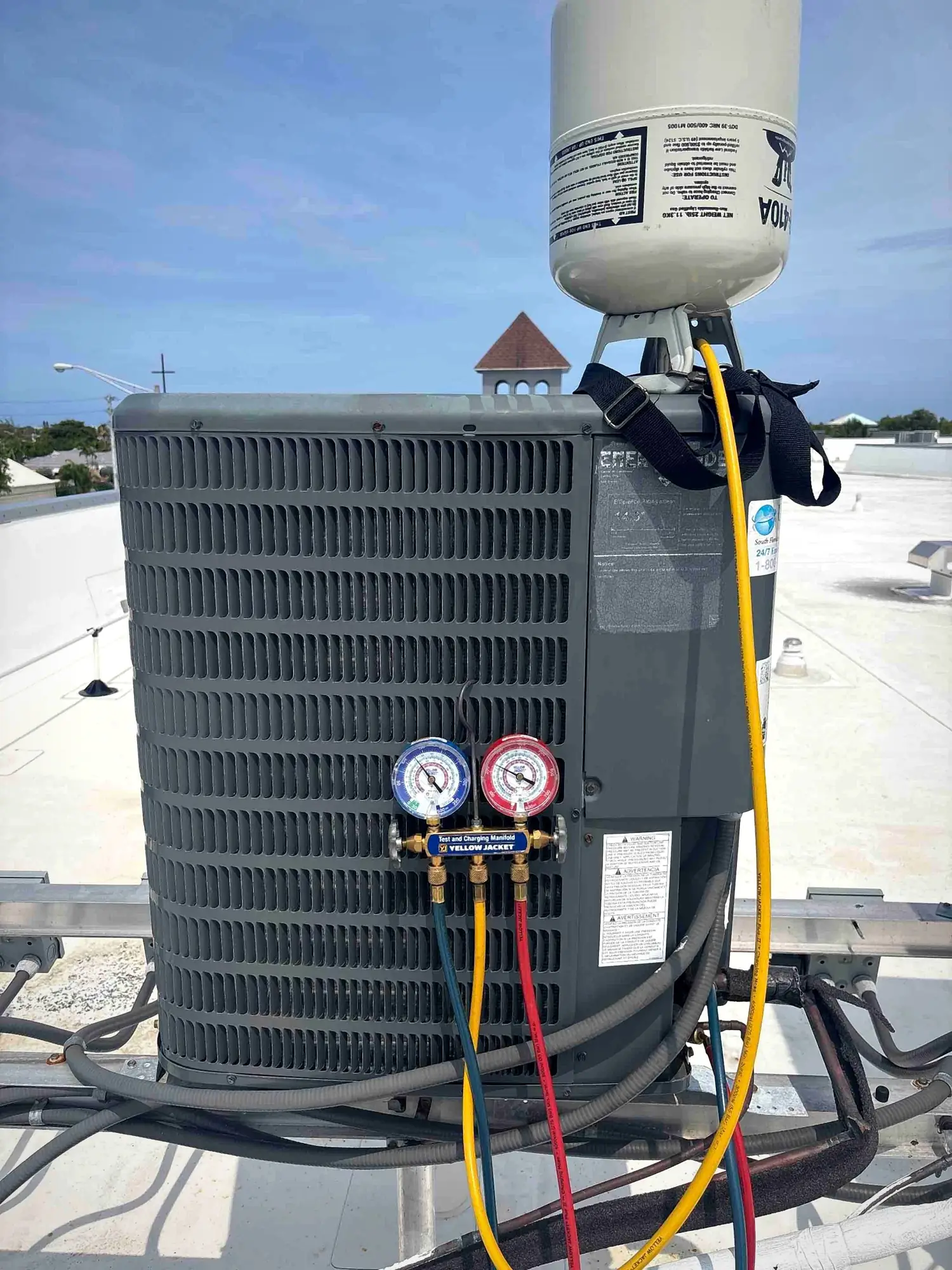
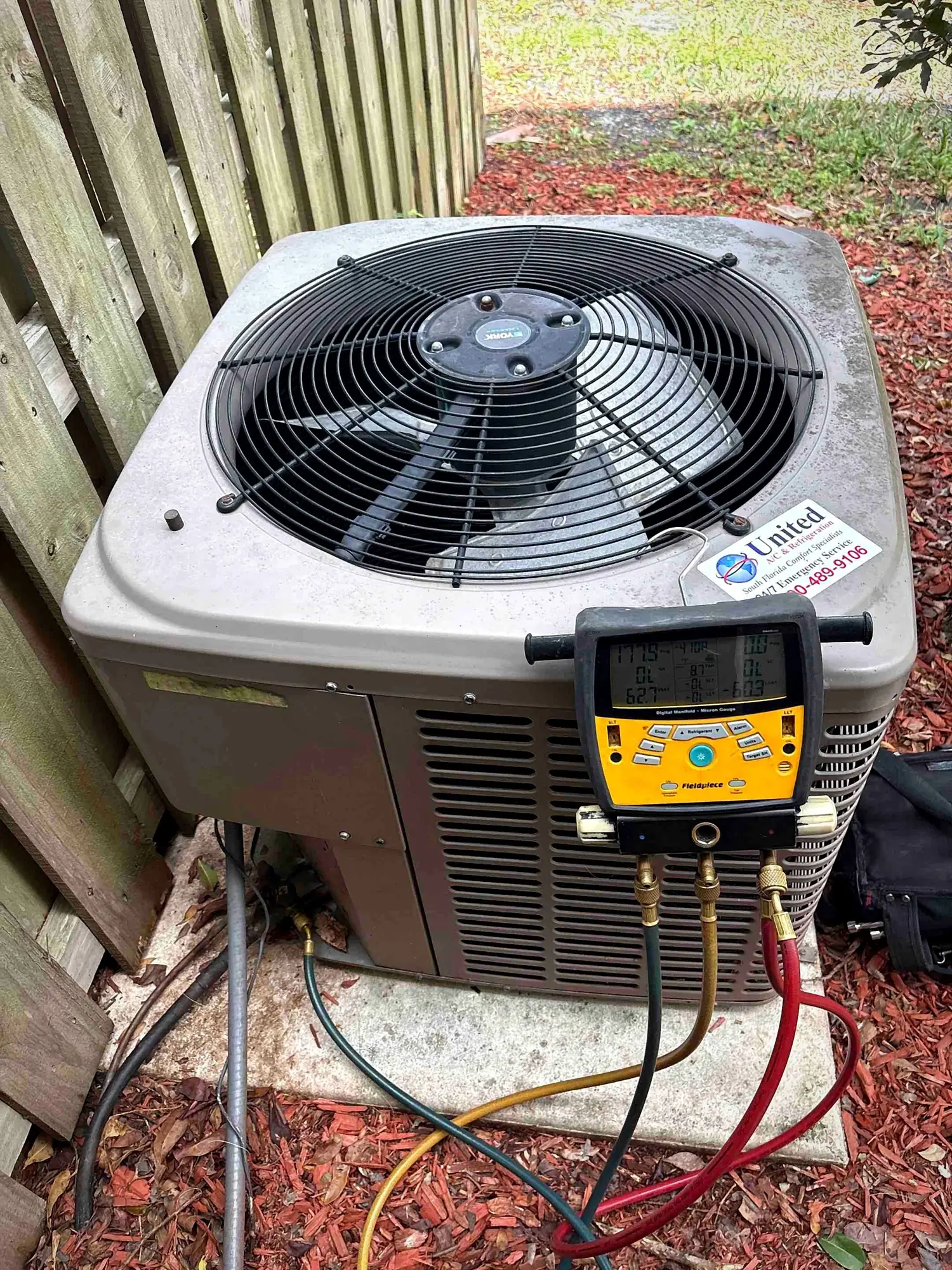
A diagnosis is measurement, not a look and an opinion. If a technician reaches a conclusion without putting instruments on your system, they are guessing — and a guess is how people end up replacing equipment that had years left in it.
Pressures and temperatures
Refrigerant pressures read against the equipment’s own specification, and temperature split measured across the coil. Together these separate a refrigerant problem from an airflow problem — two faults with similar symptoms and very different repairs.
Electrical readings
Capacitor values, contactor condition, and amp draw under load. Most sudden no-cooling calls in this climate come down to an electrical component that had been degrading for months and finally gave up on a hot afternoon.
Airflow, properly measured
Static pressure tells us whether the ducts are strangling the system. A restricted return will freeze a coil and mimic a refrigerant fault convincingly — and no amount of refrigerant fixes it. Duct condition matters more than most people expect.
The drain and the pan
Checked every visit, because a blocked line is the leading cause of indoor water damage from an air conditioner and it gives almost no warning. Why systems leak.
The component itself
If something failed, we show it to you. A swollen capacitor or a burnt contactor is visible, and you should not have to take our word for what you are paying to replace.
Findings, in plain language
What failed, why it failed, what it costs to put right, and whether anything else is close behind. Including the option of doing nothing yet, when that is genuinely the right call.
Wondering whether a quote you were given holds up? Ask us for a second opinion →
Is this urgent,
or can it wait?
Burning smells, a breaker that trips repeatedly, water actively spreading across a ceiling, or ice visibly building on the refrigerant line. Running a system through any of these turns a repair into a replacement.
No cooling at all in summer, a system running constantly without holding temperature, or a hard grinding noise from the outdoor unit. None of these improve on their own, and in August a house heats up faster than people expect.
A rattle, slightly weaker airflow, a bill creeping upward, or one room lagging behind the rest. Real faults worth attending to, but nobody needs to pay emergency rates for them.
Tell us the symptom and we will tell you honestly which of these three it is.
What we will not do.
The complaints people bring us about other companies are consistent enough to be worth answering directly, so here is what we do not do.
We will not quote a replacement on a first visit for a minor fault. If a capacitor failed, we replace the capacitor and tell you how much life the system has left. We will not top up a leaking system year after year and call it maintenance — a system losing refrigerant has a leak, and the honest work is finding it. We will not invent urgency, and we will not use the heat as a negotiating tactic; if something can reasonably wait, you will hear that.
Where a repair genuinely is not worth it, we will say so plainly and show you why — and you are free to take that assessment elsewhere. Roughly a third of the systems we are called out to look at get repaired when the customer arrived expecting to be sold a new one. If you are weighing the two, the honest arithmetic is here, and replacement is there when it is genuinely time.
Repair questions, answered plainly.
It can assess your symptoms, explain the likely cause, and get dispatch moving — immediately, at any hour.
How fast can you get here?
Urgent jobs get flagged the moment you tell the assistant what’s happening, and dispatch calls with a real arrival window — same-day across our area whenever the schedule allows. No-cooling calls in July don’t wait behind tune-ups.
What does the diagnostic actually include?
A full-system check — electrical components, refrigerant pressures, airflow, and drainage — not a glance at the thermostat. You get the real cause, the exact repair price, and the choice before any work starts.
How much will my repair cost?
Honestly: it depends on which part failed and nothing else — which is why we quote after diagnosing, never from a script. The number you approve is the number you pay, with no surprise line items when the job’s done.
Is my brand one you work on?
If it cools a South Florida home, we’ve had our hands inside it — every major manufacturer and plenty of forgotten ones. We repair them all; when it’s time for new equipment, we install Amana.
Why is my AC freezing up?
Ice means the system is starving — usually blocked airflow (a filthy filter) or low refrigerant from a leak. Shut it off and let it thaw before we arrive; running it frozen is how compressors die.
Can I just keep adding refrigerant?
You can, but it resolves nothing. Refrigerant is not consumed in normal operation — if the level is low, it escaped through a leak, and it will again. Locating and repairing the leak is the actual fix; recharging alone only postpones the same failure at additional cost.
Is an older system still worth fixing?
Sometimes genuinely yes — and we’ll say so. The ten-second gut check is the $5,000 rule: run your numbers in the calculator above, and if the math leans toward retirement, the in-home estimate is free either way.
Are your repairs guaranteed?
Yes — workmanship is backed in writing, quality parts carry their manufacturer coverage, and every repair is run-tested against spec before we leave. If something we touched isn’t right, we make it right.

Restore your comfort today.
A failed air conditioner in South Florida is urgent business — and we treat it that way, at any hour.