
Repair or Replace Your AC, the honest maths.
The most expensive decision a homeowner makes about cooling, and the one contractors have the most incentive to skew. Here is how to think about it clearly — including when the answer is simply "repair it".
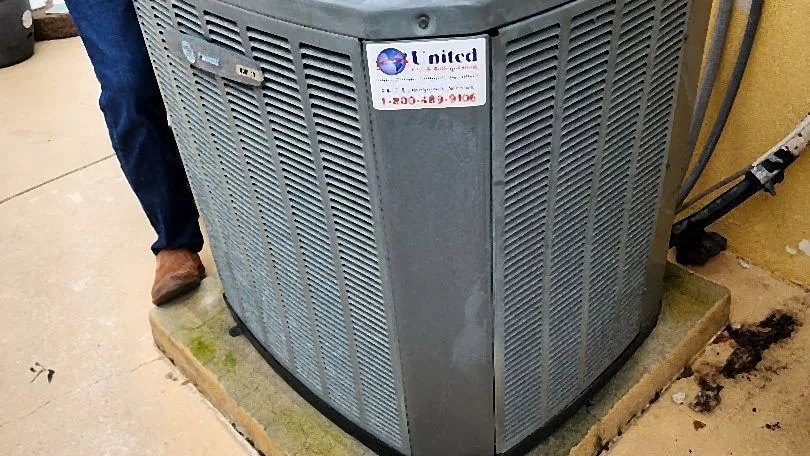
Working the decision through
The most expensive decision a homeowner makes about cooling, and the one contractors have the most incentive to skew. Here is how to think about it clearly — including when the answer is simply "repair it".
Start with age
Most systems here last roughly 12–15 years given our runtime. A repair on a young system is almost always worth doing; the same repair on one near the end may only postpone the inevitable.
Weigh the repair against the system
A useful sanity check: multiply the repair cost by the system's age in years. A large result relative to a new system suggests replacement is the better value. It is a rule of thumb, not a law.
Count the repeat visits
One failure is bad luck. Three in two seasons is a pattern, and patterns rarely reverse. At that point you are renting reliability rather than owning it.
Factor the power bill
An older, struggling unit costs money every month, not just when it breaks. If your bills have climbed with no change in habits, that is part of the true cost of keeping it.
Consider the refrigerant
Older systems may use refrigerants that are being phased down, which makes future repairs more expensive and harder to source. That shifts the maths toward replacement as a system ages.
Be honest about your timeline
If you are selling in a year, a repair may be entirely rational. If this is your long-term home, buying reliability and efficiency usually wins. Your plans are a legitimate input.
The right answer is whichever one you would still be happy with in three years — and a good contractor will help you find it, not sell past it.
United A/C & RefrigerationThe numbers that actually matter
Most repair-or-replace advice reduces to a rule of thumb, and rules of thumb are how people end up replacing perfectly good equipment. The honest version has three inputs. First, the age of the system against its realistic life in this climate, which is shorter here than manufacturer literature suggests and shorter again near salt water. Second, whether the failure is a wear item or a core component — a capacitor or contactor is routine, while a failed compressor or a leaking evaporator coil changes the arithmetic entirely. Third, what the system has cost you over the past two years, because a pattern of repairs predicts more of them. Efficiency matters too, though less than sales copy implies unless the existing system is genuinely ancient. If you are weighing it, have the fault diagnosed properly before deciding, and read what efficiency actually returns before paying for it.
Before committing either way, request the repair price and the replacement price in writing. Anyone unwilling to quote the repair has already made the decision for you, and a second opinion on major work is cheap insurance.
Where your home sits changes the math
The age at which replacement becomes sensible is not a fixed number in South Florida, and it moves depending on how close you are to the ocean. A system in Deerfield Beach or Pompano Beach, breathing salt air off the water every day, will often show corrosion on the condenser and the electrical connections while an identical unit in Coral Springs or Parkland still looks serviceable. That corrosion is not cosmetic — it is what turns a straightforward capacitor repair into a cascade of failures. So when we look at a coastal system, remaining life is weighed on condition as much as on age. Inland, where the salt load is far lower, a well-maintained system frequently earns another few years that a beachside one simply will not.
Serving Broward County and southern Palm Beach County from our shop in Deerfield Beach.
How to spot
a skewed answer.
Ask what specifically failed
A trustworthy diagnosis names the part and explains why it went. "It is just old" is not a diagnosis — it is a sales position dressed as one.
Ask for both numbers
You are entitled to the repair price and the replacement price, in writing, before deciding. Anyone unwilling to quote the repair has already made your decision for you.
Get a second opinion on big jobs
On a major repair or a replacement recommendation, a second opinion is cheap insurance. Reputable companies expect it and will not be offended.
Questions and answers
How long should an AC system last in South Florida?
Commonly around 12 to 15 years. Our systems run far more hours per year than northern ones, and coastal homes face salt corrosion on top of that, so the same equipment simply ages faster here.
Is there a rule for when to replace instead of repair?
A common rule of thumb is to multiply the repair cost by the system age; a high result relative to a new system points toward replacing. Treat it as a starting point, not a verdict — condition and repair history matter just as much.
My system keeps needing refrigerant. Repair or replace?
Neither, until the leak is found. Refrigerant circulates in a sealed loop and is never consumed, so repeated top-ups mean it is escaping. Whether the leak is worth repairing depends on where it is and how old the system is.
Will a new system really lower my bill?
If you are replacing an old, low-efficiency unit, usually yes — and noticeably, because cooling dominates a South Florida summer bill. Replacing a healthy modern system purely for efficiency rarely pays back.
Should I replace both the indoor and outdoor units?
Generally yes. Mismatched components rarely deliver their rated efficiency and can cause premature failures. If a contractor proposes replacing only half, ask them to explain exactly why.
A contractor said my system is too old to repair. Is that a fair answer?
It is a claim that deserves specifics. Age alone does not make a system unrepairable — parts availability, the nature of the fault and the condition of the rest of the equipment do. Ask which component failed, whether the part is available, and what the repair would cost against the realistic remaining life. If those questions produce vague answers, get a second opinion. Plenty of older systems have years left in them once a single wear item is replaced.
Does replacing the outdoor unit alone ever make sense?
Rarely, and it is worth understanding why. The outdoor and indoor units are matched as a system, and pairing a new condenser with an old air handler and coil usually produces neither the efficiency nor the reliability you paid for, and can void warranty coverage. There are narrow cases where it is defensible, but if someone proposes it as a routine money-saver, ask them to explain how the two halves are matched.
How we know this
This advice comes from what our technicians actually find on service calls in Broward County and southern Palm Beach — not from national HVAC copy. Salt-air corrosion on the barrier island, drain lines that block every wet season, and equipment running nine months a year are local realities, and they change the right answer.
Worth disclosing: we install Amana equipment, so we are not an independent reviewer. Where a brand or product is discussed we say what it is good and bad at, and we will tell you when the honest answer is to repair what you have or do nothing yet.
Talk to a technician
Have a question this raised? The assistant answers what it can, takes your details, and hands you to a real person who confirms the day and time.