
Is High-Efficiency AC Worth It, honestly?
Sometimes clearly yes, sometimes clearly no. The answer depends on how much you run it, what you are replacing, and how long you will stay — not on the number on the box.
What the rating buys you
Sometimes clearly yes, sometimes clearly no. The answer depends on how much you run it, what you are replacing, and how long you will stay — not on the number on the box.
What SEER2 actually measures
Cooling delivered per unit of electricity, under realistic test conditions. A higher number means less power for the same cold air — the current standard, replacing the older SEER measure.
Why runtime decides it
Efficiency only saves while the system runs. Ours run most of the year, so the same upgrade pays back considerably faster here than in a mild climate. That is the strongest argument for it locally.
The size of the jump matters
Moving from a very old low-efficiency unit to a modern high-SEER2 system is a large change. Moving between two already-efficient systems is a small one, and the payback stretches accordingly.
Installation quality can outweigh rating
A high-efficiency system installed on leaky ducts with a poor charge will underperform a modest system installed properly. The rating is a ceiling, not a promise.
Comfort is part of the value
Higher-efficiency systems often run at variable speeds, which means steadier temperatures, better humidity control and less noise. Some of the value never appears on the bill.
Rebates change the maths
Manufacturer promotions and utility or tax incentives can meaningfully shorten payback. They vary over time, so they are worth checking at the moment you buy rather than assuming.
High efficiency is worth it when you run it hard, replace something old, and install it properly. Two out of three and the maths gets thin.
United A/C & RefrigerationWhen the premium pays back
Efficiency ratings describe performance under test conditions, and the gap between that and your actual bill is where most disappointment lives. The premium for high-efficiency equipment repays fastest in houses that run their systems hardest — large floor plans, heavy sun exposure, long occupancy — because savings scale with run hours. It repays slowly in a small, shaded, part-occupied home, where the absolute consumption is modest to begin with. Two things undermine the investment regardless of rating: ductwork that leaks conditioned air into an attic, and equipment sized incorrectly for the house. A high-efficiency system attached to poor ducts will underperform a modest system attached to good ones. So the honest sequence is to fix distribution and sizing first, then decide how much efficiency to buy. Sizing and duct condition come before the rating on the box, and a proper assessment should cover all three.
Leaky ducts and incorrect sizing will undermine any efficiency rating, because the rating is a ceiling rather than a promise. Address distribution and sizing first, then decide how much efficiency is worth buying.
Run hours and salt both change the payback
Efficiency premiums repay in proportion to how hard a system works, and in Palm Beach County they work hard. A large home in Boca Raton with heavy sun exposure and long occupancy accumulates enough run hours to make a higher-rated system pay back within a sensible period. The same equipment in a small, shaded, part-occupied condominium will not. There is a second local factor people miss: on properties close to the water in Delray Beach and along the Boca coast, salt shortens equipment life regardless of efficiency rating. Paying a large premium for a system that the air itself will age early is a poor trade — which is why, near the water, we usually recommend spending on coastal-rated construction and protective coil treatment before spending on the efficiency number.
Serving Broward County and southern Palm Beach County from our shop in Deerfield Beach.
The honest
counter-argument.
If your system is healthy
Replacing a sound, reasonably efficient system to chase a better rating rarely returns the money. The greenest and cheapest system is often the one you already own.
If you are moving soon
Payback takes years of runtime. If you will not be there for them, the efficiency argument weakens considerably — though a new system may still help a sale.
If the ductwork is the problem
Spending on premium equipment while leaving leaky ducts in place buys you less than fixing the ducts would. Sequence matters.
Questions and answers
What is the difference between SEER and SEER2?
SEER2 is the current standard, tested under conditions closer to real-world installation. The numbers are not directly comparable to older SEER ratings, so when comparing systems make sure you are comparing like with like.
How much can a high-efficiency system actually save?
It depends on what you are replacing and how much you run it. Upgrading from an old, low-efficiency unit in a climate like ours produces a meaningful cut to the cooling share of the bill. We prefer to estimate from your actual usage rather than quote a headline figure.
Is the highest available rating always the best buy?
Not usually. The savings curve flattens as ratings climb while the price keeps rising, so the best value often sits in the upper-middle of the range. We will tell you where that point is for your home.
Does a variable-speed system matter?
It often matters more than the rating for comfort. Running at low speed for longer periods removes humidity far better than a system that blasts and shuts off, which is particularly valuable here.
Will efficiency help if my ducts leak?
Only partly. Conditioned air lost into an attic is wasted regardless of how efficiently it was produced. Addressing distribution first makes any equipment upgrade perform closer to its rating.
Do variable-speed systems make a real difference here?
In a humid climate they genuinely can. Running at lower capacity for longer periods removes more moisture than a single-stage system cycling on and off, and moisture is what determines whether a house feels comfortable here. The comfort improvement is often more noticeable than the energy saving. Whether that justifies the cost depends on how sensitive your home is to humidity, which varies more between houses than most people expect.
Is there a point where higher efficiency stops being worth it?
Yes, and it arrives sooner than the marketing suggests. Gains follow diminishing returns: the step from an old low-efficiency system to a solid modern one captures most of the available saving, while the step from good to exceptional captures much less for a considerably higher price. Unless run hours are very high, the middle of the range is usually where the sensible money sits. We will tell you when you are paying for a number rather than a result.
How we know this
This advice comes from what our technicians actually find on service calls in Broward County and southern Palm Beach — not from national HVAC copy. Salt-air corrosion on the barrier island, drain lines that block every wet season, and equipment running nine months a year are local realities, and they change the right answer.
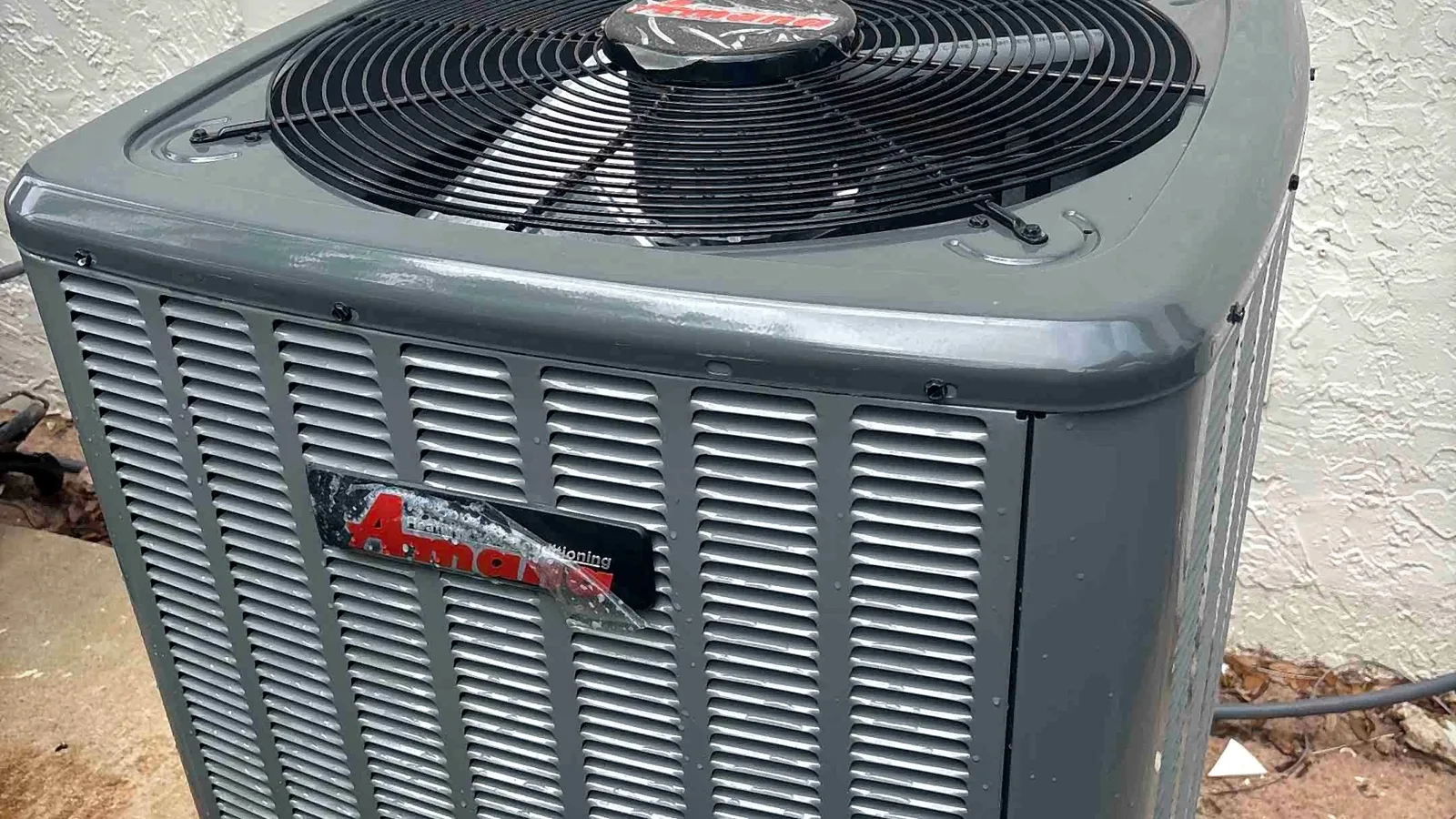
Worth disclosing: we install Amana equipment, so we are not an independent reviewer. Where a brand or product is discussed we say what it is good and bad at, and we will tell you when the honest answer is to repair what you have or do nothing yet.
Talk to a technician
Have a question this raised? The assistant answers what it can, takes your details, and hands you to a real person who confirms the day and time.