
AC making a loud noise
Cooling systems are not silent, but a new or sudden noise is always worth listening to closely. Here is what the most common sounds - banging, squealing, grinding, clicking, hissing - actually mean, and which ones mean turn it off now.
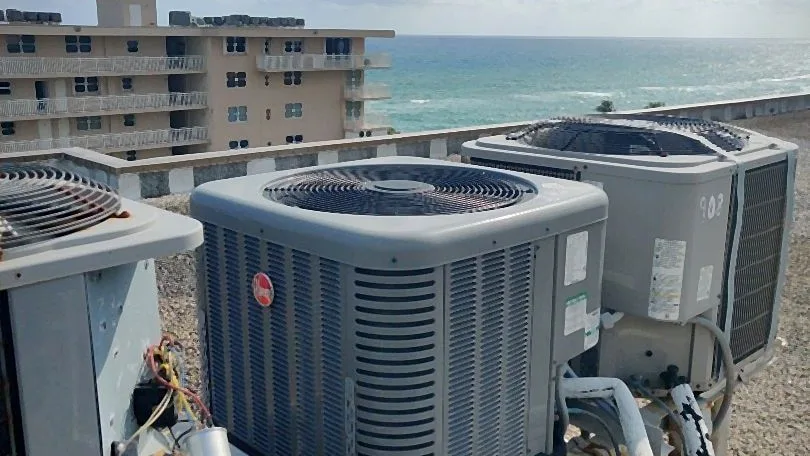
What does a banging or clanking noise mean?
Every air conditioner makes some sound - a compressor kicking on, air moving through ducts, a fan spinning up. What matters is a sound that is new, sudden, or clearly wrong for what the system is supposed to be doing. Unlike a lot of AC symptoms, noise is genuinely useful for diagnosis, because different failures produce distinctly different sounds, and knowing the vocabulary helps you describe what is happening accurately - both to yourself, deciding how urgent it is, and to a technician who will ask exactly this question first.
A banging or clanking sound, especially from the outdoor unit, almost always means something loose or broken is striking a moving part. A loose blower wheel, a broken fan blade, or a piece of hardware that has worked itself free inside the cabinet can all produce a hard, repetitive bang in time with the fan's rotation.
On the compressor itself, a knocking sound can mean internal wear serious enough that the compressor is nearing the end of its life - this is one of the sounds worth stopping the system for rather than letting it run through a diagnostic visit. If the bang is loud, metallic, and rhythmic, turn the system off and have it looked at before running it again; continuing to run a unit with loose hardware inside the cabinet risks that hardware causing more damage the longer it spins.
Noise is one of the few AC symptoms that tells you almost exactly where to look before a technician ever arrives.
United A/C & RefrigerationWhat does squealing or screeching mean?
A high-pitched squeal, especially right when the system starts, usually points at a belt or a motor bearing - though most residential systems today are belt-free, which narrows it further to a bearing. A blower motor bearing that has lost its lubrication will squeal or squeak, getting louder over time, and it is a wear item that eventually needs replacing rather than something that resolves on its own.
A metallic screech from the outdoor fan motor suggests the same kind of bearing wear on that side of the system instead. Neither of these is an emergency in the way a burning smell is, but neither improves with time - a squealing bearing is audibly telling you it is heading toward a full seizure, and catching it before that happens is a smaller repair than catching it after.
What does grinding or scraping mean?
Grinding is one of the more serious sounds an AC can make, because it usually means metal parts are already in direct contact with each other. A blower wheel that has slipped on its shaft and is now dragging against the housing, or a motor bearing that has worn past the point of squealing into full metal-on-metal contact, both produce a grinding sound. This one deserves an immediate shutdown rather than a wait-and-see approach - a motor run in this state can seize completely, turning a bearing replacement into a full motor replacement.
What about clicking, hissing, or buzzing?
Clicking is often the most normal of the group. A single click at start-up and shutdown is usually just the relay or contactor switching, which is expected. Rapid, repeated clicking that will not resolve into either a running system or full silence, though, can point at a failing capacitor or a relay struggling to hold the contactor closed, and is worth a listen from a technician.
Hissing is the sound worth taking most seriously among this group. A steady hiss near the indoor unit or the line set can mean refrigerant escaping through a leak, which is a repair rather than a wait-and-see, since the system will keep losing capacity until it is found. A buzzing sound, distinct from a hum, often points at an electrical component - a failing contactor or a loose connection - and pairs with the same caution as any other electrical symptom: if it comes with any smell of heat, shut the system down. See our repair services for how a noise complaint gets diagnosed in person.
Does it matter whether the noise is coming from indoors or outdoors?
Yes, and it is often the fastest way to narrow down which half of the system is involved. A noise from the indoor air handler - usually in a closet, attic, or utility room - almost always points at the blower motor, the blower wheel, or the ductwork connected to it, since that is the only moving hardware inside. A noise from the outdoor condenser points instead at the compressor, the outdoor fan motor and blade, or one of the electrical components mounted in that cabinet.
This distinction matters because the two halves fail differently and are addressed differently. An indoor blower issue is often quieter from outside the house and noticeably louder near a supply vent or the equipment closet itself, sometimes carrying through the ductwork to rooms far from the actual source. An outdoor issue is the reverse, and it is usually easier to confirm - standing a safe distance from the condenser while it runs and listening directly is one of the more useful checks available before calling anyone, since it tells you immediately which side of the system needs attention.
Why noise complaints spike here after storms and through peak summer
Two local patterns show up again and again in noise-related calls. The first is storm debris: after a squall or a named storm passes through, outdoor units across Broward and southern Palm Beach often pick up leaves, small branches, or loose screening in the fan guard, and the first sign is a new rattling or banging sound that was not there before the weather rolled through. It is worth a visual check of the outdoor unit after any significant wind event before assuming a mechanical failure. The second is simply run time. A compressor and fan motor working eight or nine months a year accumulate wear far faster than the same equipment in a milder climate, so bearing-related sounds - squealing, then grinding if ignored - tend to show up here on a shorter timeline than the manufacturer's general expectations assume. Units mounted near a lanai, a pool cage, or a courtyard wall can also have their sound reflected and amplified in a way that makes a moderate noise seem louder than it actually is, which is worth factoring in before assuming the worst from indoors.
Serving Broward County and southern Palm Beach County from our shop in Deerfield Beach.
Questions and answers
Is it ever okay to just ignore a noise if the AC still cools fine?
Not for long. A system can keep cooling for a while even as a bearing wears or a component loosens, but the noise is telling you the failure is already underway. Sounds like grinding or a hard bang warrant stopping the system regardless of how well it is currently cooling, because the damage compounds while it keeps running.
What noise means I should turn the AC off right now?
Grinding, a loud metallic bang, or any sound paired with a burning smell. Squealing and mild clicking can usually wait for a scheduled visit, but grinding means metal is already contacting metal, and running it further risks turning a repairable part into a full motor or compressor replacement.
Why is my outdoor unit suddenly rattling?
The most common cause is loose hardware or debris - a panel screw that has worked loose, or leaves and small debris caught in the fan guard, especially after windy weather. It is worth a visual check outside before assuming a bigger mechanical problem, though a rattle that continues after clearing visible debris should be looked at.
Can a noisy AC mean a refrigerant leak?
Yes, specifically if the sound is a steady hiss near the indoor coil or the refrigerant lines rather than a mechanical clank or squeal. A hissing sound paired with reduced cooling over time is worth having checked with gauges rather than waiting for the system to lose all its charge.
Is a noisy AC more expensive to fix the longer I wait?
Often, yes. A squealing bearing caught early is usually a contained repair; the same bearing run to failure can seize the motor and take other parts with it. Noise is one of the clearer early-warning symptoms an AC gives, and acting on it early tends to be the cheaper path.
Can you tell what's wrong just from a description of the noise?
Often we can narrow it down significantly before a technician even arrives, which helps us bring the right parts. Describe the sound to the assistant - banging, squealing, grinding, hissing, clicking - along with when it happens, and we will help you figure out how urgent it is and get you scheduled.
How we know this
This advice comes from what our technicians actually find on service calls in Broward County and southern Palm Beach — not from national HVAC copy. Salt-air corrosion on the barrier island, drain lines that block every wet season, and equipment running nine months a year are local realities, and they change the right answer.
Worth disclosing: we install Amana equipment, so we are not an independent reviewer. Where a brand or product is discussed we say what it is good and bad at, and we will tell you when the honest answer is to repair what you have or do nothing yet.
Talk to a technician
Have a question this raised? The assistant answers what it can, takes your details, and hands you to a real person who confirms the day and time.