
Blower motor problems
When the outdoor unit sounds fine but the air coming out of the vents is weak, uneven, or barely there, the problem is usually indoors, at the blower motor. Here is what that motor does, what its common failures sound and feel like, and what actually causes them to wear out.
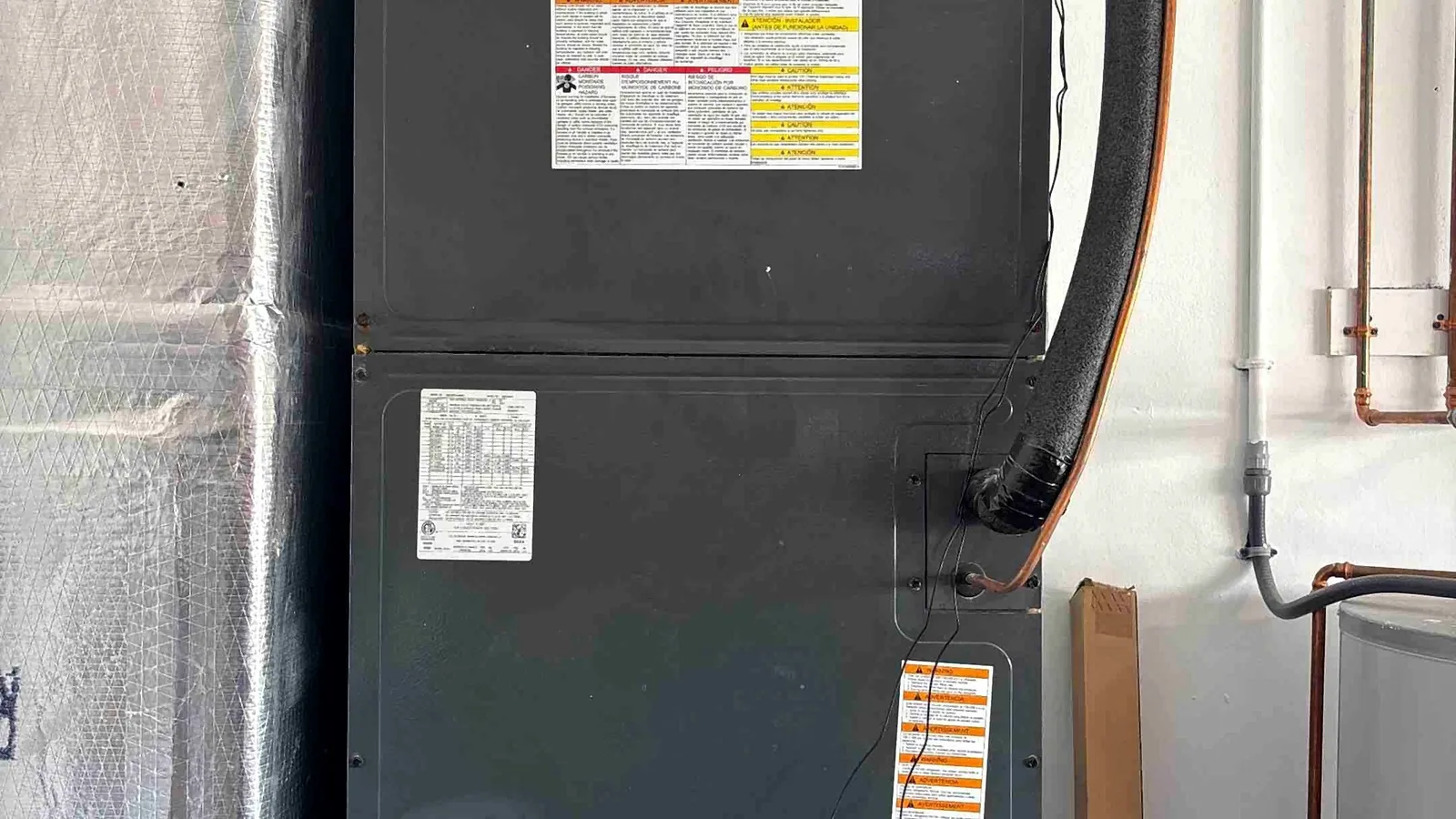
What does the blower motor actually do?
A cooling system can have a perfectly healthy compressor, coil, and refrigerant charge and still leave a house uncomfortable if the blower motor cannot move the air. The blower is the indoor fan that pulls warm room air across the evaporator coil and pushes the cooled air out through the ducts, and it is easy to overlook because it lives inside the air handler, out of sight, until it starts making noise or the airflow drops off. Understanding what it does and how it fails helps separate a blower problem from the outdoor issues that get more attention.
The blower motor spins a squirrel-cage fan wheel inside the air handler that pulls air from the return ducts, pushes it across the cold evaporator coil, and forces the now-cooled air out through the supply ducts into every room. It is the delivery mechanism for cooling that has already happened at the coil; without it, a perfectly cold coil sits there doing nothing useful.
Why blower problems get blamed on the wrong thing
Because weak airflow feels like the air conditioner is not cooling, homeowners often assume a refrigerant or compressor problem first. But if the coil itself is cold and the air simply is not moving through the house the way it should, the blower — not the outdoor unit — is usually where to look.
A perfectly cold coil sitting behind a weak blower still leaves a house uncomfortable, because cooling only helps once it reaches the room.
United A/C & RefrigerationWhat are the signs of blower motor trouble?
Blower problems tend to show up as airflow and noise complaints rather than temperature complaints, which is a useful clue on its own.
Weak or uneven airflow
Vents that used to push air firmly now barely stir a curtain, or some rooms cool fine while others lag noticeably behind, both point at reduced blower output, often from a motor losing strength or a wheel caked in dust.
Grinding, squealing, or rattling
A worn motor bearing produces a distinct grinding or squealing sound from the air handler, usually most noticeable right when the system starts up. It tends to worsen gradually rather than appear overnight, which is why it is easy to get used to until it fails.
The blower runs constantly or won't start
A motor that never shuts off, or one that hums without spinning when the system calls for airflow, both point at a motor or its control circuit rather than anything happening outside.
What is the difference between the common motor types?
Without getting into model specifics, indoor blower motors generally fall into two broad categories, and it is worth understanding the concept even if you never need to know which one you have.
Single-speed motors
Older and simpler designs run at essentially one speed, relying on a start-and-run capacitor much like the compressor does. They are straightforward to service, and a failing capacitor is a common, inexpensive cause of blower trouble on this type.
Variable-speed motors
Newer systems commonly use electronically controlled motors that ramp their speed up and down to match the cooling demand, running longer and gentler cycles that tend to be quieter and better at pulling humidity out of the air. They rely on a small electronic control module rather than a simple capacitor, so their failures are more often electronic than mechanical.
What causes blower motors to fail early?
Motors are built to run for years, but a few things reliably shorten that life. A blower wheel caked in dust and debris forces the motor to work harder to move the same amount of air, straining the bearings and windings over time — this is one more reason a clean filter and clean coil matter beyond just airflow. Heat is the other major factor: an air handler and its motor mounted in a South Florida attic sit in an environment that can run far hotter than the conditioned space it serves, and sustained heat exposure is hard on both motor bearings and electronic control boards. On single-speed motors, a weak start capacitor forces repeated hard starts that wear the motor faster than a healthy start would.
Why attic-mounted blowers work harder here
Most South Florida homes have the air handler, and its blower motor, tucked into the attic rather than a basement, which does not exist here. That attic space bakes under direct sun for most of the day, and even with insulation it routinely runs far hotter than the rest of the house, especially by late afternoon. A blower motor working inside that heat, for eight or nine months of the year, ages faster than the same motor would in a cooler mechanical closet up north. Humidity adds a second stress, particularly for the electronic control boards on variable-speed motors, which are more sensitive to moisture and heat cycling than a simple capacitor-driven motor is. This is part of why a musty smell, weak airflow, or a new rattling sound from the attic is worth taking seriously here rather than dismissing as background noise — the environment the motor works in is genuinely tougher than most of the country, and catching wear early through routine maintenance costs far less than a motor that fails outright in August.
Serving Broward County and southern Palm Beach County from our shop in Deerfield Beach.
Questions and answers
Why does my AC blow weak air even though it feels cool near the vent?
This usually points at the blower rather than the refrigerant side. If the coil is cooling properly but the fan cannot push enough air through the ducts, you get a trickle of cold air right at the vent and little relief in the rest of the room. A dirty blower wheel, a struggling motor, or a clogged filter are the common causes.
Is a grinding noise from the air handler serious?
It is worth having checked promptly. A grinding or squealing sound from the air handler usually means a worn motor bearing, and bearings do not repair themselves — they get worse and eventually the motor can seize. Catching it early is a straightforward repair; letting it run to failure risks a full motor replacement instead.
What's the difference between an ECM and a PSC blower motor?
Broadly, an ECM is an electronically controlled motor that varies its speed to match cooling demand, running longer, gentler, quieter cycles that handle humidity well. A PSC motor runs at a simpler, fixed speed and relies on a capacitor to start and run. Both are common; which one is right for a system depends on the whole setup, not just the motor.
Can a dirty filter damage the blower motor?
Indirectly, yes. A clogged filter restricts airflow, forcing the blower motor to work harder to push the same volume of air, which adds strain over time and can also lead to a frozen coil. Changing the filter regularly is one of the simplest things a homeowner can do to protect the motor.
Why does one room barely get any air while others are fine?
Uneven airflow room to room is often a duct issue — a closed or damaged register, a disconnected duct run, or a blocked return — rather than the blower motor itself, though a weakening motor can make an existing imbalance more noticeable. It is worth having the duct system checked alongside the blower rather than assuming it is one or the other.
How do I know if the blower motor needs to be repaired or replaced?
It depends on what is actually wrong. A failed capacitor on a single-speed motor is a simple, inexpensive fix. A seized bearing or a failed control module on a variable-speed motor more often means motor replacement. Tell the assistant what you are hearing or noticing with the airflow and we can help point you toward the likely cause.
How we know this
This advice comes from what our technicians actually find on service calls in Broward County and southern Palm Beach — not from national HVAC copy. Salt-air corrosion on the barrier island, drain lines that block every wet season, and equipment running nine months a year are local realities, and they change the right answer.
Worth disclosing: we install Amana equipment, so we are not an independent reviewer. Where a brand or product is discussed we say what it is good and bad at, and we will tell you when the honest answer is to repair what you have or do nothing yet.
Talk to a technician
Have a question this raised? The assistant answers what it can, takes your details, and hands you to a real person who confirms the day and time.