
AC compressor failure explained
The compressor is the single most important, most expensive, and most misunderstood part of an air conditioner. Here is what it actually does, the warning signs it gives before it fails, and how to tell a genuine compressor failure from a smaller problem that only looks like one.
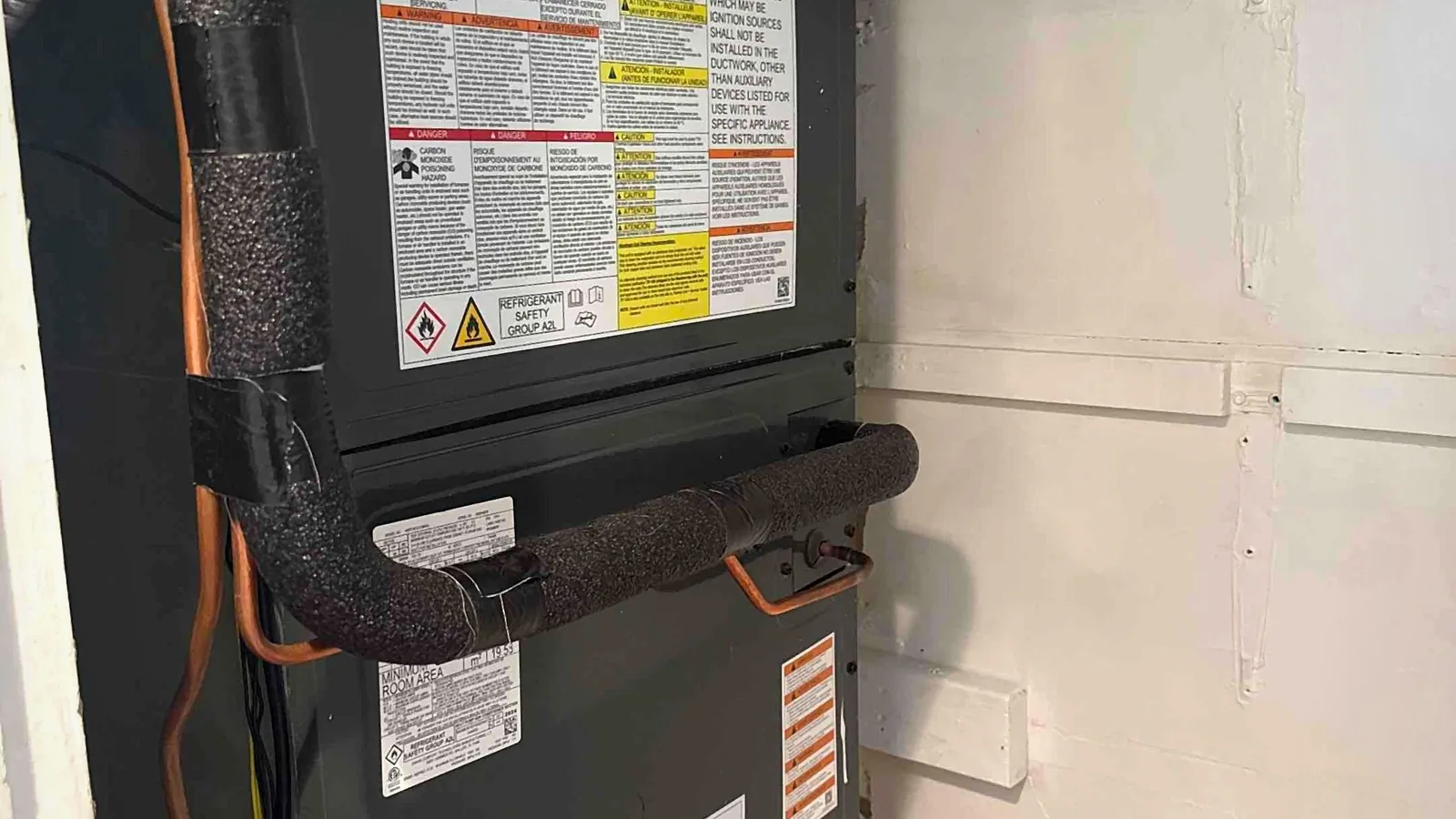
What does the compressor actually do?
No part of an air conditioner works harder, or costs more to replace, than the compressor. It is a sealed pump inside the outdoor unit that pressurizes refrigerant and pushes it through the entire system, and without it nothing cools no matter how well everything else works. A compressor failure is also one of the most feared calls a homeowner can get, partly because the word gets used loosely for problems that are not actually the compressor at all. Knowing what real compressor trouble looks like, and what commonly gets mistaken for it, is worth understanding before you assume the worst.
The compressor is the pump at the center of the refrigeration cycle. It draws in low-pressure refrigerant gas from indoors, compresses it into a hot, high-pressure gas, and sends it out to the condenser coil where the heat is released outside. Without that pressure change, refrigerant cannot absorb and release heat, and the system cannot cool at all.
Why it is called the heart of the system
Every other component — the fan, the coils, the metering device — supports the compressor's work of moving refrigerant around the loop. It runs constantly whenever the system is cooling, it is sealed and built to run for the system's full service life, and it is the one part that is genuinely not designed to be opened and repaired in the field.
A surprising number of suspected compressor failures turn out to be a cheaper part straining a compressor that was fine all along.
United A/C & RefrigerationWhat are the warning signs of a failing compressor?
A struggling compressor usually gives some warning before it fails outright, though the signs overlap with other problems, which is exactly why a proper diagnosis matters.
Humming without starting
A compressor that hums but does not start, sometimes tripping the breaker on the attempt, can mean the compressor itself is seized or it can mean a failed start capacitor is not giving it the jolt it needs. These look identical from outside the unit and are very different repairs.
Warm air with everything else running
If the indoor fan runs, the outdoor fan spins, and the air is still blowing warm, a compressor that cannot build pressure is one possible cause, alongside low refrigerant from a leak. Both need gauges to tell apart.
Unusual sounds or a hot outdoor unit
A loud clanking or grinding from the outdoor unit, or a compressor housing that is noticeably hotter than normal to the touch, points toward internal wear or overheating that is worth having checked before it goes further.
What actually causes a compressor to fail?
Compressors rarely fail out of nowhere; most failures are the end point of a stress that built up over time.
Electrical strain
A weak run capacitor or a pitted contactor forces the compressor's motor to work harder to start and run, and that extra strain, repeated over months, shortens its life. Catching those cheaper parts early is one of the best ways to protect the compressor behind them.
Refrigerant problems
Running low on refrigerant from an undetected leak forces the compressor to work outside its designed pressures, which generates excess heat internally. Running long-term with a restricted or dirty outdoor coil has a similar effect, since the compressor cannot reject heat efficiently.
Power surges
South Florida's frequent lightning activity can send damaging surges through outdoor equipment, and a compressor is one of the more vulnerable components to a surge that a contactor or capacitor might otherwise absorb.
Can a failing compressor be repaired, or does it mean replacement?
The honest answer starts with confirming it is actually the compressor, because a surprising number of suspected compressor failures turn out to be a failed capacitor or contactor straining a compressor that is otherwise fine. A technician diagnoses this with gauges and electrical testing before concluding anything, because the compressor is sealed and not something opened up and repaired the way a capacitor is swapped. If the compressor itself has genuinely failed, the decision comes down to weighing a compressor replacement against the age and condition of the rest of the system, since a unit near the end of its expected life is rarely worth investing in on that scale. That is a conversation worth having honestly, with both paths laid out rather than assumed.
Why South Florida is harder on compressors
A compressor here works under conditions that shorten its expected life compared with almost anywhere else in the country. The season itself is the biggest factor: a system running eight or nine months a year, often through long, humid afternoons in the 90s, keeps the compressor under sustained load far longer per year than a four-season climate ever asks of it. Lightning adds a second, sharper risk — South Florida sees some of the highest strike frequency in the country, and a nearby strike can send a damaging surge through outdoor equipment even without a direct hit. Coastal salt air compounds the electrical side of it, corroding the contactors and capacitors that protect the compressor's start and run cycle, which is part of why a compressor issue on the barrier island so often traces back to a corroded part upstream rather than the compressor being simply worn out. None of this means a compressor here is destined to fail early, but it is the reason a twice-yearly check of the electrical components around it is worth more here than in a milder climate.
Serving Broward County and southern Palm Beach County from our shop in Deerfield Beach.
Questions and answers
What does it mean when the outdoor unit hums but won't start?
It usually means either the compressor is struggling to start under load or a failed start capacitor is not giving it the jolt it needs, and the two look identical from outside. Do not keep resetting the breaker to force it; that risks compounding the damage. A technician can tell the difference quickly with a meter.
How long do AC compressors usually last?
Most compressors are built to last as long as the rest of the system, roughly a decade or more under normal conditions, though heavy South Florida run hours, electrical strain from failing capacitors, and surge exposure can shorten that. Regular maintenance that catches weak electrical components early is the best protection for compressor life.
Is it worth repairing a failed compressor?
It depends on the age and condition of the rest of the system, since a compressor replacement is a significant repair on equipment that is otherwise sound. On a newer system it is usually worth it. On an older system nearing the end of its expected life, replacing the whole unit is often the more sensible path, and a straight comparison is worth asking for.
Can a power surge really damage a compressor?
Yes. A lightning strike does not have to hit the unit directly; a nearby strike can send a surge through the power lines into the outdoor equipment. South Florida's high lightning frequency makes this a real risk here specifically, and surge protection at the panel or the outdoor disconnect is a reasonable precaution.
Will low refrigerant actually damage the compressor?
Yes, over time. A compressor is designed to run within a specific pressure range, and running low on refrigerant from a leak forces it to work outside that range, generating extra heat and strain. This is part of why a slow leak should be found and repaired rather than simply topped up.
How do I know if it's really the compressor and not something cheaper?
You generally cannot tell for certain without gauges and an electrical test, since capacitor and contactor failures often mimic compressor trouble. That is exactly why a proper diagnosis matters before assuming the worst. Tell the assistant what the outdoor unit is doing and we will help you figure out what it likely is before anything gets replaced.
How we know this
This advice comes from what our technicians actually find on service calls in Broward County and southern Palm Beach — not from national HVAC copy. Salt-air corrosion on the barrier island, drain lines that block every wet season, and equipment running nine months a year are local realities, and they change the right answer.
Worth disclosing: we install Amana equipment, so we are not an independent reviewer. Where a brand or product is discussed we say what it is good and bad at, and we will tell you when the honest answer is to repair what you have or do nothing yet.
Talk to a technician
Have a question this raised? The assistant answers what it can, takes your details, and hands you to a real person who confirms the day and time.