
What a capacitor does and why it fails
A failed capacitor is one of the most common reasons an air conditioner will not start, and one of the least understood parts in the whole system. Here is what it actually does, why South Florida wears them out faster, and why it is always a technician's job, never a homeowner's.
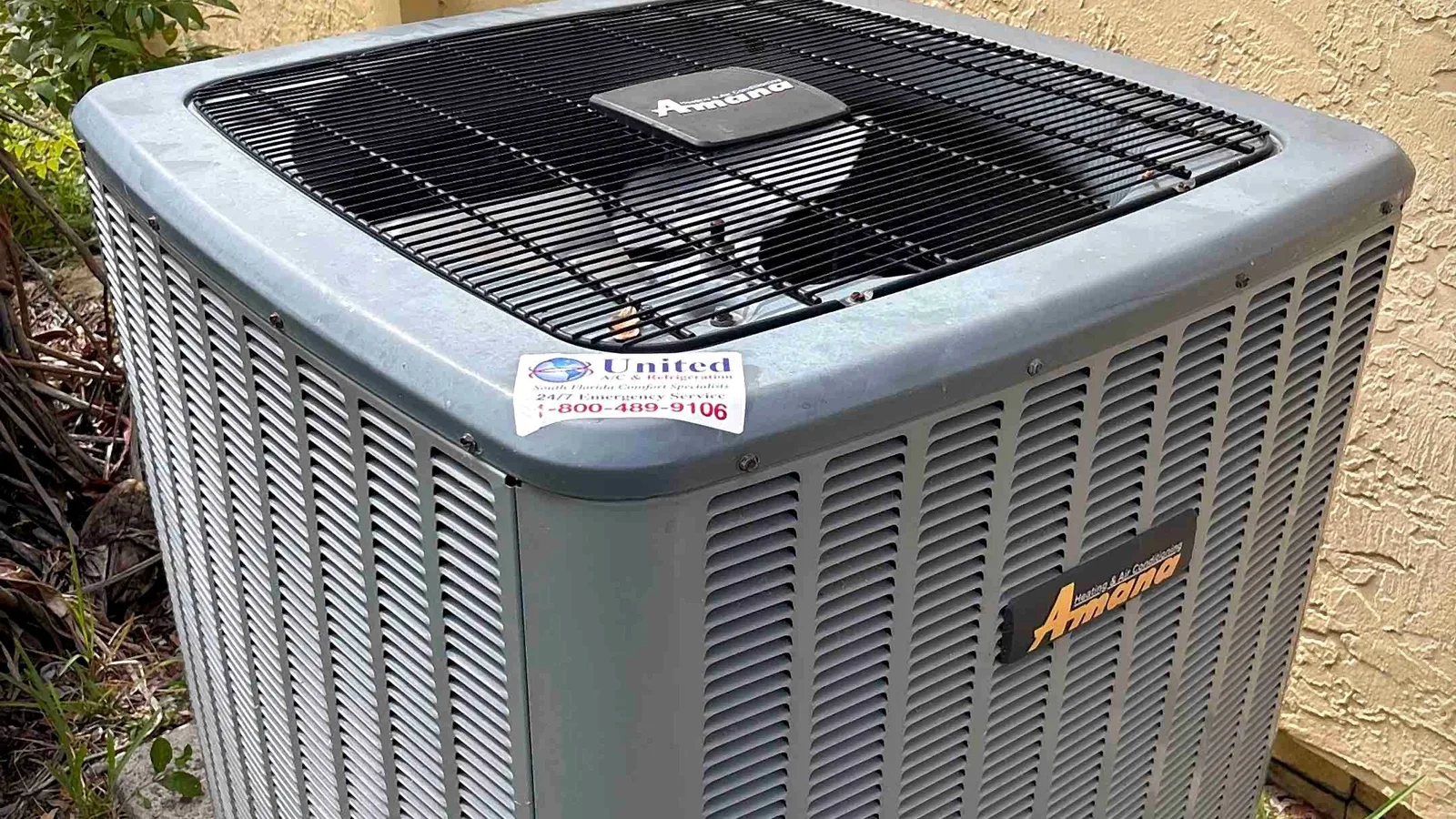
What does a capacitor actually do?
Ask any technician what the single most common cause of a no-cooling call is, and a failed capacitor is near the top of nearly everyone's list. It is a small, inexpensive part doing an outsized job: giving the compressor and the fan motors the jolt of energy they need to overcome inertia and start turning. When it wears out, the whole system can go silent even though nothing else is wrong. Understanding what it does, and why South Florida is particularly hard on it, explains why this one part shows up in so many service calls.
A capacitor stores electrical energy and releases it in a quick burst, giving an electric motor the extra push it needs to start spinning from a dead stop.
Why motors need that push
An electric motor at rest takes considerably more energy to get moving than it does to keep running once it is up to speed, similar to how it takes more effort to start pushing a stalled car than to keep it rolling. The capacitor supplies that starting energy instantly, then continues supporting the motor at a lower level while it runs, which is why it is sometimes called a run capacitor.
One part, multiple jobs
Most residential systems use what is called a dual capacitor, a single component doing this job for both the compressor and the outdoor fan motor at once, in two separate sections inside the same housing. That is efficient when the part is healthy, but it also means one failing capacitor can affect both motors together, which is often the first clue pointing at it.
The capacitor is a small, inexpensive part doing an outsized job — and it keeps holding a real electrical charge long after the system is switched off, which is exactly why this one is never a do-it-yourself repair.
United A/C & RefrigerationWhat causes a capacitor to fail?
Capacitors wear out gradually through ordinary use, and a handful of specific stresses accelerate that wear well beyond what the part would otherwise see.
Heat is the biggest factor
A capacitor is rated for a specific operating temperature, and every degree above that rating shortens its working life. It sits inside or near the outdoor unit, in direct South Florida sun, often in an enclosure that traps heat around it — conditions that push capacitors well past what a manufacturer's lab test assumes as normal.
Simple age and cycle count
Every start draws down and recharges the capacitor, so a system that starts more often — including one that is short cycling for an unrelated reason — puts more cumulative wear on the capacitor than a system that runs long, steady cycles. Over years, that wear shows up as a gradual loss of the capacitor's rated storage capacity.
Voltage swings
Power fluctuations, including the kind that come with storms and grid instability, put a sudden electrical stress on a capacitor that can push a weakened one over the edge or damage a healthy one outright.
What are the warning signs before a capacitor fails completely?
A capacitor rarely fails without any warning at all; the signs are just easy to miss until they are pointed out.
Sounds worth noticing
A humming sound from the outdoor unit when the system tries to start, without the fan actually turning, is one of the clearest signs — the compressor and motor are asking for power the capacitor can no longer deliver. A fan that spins slowly, hesitates, or needs a nudge to get going is showing the same weakening.
Performance clues
A system that takes noticeably longer to start cooling after the thermostat calls for it, or one that has started short cycling for no obvious reason, can both trace back to a capacitor losing its rated capacity gradually rather than all at once. None of these symptoms guarantee it is the capacitor specifically, since a few other faults can look similar, but they are worth mentioning to a technician as part of describing what the system is doing, since they narrow the search considerably before anyone opens the cabinet.
Why is capacitor replacement always a technician's job?
A capacitor stores an electrical charge, and it keeps holding that charge even after the system is switched off and unplugged from power — which is precisely why this is never a task to attempt yourself.
A technician working on a capacitor properly discharges it first, using tools and a process built for handling stored electrical energy safely, before touching or removing it. Beyond the safety issue, correctly diagnosing a capacitor failure means testing it against its rated microfarad value with a meter, not guessing from symptoms alone, because a handful of other faults — a bad contactor, a failing motor itself, a wiring problem — can produce similar-looking symptoms. Replacing a capacitor that was not actually the problem wastes money and leaves the real fault untouched. A proper repair visit tests the part, confirms the diagnosis, and replaces it with the correctly rated component, since an incorrectly rated capacitor can itself shorten a motor's life.
Can regular maintenance catch a weak capacitor before it fails?
Often, yes, which is one of the more useful things a routine maintenance visit does. A capacitor's stored capacity can be measured with a meter and compared against its rated value, showing a gradual decline well before the part fails outright and strands the system on a hot afternoon.
A capacitor testing meaningfully below its rating is a known, predictable failure waiting to happen, and replacing it proactively during a scheduled maintenance visit is a small, planned task rather than an emergency no-cooling call on the worst possible day. Given how inexpensive the part itself is relative to the inconvenience of a full system failure, catching a weakening capacitor early is one of the more straightforward wins a regular maintenance schedule offers, and it is a standard check on every visit rather than something that has to be specially requested.
Why South Florida burns through capacitors faster
Three forces converge on capacitors here more than almost anywhere else in the country. The heat itself is relentless — an outdoor unit in full sun through a Broward or southern Palm Beach summer sits at ambient temperatures for months on end that other climates only see for a few weeks a year, and heat is the single biggest factor in capacitor wear. Salt air compounds it along the coast, corroding the capacitor's terminals and the connections around it, which can cause a marginal capacitor to fail even sooner than heat alone would predict — a pattern we see disproportionately in service calls from Deerfield Beach, Pompano, and other communities close to the water. And the sheer run time matters as much as either: a system cycling on and off for eight or nine months a year puts far more start-cycles through its capacitor than the same equipment would see in a four-season climate, compounding ordinary wear into a part that often needs replacing years sooner here than the manufacturer's typical lifespan would suggest.
Serving Broward County and southern Palm Beach County from our shop in Deerfield Beach.
Questions and answers
How long does an AC capacitor usually last?
It varies with heat exposure and how often the system cycles, both of which run harder here than in most of the country. Some last a decade or more in mild conditions; in a South Florida outdoor unit running through long, hot summers, several years of solid service followed by a gradual decline is a common and unremarkable pattern rather than a sign anything was done wrong.
Is a failed capacitor an emergency?
It usually means the system will not start at all, which on a hot day feels urgent even though the part itself is inexpensive and quick to replace once diagnosed. It is not a safety emergency in the way a burning smell or a tripping breaker is, but it is worth prompt attention since the house will not be cooling in the meantime.
Can a bad capacitor damage other parts of the system?
Yes, if it is left in a failing state and the system keeps attempting to start against it. A compressor or fan motor straining to start without adequate capacitor support can overheat or wear prematurely, turning an inexpensive capacitor replacement into a more serious motor repair if it goes unaddressed for too long.
Why does my outdoor unit hum but the fan does not spin?
That is one of the classic signs of a failing capacitor — the motor is receiving power and trying to start, but without the capacitor's starting boost it cannot overcome its own resistance and begin turning. It usually means the capacitor has weakened significantly or failed outright, and it is worth having it tested rather than continuing to run the system in that state.
Can I test my own capacitor with a multimeter?
Even with the right meter, safely handling a capacitor requires knowing how to discharge it first, since it holds a real electrical charge independent of whether the system is powered or not. This is squarely a technician task; the risk involved is not worth attempting to save on what is already an inexpensive part and a quick repair visit.
How would I know if it is the capacitor and not something else?
You would not know for certain without testing, and that is exactly the point of having a technician diagnose it rather than guessing. Tell the assistant what you are noticing — a humming outdoor unit, a hesitant fan, a system that will not start — and we can help figure out how likely a capacitor is before booking a visit.
How we know this
This advice comes from what our technicians actually find on service calls in Broward County and southern Palm Beach — not from national HVAC copy. Salt-air corrosion on the barrier island, drain lines that block every wet season, and equipment running nine months a year are local realities, and they change the right answer.
Worth disclosing: we install Amana equipment, so we are not an independent reviewer. Where a brand or product is discussed we say what it is good and bad at, and we will tell you when the honest answer is to repair what you have or do nothing yet.
Talk to a technician
Have a question this raised? The assistant answers what it can, takes your details, and hands you to a real person who confirms the day and time.