
Package units versus split systems
One system puts everything in a single outdoor cabinet; the other splits the job between an indoor and an outdoor unit. Here is what that difference actually means for space, installation, and long-term service.
What is a split system?
Package units and split systems are both central air conditioning, cooling a whole home rather than a single room, but they are built in fundamentally different shapes, and that shape decision is made largely by the house itself rather than by preference. A split system separates the job between an indoor air handler and an outdoor condenser connected by refrigerant lines. A package unit puts every component — compressor, coils, and blower — into a single cabinet that sits entirely outside or on a roof. Which one fits a given home usually has less to do with performance and more to do with where the equipment actually has room to go. Both configurations, in turn, come in straight-cool or heat pump versions, so the shape decision here is entirely separate from the heat pump versus straight-cool question.
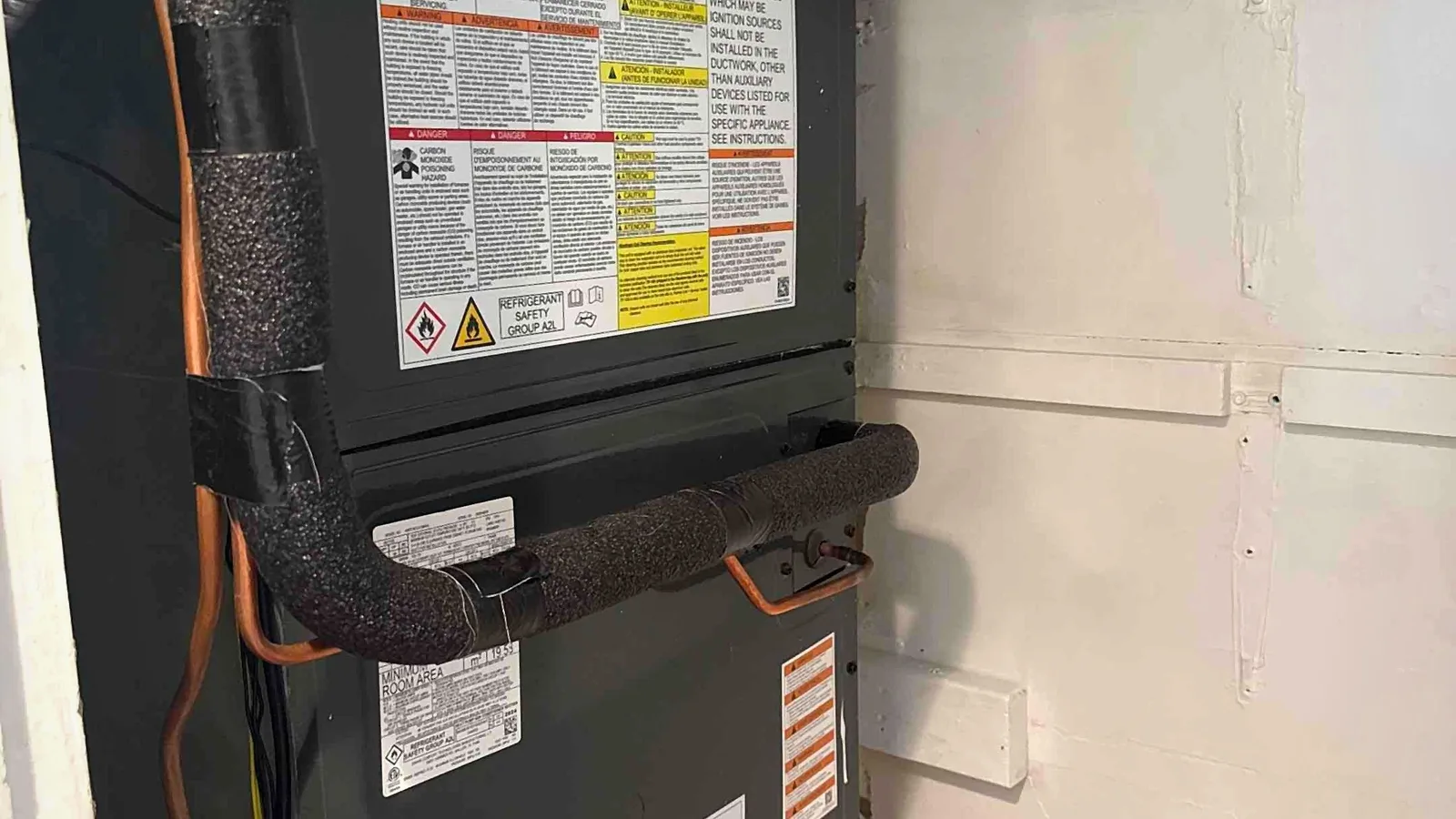
A split system is the setup most South Florida single-family homes already have: an indoor air handler, typically in a closet, garage, or attic, connected by refrigerant lines and ductwork to an outdoor condenser holding the compressor and outdoor coil.
Why it is the default choice
Separating the noisiest component — the compressor — from the living space keeps a split system quiet indoors, and having two smaller cabinets rather than one large one gives installers more flexibility in placement. It is also the configuration most technicians are most practiced with, which tends to mean more straightforward repair and parts availability over the system's life.
The house usually decides between a package unit and a split system before preference ever gets a say.
United A/C & RefrigerationWhat is a package unit?
A package unit combines the compressor, coils, and air handler into a single cabinet, installed outside the home, usually on a concrete pad at ground level or, in some commercial and multifamily settings, on a roof.
Where package units are actually used
They are common in homes with no attic or interior utility space for an air handler, in certain condominiums and townhomes with tightly defined mechanical footprints, and in manufactured or mobile housing where interior space is especially limited. Ductwork still runs through the home to distribute the air; only the mechanical components live outside in one cabinet rather than split between two locations.
The trade-off in a single cabinet
Consolidating everything into one unit simplifies the refrigerant lines, since there is no long run between an indoor and outdoor component, but it also means the entire system sits outside, exposed to weather and, near the coast, salt air, with nothing indoors to shelter part of it.
How does the choice affect noise and interior space?
This is where the two configurations feel most different day to day, inside the home.
A split system's indoor air handler is quiet by design and tucked out of the way, which is part of why it remains the standard for most houses. A package unit keeps all of its mechanical noise, including the compressor, entirely outside, which some homeowners actually prefer, since nothing indoors ever hums or vibrates, at the cost of using no interior closet or attic space at all. For homes genuinely short on interior mechanical space — a small condo or a manufactured home with no attic to speak of — that trade favors the package unit outright, since a split system's indoor component has to go somewhere.
What about installation, maintenance, and repairs?
Both configurations use proven, widely available technology, but the practical experience of owning each differs slightly.
Access for service
A package unit puts every component in one accessible outdoor location, which can make routine maintenance visits and many repairs somewhat more straightforward, since a technician is not working in two separate locations. A split system requires access to both the outdoor condenser and wherever the indoor air handler is located, which is usually simple but occasionally means working in a cramped attic or closet.
Exposure and lifespan
Because a package unit's entire mechanism sits outside full-time, it faces more direct weather exposure, and in coastal areas more salt-air corrosion, than a split system's outdoor condenser alone, since a split system's air handler is sheltered indoors. This is a meaningful factor in a climate where the outdoor environment already shortens equipment life.
Which one is right for a given home?
The honest answer is that the house usually decides for you, more than personal preference does.
A standard single-family home with attic or closet space for an air handler is almost always better served by a split system, both because it is the established default and because keeping part of the equipment sheltered indoors extends its life in this climate. A home genuinely lacking interior mechanical space — certain condos, manufactured housing, or additions built without a place for an air handler — is a legitimate case for a package unit, where the alternative might be no practical way to install central air at all. In some of those same space-constrained homes, a ductless mini-split is a simpler answer than either configuration, since it skips both the attic air handler and the single outdoor cabinet entirely. Replacing an existing system generally keeps the same configuration unless there is a specific reason to change it, since converting from one type to the other usually means new ductwork routing as well as new equipment.
Where each configuration actually shows up in South Florida
Split systems are the overwhelming default across single-family neighborhoods in Broward and southern Palm Beach, from mid-century concrete block homes with attic air handlers to newer master-planned communities built with dedicated mechanical closets. Package units show up more in specific pockets: older low-rise condominiums and townhome communities without attics, some manufactured and mobile home communities further inland, and certain commercial and light-industrial buildings with rooftop units. Coastal placement matters more for a package unit than for a split system, precisely because the whole thing sits outside; a package unit near the barrier island or the intracoastal faces the same salt-air corrosion issues that affect any outdoor condenser, but with no indoor-sheltered component to offset the exposure. For a homeowner in one of the region's condo or townhome communities where a package unit is the only practical option, that makes rinse habits and coastal-rated equipment specifications even more relevant than they are for a typical split-system household further inland.
Serving Broward County and southern Palm Beach County from our shop in Deerfield Beach.
Questions and answers
Is a package unit cheaper than a split system?
Not reliably. Pricing depends on the specific equipment and installation requirements more than the configuration itself. A package unit can simplify some aspects of installation by consolidating the refrigerant lines, but it is not a guaranteed cost advantage over a comparable split system.
Can I convert my split system to a package unit, or the other way around?
Technically yes, but it usually means reworking ductwork routing and connections along with replacing the equipment, since the two configurations connect to the home differently. It is a larger project than a standard replacement and is only worth considering if the current configuration is genuinely unworkable for the home.
Do package units last as long as split systems in Florida?
Often somewhat less, specifically because the entire mechanism sits outside full-time and faces more weather and, near the coast, salt-air exposure than a split system's sheltered indoor component. Good maintenance narrows that gap but does not fully close it in harsh coastal locations.
Why do some condos only have package units?
Many older condominium and townhome buildings were designed without attic space or an interior closet suited to an air handler, which makes a package unit the practical option since it needs no indoor mechanical space at all beyond the ductwork itself. It is a building-design decision more than a performance choice.
Are package units noisier than split systems?
Not necessarily louder overall, but the noise sits entirely outside rather than being split between an outdoor compressor and a quiet indoor air handler. Some homeowners actually prefer that, since nothing hums indoors at all, while others find the outdoor unit itself louder than the sheltered condenser of a split system.
Which type does United typically install?
Split systems are the more common installation for standard single-family homes across Broward and southern Palm Beach, simply because most of those homes have the attic or closet space for it. Package units come up for condos, manufactured housing, and specific commercial jobs. Tell the assistant about your property and we can talk through which configuration actually fits.
How we know this
This advice comes from what our technicians actually find on service calls in Broward County and southern Palm Beach — not from national HVAC copy. Salt-air corrosion on the barrier island, drain lines that block every wet season, and equipment running nine months a year are local realities, and they change the right answer.
Worth disclosing: we install Amana equipment, so we are not an independent reviewer. Where a brand or product is discussed we say what it is good and bad at, and we will tell you when the honest answer is to repair what you have or do nothing yet.
Talk to a technician
Have a question this raised? The assistant answers what it can, takes your details, and hands you to a real person who confirms the day and time.