
Replacing only the outdoor unit
It sounds like the cheaper half-measure: swap the failed outdoor condenser, leave the indoor coil alone. Sometimes that is a reasonable call. More often it quietly costs more than it saves.
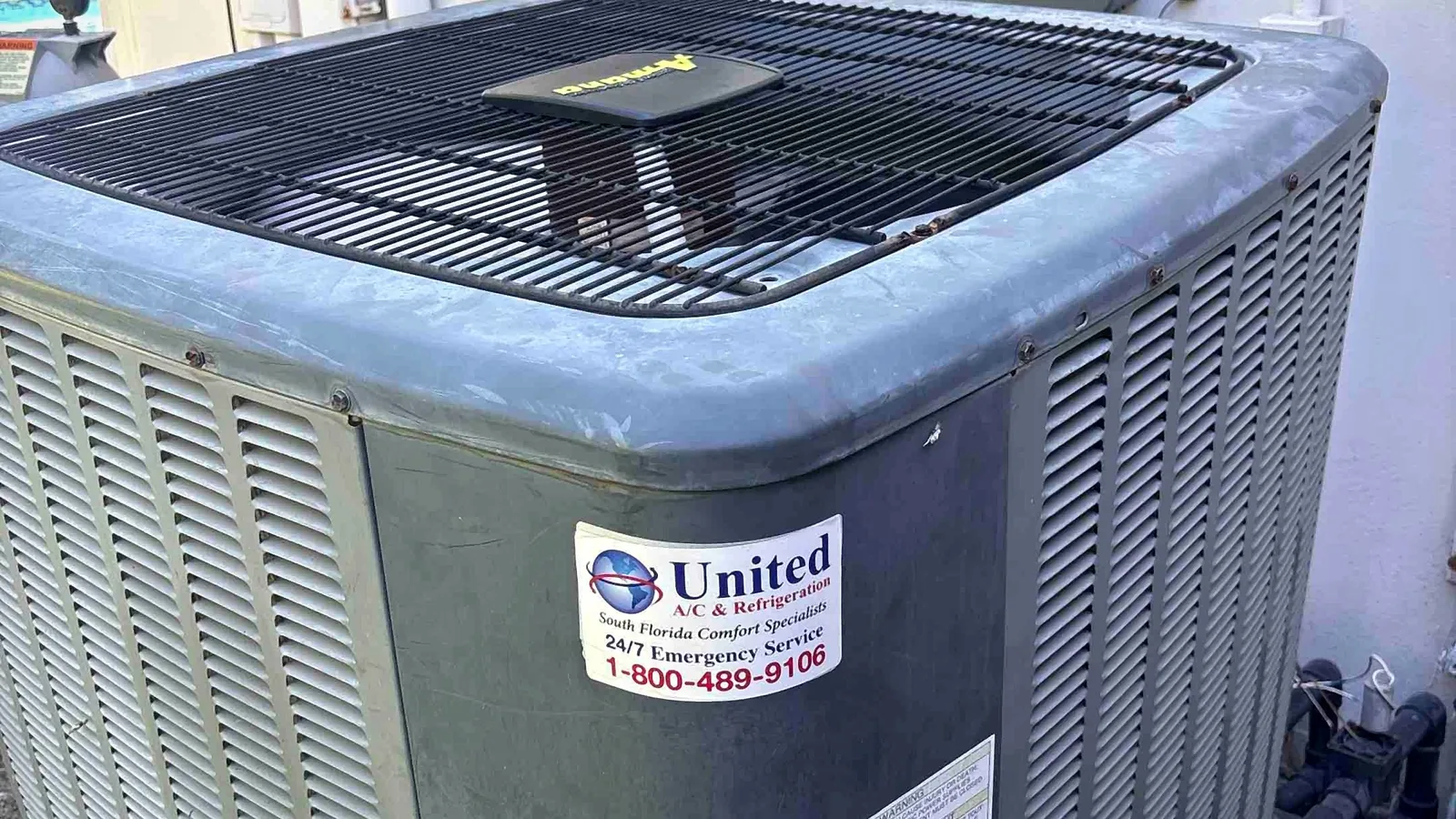
Can you actually replace just the outdoor unit?
When an outdoor condenser fails, the math looks tempting: the indoor coil in the attic or closet is still running fine, so why replace something that is not broken? Some companies will sell exactly that job, and in a narrow set of situations it is a defensible one. In most homes with an aging system, though, replacing only the outdoor half creates a mismatched pair that costs more in lost efficiency and comfort than it saves on the day of the install, and it can quietly cost you the manufacturer's warranty as well.
Mechanically, yes — a new outdoor condenser can usually be connected to an existing indoor coil and refrigerant line set, and the system will run. The question is not whether it can be done; it is whether it should be, and that depends on how closely the new outdoor unit's capacity and refrigerant metering match what the old indoor coil was designed around.
Why the pairing matters
Air conditioners are designed and rated as matched systems: the outdoor condenser and the indoor coil are engineered together so refrigerant pressures, airflow, and capacity line up. That is what a matched system actually means, and it is how the equipment reaches the efficiency figure printed on its paperwork. Bolt a new, more efficient condenser onto an old coil built for a different refrigerant charge or a different capacity, and the system runs as a compromise rather than as either unit performs on its own.
Bolting a new outdoor unit onto an old indoor coil does not fail loudly; it fails quietly, on the power bill and in the warranty file.
United A/C & RefrigerationWhat actually goes wrong with a mismatched pair?
Three things tend to show up, roughly in order. First, efficiency drops: a new, efficient outdoor unit cannot deliver its rated performance through an indoor coil it was not designed to work with, so the promised gain on the power bill shrinks or disappears. Second, humidity control suffers, because mismatched capacity often means the system satisfies the thermostat before it has run long enough to pull moisture out of the air — leaving the house cold and clammy rather than comfortably dry, which is its own kind of discomfort in a climate this humid. Third, the mismatch adds wear of its own: a system fighting an imperfect pairing works harder to hit the same result, which shortens the life of the very equipment you just paid to install, and can bring you back to another repair decision sooner than expected.
Does mismatching void the warranty?
Often, yes, or it is reduced to something far short of what a matched system would carry. Most manufacturers publish approved combinations of outdoor and indoor components and condition their full warranty coverage on installing one of those matched pairs. Pair a new condenser with an old, unlisted coil, and the manufacturer can decline coverage on a failure it considers caused by the mismatch, even if the new part itself is not obviously at fault.
Why this matters more than it sounds
A voided or reduced warranty is easy to overlook at the moment of the sale, because the system is working and the paperwork is dense. It becomes expensive knowledge only later, when something fails and the coverage everyone assumed was there is not — which ties directly into the repair conversation that follows.
Is a condenser-only replacement ever the right call?
Yes, in a specific and fairly narrow set of cases. If the indoor coil is itself only a few years old, was installed to modern specifications, and is confirmed compatible with the refrigerant and capacity of the new outdoor unit, pairing them can be a reasonable, honest option rather than a compromise. The key word is confirmed: it takes an actual check against the coil's specifications, not an assumption that it is still working fine so it must match.
A stopgap, chosen knowingly
There are also situations where a homeowner understands the tradeoffs — reduced efficiency, a shorter runway before the coil needs attention too — and chooses a condenser-only swap anyway as a deliberate, temporary bridge. That is a legitimate choice as long as it is made with the full picture, not sold as a free upgrade with no downside.
How do you know which situation you are actually in?
The honest answer requires looking at the actual coil, not guessing from its age or how well it seems to be cooling. A technician can check the coil's condition, its rated capacity, and whether it is on the new condenser's approved match list, and give you a straight comparison: what a condenser-only swap would cost in efficiency and warranty coverage against what a fully matched replacement would involve up front. That comparison, not a rule of thumb, is what should decide it, and it is a conversation worth having before the old condenser fails rather than in the middle of an emergency call.
Why this matters more in South Florida than it might elsewhere
A mismatch penalty that would be a minor annoyance in a mild climate compounds quickly here, because a South Florida system runs so many hours a year that a small loss of efficiency on every one of those hours adds up fast. It is also a tempting shortcut specifically in this market: coastal homes often lose an outdoor condenser to corrosion well before the indoor coil shows any wear, so the reasoning that the inside half is still fine comes up often and sounds plausible. In older, mid-century neighborhoods where systems have already been through a repair or two, it is also common for nobody to have kept clear records of exactly what capacity or refrigerant the existing coil was built for, which makes a real compatibility check — rather than a visual guess — more important here than in a newer, better-documented home.
Serving Broward County and southern Palm Beach County from our shop in Deerfield Beach.
Questions and answers
My condenser died suddenly. Do I have to replace the whole system right away?
Not necessarily, but it is worth finding out whether your existing indoor coil is a genuine candidate for pairing with a new outdoor unit before assuming either way. A quick compatibility check tells you whether a condenser-only swap is a sound option or whether it would leave you with a mismatched, underperforming system.
How do I know if my indoor coil is compatible with a new condenser?
A technician checks the coil's rated capacity, its refrigerant type, and whether that combination appears on the new condenser's approved match list from the manufacturer. This is not something you can reliably judge from the coil's age or its outward condition alone.
Will a mismatched system still cool the house?
Usually yes, which is exactly why the problem is easy to miss. A mismatched system typically keeps cooling, just less efficiently and often with weaker humidity control, so the shortfall shows up gradually in the power bill and comfort rather than as an obvious failure.
Is a condenser-only swap actually cheaper in the long run?
Sometimes, but not always, once lost efficiency and reduced warranty coverage are counted. It can be the right call when the indoor coil is genuinely young and confirmed compatible. Paired with an older, unlisted coil, the ongoing efficiency loss and warranty gap often outweigh the smaller upfront job.
Does the refrigerant type of my old coil matter?
Yes, significantly. If the existing indoor coil was designed around a refrigerant that new equipment no longer uses, pairing it with a modern condenser generally is not an option at all, regardless of capacity. This is one of the first things a compatibility check should confirm.
What should I ask a company that offers to replace just the outdoor unit?
Ask directly whether they have confirmed the indoor coil's specifications against the new condenser's approved match list, and ask them to show you, not just tell you. Also ask what it does to the manufacturer's warranty coverage. A straight answer to both questions tells you whether the offer is sound.
How we know this
This advice comes from what our technicians actually find on service calls in Broward County and southern Palm Beach — not from national HVAC copy. Salt-air corrosion on the barrier island, drain lines that block every wet season, and equipment running nine months a year are local realities, and they change the right answer.
Worth disclosing: we install Amana equipment, so we are not an independent reviewer. Where a brand or product is discussed we say what it is good and bad at, and we will tell you when the honest answer is to repair what you have or do nothing yet.
Talk to a technician
Have a question this raised? The assistant answers what it can, takes your details, and hands you to a real person who confirms the day and time.