
Humidity control beyond the thermostat
A home can read seventy-two degrees on the thermostat and still feel damp. Here is why temperature and humidity are two different jobs, and what actually controls the second one in a South Florida house.
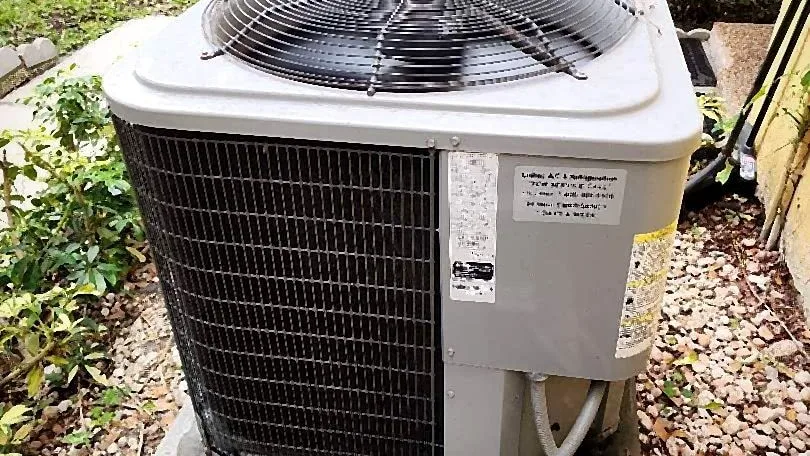
Why does a house feel humid even when the AC is running?
Most homeowners set a temperature and assume comfort follows automatically. In South Florida it often does not, because temperature and humidity are controlled by different parts of the same system, and the thermostat only speaks directly to one of them. A house can hit its set point and still feel sticky, because reaching a number on the wall and pulling real moisture out of the air are not the same task. Understanding the difference is the first step to a home that actually feels dry, not just cool.
An air conditioner removes humidity as a side effect of cooling, not as its main job, and the two do not always happen in the right proportion. As air passes over the cold evaporator coil, moisture in it condenses onto the coil and drains away — that is the entire dehumidification mechanism. The problem is that a system can satisfy the thermostat's temperature demand and shut off before it has run long enough to condense much water at all. The room reads cool. It does not read dry.
Sensible heat versus latent heat
Technicians call these two loads sensible (temperature) and latent (moisture). A system sized and run to handle sensible load well can still leave latent load — the humidity — largely untouched, which is exactly the gap that makes a seventy-two-degree room feel clammy.
A room can hit its set temperature and still feel damp, because reaching a number on the wall and pulling real moisture out of the air are not the same job.
United A/C & RefrigerationDoes a bigger air conditioner control humidity better?
No — a larger system is usually worse at it, which surprises most homeowners. An oversized unit cools the air quickly enough to satisfy the thermostat in a matter of minutes, then shuts off. That short burst chills the room before the coil has had time to condense meaningful moisture, so the cycle repeats all day: cold air, quick shutoff, humidity essentially untouched, a pattern explained further in our look at why oversizing is the most common mistake.
Short cycling is the real culprit
This pattern, called short cycling, is the single most common reason a newer, seemingly capable system leaves a house feeling damp. It is also hard on the equipment — frequent starts and stops wear parts faster than long, steady runs. Correct sizing from a proper load calculation, not the biggest unit that will fit, is what lets a system run the longer cycles humidity control actually needs. Our replacement process is built around that calculation rather than a rule of thumb.
How much should the AC actually run to keep humidity down?
Longer, steadier cycles remove more moisture than short, powerful ones, so a system that runs for twenty or thirty minutes at a stretch is usually doing a better humidity job than one that cycles on and off every few minutes, even at the same average temperature. A thermostat fan setting matters here too: leaving the fan on AUTO lets the coil stay cold and keep condensing moisture during the cooling cycle, while a fan left on ON blows air across a coil that is not always cold, re-evaporating some of the moisture the system just removed and pushing it back into the house.
A slightly higher set point can help, not hurt
Nudging the thermostat up a degree or two can sometimes improve comfort rather than worsen it, because it lets the system run longer, gentler cycles instead of short blasts. Comfort in a humid climate is often more about cycle length than the number on the dial.
Where does the extra moisture in the house actually come from?
The air conditioner is fighting a constant supply of new moisture, not a fixed amount. Showers, cooking, houseplants, and simple breathing add water vapor to indoor air continuously, and in a climate this humid, outdoor air infiltrating through gaps, unsealed attic hatches, or a leaky building envelope brings in more. Bathroom and kitchen exhaust fans that vent outside, rather than just recirculating, matter more here than in a dry climate because they remove moisture at the source instead of leaving it for the AC to catch later.
Ductwork plays a role too
Leaky supply or return ducts running through a hot, humid attic can pull unconditioned, moisture-laden air into the system and distribute it through the house, undermining the dehumidification the equipment is otherwise achieving. Sealed, well-insulated ductwork is as much a humidity measure as an efficiency one.
When does a home need help beyond the AC itself?
A correctly sized, well-run system handles humidity well in most South Florida homes, but not every situation. Homes with unusually high moisture loads — a large aquarium, a home gym, a laundry room without outside venting, ground-level rooms near standing water, or simply a house that runs the AC lightly because it is often unoccupied — can outpace what the main system was ever designed to remove on its own. In those cases, a standalone dehumidifier in the problem room, or a dedicated whole-home unit integrated with the ductwork, fills the gap the main system cannot close by itself. We cover that specific decision, including when it is and is not worth adding, in a separate look at whole-home dehumidifiers. Either way, the starting point is the same: confirm the AC itself is sized and running correctly through a proper maintenance visit before assuming the system needs help.
Why humidity is a year-round job here, not a summer one
In much of the country, humidity control is a warm-weather concern that fades by autumn. In Broward and southern Palm Beach it barely lets up. The wet season runs roughly from late spring into fall with near-daily moisture in the air, and even the cooler months rarely bring the kind of dry air that gives a system a break. That means the sizing and run-time mistakes described above compound for most of the year rather than a few peak weeks, which is why a slightly oversized system here causes more year-round discomfort than the same mistake would up north. Housing stock adds its own wrinkle: older mid-century homes with minimal insulation and leaky original ductwork fight humidity harder than newer, tightly built construction, while condos and 55-plus communities often have shared or older ductwork with limited options for changes, making correct sizing and sealed ducts even more important since the fixes available afterward are fewer. Whatever the housing type, the same principle holds — a system matched to the home and run in long, steady cycles is doing more for humidity than almost any add-on could.
Serving Broward County and southern Palm Beach County from our shop in Deerfield Beach.
Questions and answers
Will turning the thermostat down further dry the house out faster?
Not reliably, and it can backfire. A lower set point often just makes an oversized system satisfy the temperature demand even faster, shortening the cycle further and giving the coil even less time to remove moisture. Humidity responds more to cycle length than to how low the number is set.
Does running the fan constantly help with humidity?
Usually not. Leaving the fan set to ON keeps air moving across the coil even when the coil is not actively cooling, which can re-evaporate condensed moisture back into the airstream. AUTO, so the fan only runs with active cooling, generally keeps a house drier.
Are ceiling fans useful for humidity, or just temperature?
They help with comfort more than actual humidity. A moving-air feel makes a slightly warmer, slightly more humid room feel more tolerable, which can let you raise the thermostat a degree or two without discomfort. They do not remove moisture from the air themselves.
Can opening windows in the evening help cool the house without the AC?
In most of South Florida, no — even evening air here typically carries enough moisture that opening windows adds humidity rather than relieving it, undoing whatever the system removed earlier in the day. It is one of the more common well-intentioned habits that works against comfort in this climate.
Is a musty smell always a sign of a humidity problem?
It is worth taking seriously either way. A persistent musty odor usually points to moisture sitting somewhere it should not — in the ductwork, around the air handler, or in a room that runs damp — and is worth having looked at rather than masked, since it tends to get more noticeable, not less, if the underlying moisture is not addressed.
How do I know if my system is actually sized correctly?
The clearest signs are cycle length and comfort: a correctly sized system runs in longer stretches rather than constant short bursts, and the house feels dry as well as cool. If cycles are short and the air still feels damp, it is worth having a technician check the sizing and airflow rather than assuming the equipment is simply underpowered.
How we know this
This advice comes from what our technicians actually find on service calls in Broward County and southern Palm Beach — not from national HVAC copy. Salt-air corrosion on the barrier island, drain lines that block every wet season, and equipment running nine months a year are local realities, and they change the right answer.
Worth disclosing: we install Amana equipment, so we are not an independent reviewer. Where a brand or product is discussed we say what it is good and bad at, and we will tell you when the honest answer is to repair what you have or do nothing yet.
Talk to a technician
Have a question this raised? The assistant answers what it can, takes your details, and hands you to a real person who confirms the day and time.