
Whole-home dehumidifiers: worth it?
A dedicated dehumidifier tied into the ductwork is a real fix for a real problem, but it is not a default upgrade every South Florida home needs. Here is how to tell whether yours is one of the homes it actually helps.
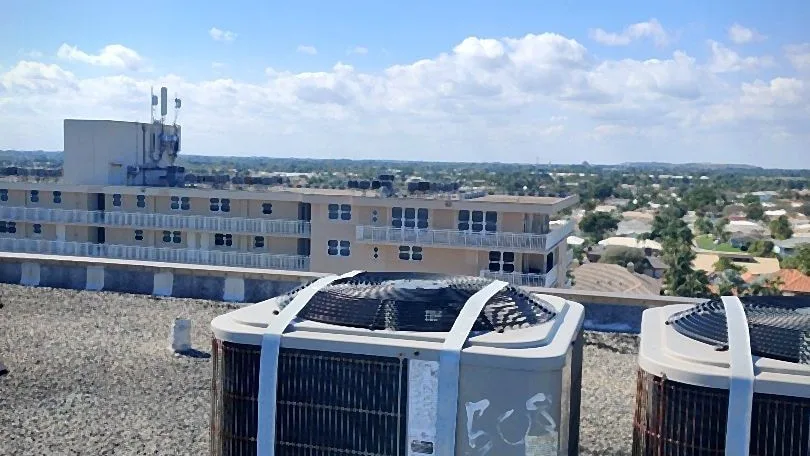
What does a whole-home dehumidifier do that the AC doesn't?
Whole-home dehumidifiers come up often once a homeowner learns that an air conditioner only removes moisture as a byproduct of cooling. The pitch is straightforward: a dedicated unit tied into the ductwork removes water from the air on its own schedule, independent of whether the house needs cooling at that moment. That is genuinely useful in the right home. It is also frequently sold to houses that do not need it, when the actual problem is a sizing or duct issue the AC itself should be handling. Sorting out which situation is yours is the point of this comparison.
A whole-home dehumidifier removes moisture from the air on its own cycle, whether or not the house currently needs cooling. It ties into the existing ductwork, draws in humid air, passes it over its own cold coil to condense the moisture out, then reheats the air slightly before returning it to the house — so it can dry the air without over-cooling the room the way running the AC longer just to chase humidity would.
Independent of the thermostat's temperature demand
That independence is the entire value proposition. An air conditioner stops removing moisture the moment it satisfies the thermostat, regardless of how humid the house still feels. A dedicated dehumidifier keeps working on humidity specifically, which matters most in the shoulder seasons and mild days when the AC is not running much but the air is still heavy.
Adding a dehumidifier on top of an oversized, short-cycling AC treats the symptom while leaving the actual cause in place.
United A/C & RefrigerationWhen does a correctly sized AC already handle humidity fine?
In most South Florida homes, a properly sized system running in long, steady cycles keeps humidity in a comfortable range without extra equipment. Because the climate here demands so many cooling hours, the AC gets far more opportunity to remove moisture than it would in a milder climate, and that alone resolves humidity for the majority of houses. If a home feels damp, the more common and less expensive fix is confirming the existing system is sized, charged, and cycling correctly, which we cover in more detail in our look at humidity control beyond the thermostat.
Don't skip the diagnosis
Adding a dehumidifier on top of an oversized, short-cycling system treats the symptom while leaving the underlying cause — and its other consequences, like uneven temperatures and higher bills — in place. The honest first step is always ruling out a correctable AC problem before adding a second machine.
What signs point toward genuinely needing one?
A handful of situations put a real moisture load on a house that a normally sized AC was never designed to remove. A home with an indoor pool or spa room, a large aquarium, a laundry area without outside venting, or a converted space like a home gym or plant room generates far more moisture than typical living space. Homes that sit largely unoccupied for stretches — a seasonal residence, for instance — run the AC lightly enough that humidity can creep up between visits regardless of sizing. Ground-floor rooms in older construction near grade, or spaces with a history of persistent musty odor despite a well-functioning AC, are also candidates worth a closer look.
Comfort in the shoulder seasons
A house that feels noticeably clammy on mild days when the AC barely runs, even though it feels fine during peak summer, is describing exactly the gap a dedicated dehumidifier is built to close.
How does a whole-home unit actually integrate with the system?
A ducted whole-home dehumidifier is installed alongside the existing air handler, typically tying into the supply and return ductwork with its own dedicated drain line, and it is controlled by its own humidity setpoint rather than the thermostat's temperature setpoint. The two systems run independently but share the same ducts to distribute air, which means the installation has to account for the house's existing duct layout and available space, usually in the attic or a mechanical closet near the air handler. It is a real mechanical addition to the home, not a plug-in accessory, which is why it is worth having assessed alongside the AC itself rather than as a separate purchase.
What are the tradeoffs before adding one?
A whole-home dehumidifier is another piece of equipment with its own filter, coil, drain line, and electrical connection, all of which need periodic attention the same way the AC does. It takes up mechanical space, typically in the attic, and adds a component that can itself fail or need service. For a home with a genuine moisture load it cannot solve any other way, that upkeep is a reasonable trade for a house that is finally comfortable in the shoulder seasons. For a home whose real issue is an oversized or leaky-duct AC system, the added equipment is an ongoing cost solving the wrong problem. The honest answer for most houses is to fix the AC's sizing and duct sealing first and reassess from there.
Where whole-home units make the most sense in South Florida
The clearest local case for a dedicated dehumidifier is the shoulder-season gap — the stretch in late fall and winter when temperatures are mild enough that the AC runs only briefly each day, but the air is still humid enough to feel uncomfortable without it. A home in western Broward or inland Palm Beach that feels crisp and dry in July but clammy in December is describing that gap precisely. Older mid-century homes with slab foundations and minimal vapor barriers, and ground-floor units in some condo buildings, can also carry a persistent moisture load from below that a dedicated unit addresses more directly than the AC alone. Seasonal residents who leave a home lightly conditioned for weeks at a time are a genuine use case too, since an unattended house with a light cooling load can drift humid regardless of how well the AC itself is sized. Outside of these situations, most full-time, well-insulated South Florida homes with a correctly sized system do not need the extra equipment — the deciding factor is the specific moisture load of the house, not the general climate.
Serving Broward County and southern Palm Beach County from our shop in Deerfield Beach.
Questions and answers
Is a whole-home dehumidifier the same as a portable unit, just bigger?
No, they work differently. A portable unit dehumidifies one room on its own and needs its reservoir emptied or drained manually. A whole-home unit ties into the ductwork, dehumidifies air distributed through the whole house, and drains automatically through a dedicated line, closer in scope to the AC itself than to a room appliance.
Will a whole-home dehumidifier lower my cooling costs?
Not directly, and it is not really an efficiency device. It runs on its own electrical draw to handle moisture the AC would otherwise have to run longer to remove. Its value is comfort and consistency, particularly in the shoulder seasons, rather than a reduction in the cooling bill.
Can I add one to an existing system, or only during a new install?
It can typically be added to an existing system as long as there is reasonable access to the ductwork and a suitable spot for the unit and its drain line. It does not require replacing the AC. The practical question is space and duct layout, which is worth having assessed at the home.
How do I know if it's the AC or the house that's causing the humidity?
Start with the AC: confirm the system is correctly sized, cycling in long runs rather than short bursts, and that the ductwork is sealed. If humidity persists in mild weather when the AC barely runs, or in a specific room with an obvious moisture source, that points toward a genuine gap a dehumidifier would close rather than an AC problem.
Does a whole-home dehumidifier need regular maintenance?
Yes, similar in kind to the AC itself — a filter to check, a coil that can need cleaning, and a drain line that can clog the same way an AC's condensate line can. It is reasonable to have it checked alongside your regular AC maintenance visits rather than as a separate schedule.
Is it worth it for a home that already feels comfortable in summer?
Only if there is a specific gap the AC is not covering, most often mild-weather clamminess or a persistent moisture source. A home that is comfortable year-round with a well-sized AC generally does not need the added equipment, and it is worth confirming that before spending on one.
How we know this
This advice comes from what our technicians actually find on service calls in Broward County and southern Palm Beach — not from national HVAC copy. Salt-air corrosion on the barrier island, drain lines that block every wet season, and equipment running nine months a year are local realities, and they change the right answer.
Worth disclosing: we install Amana equipment, so we are not an independent reviewer. Where a brand or product is discussed we say what it is good and bad at, and we will tell you when the honest answer is to repair what you have or do nothing yet.
Talk to a technician
Have a question this raised? The assistant answers what it can, takes your details, and hands you to a real person who confirms the day and time.