
Setting the AC for an empty Florida home in summer
An empty house in a Florida summer is under quiet pressure from humidity, with nobody there to notice. Here is the thermostat strategy that actually protects a vacant home, whatever the reason it is sitting empty.
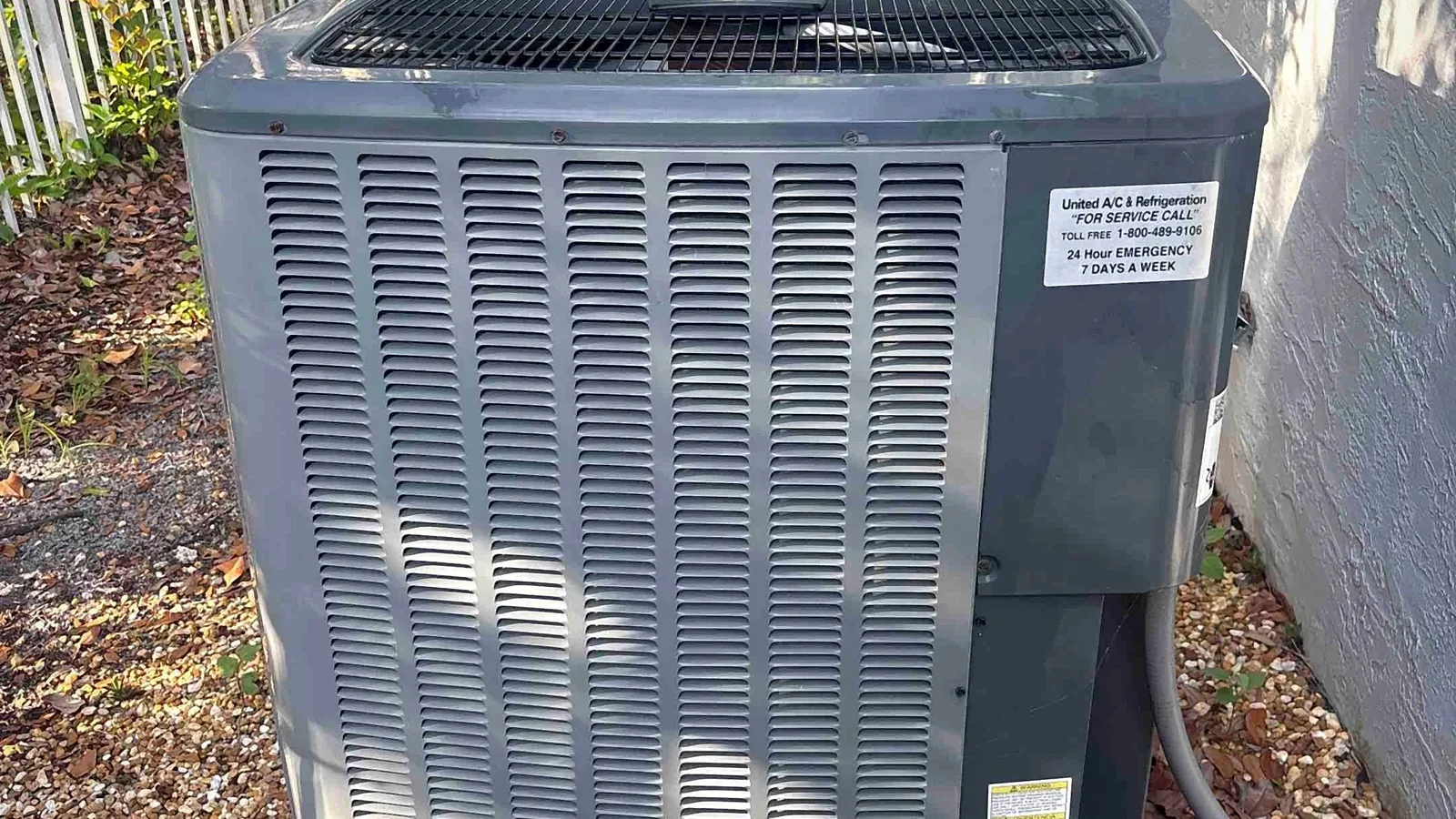
Why is turning the AC off not the safe option when a house is empty?
An empty house in a Florida summer is not a house at rest; it is a house under quiet pressure from humidity with nobody there to notice. Whether it sits empty for a week between renters, a month while an estate is settled, or a season while a snowbird owner is elsewhere, the same question comes up: what should the thermostat actually be set to when no one is living in it? The honest answer is not off, and it is not the normal daily setting either. It is something in between, chosen specifically to manage humidity rather than comfort.
Because the house keeps absorbing moisture whether anyone is inside it or not. South Florida's outside air carries enough humidity for most of the year that it pushes into a closed building through ordinary construction gaps, and without a running system to pull that moisture back out, indoor humidity climbs steadily rather than staying wherever it was when the door closed.
What high indoor humidity actually does
Once relative humidity indoors sits high for an extended stretch, mold has what it needs to start growing on drywall, in closets, behind furniture, and inside cabinetry, and by the time it is visible it has usually been developing for a while. Wood furniture and doors can swell or warp, and the musty smell that greets someone opening up a closed house is the smell of that process already underway, not a warning of something about to happen.
An empty house in South Florida is not resting; it is quietly losing a fight with humidity that only a running system can win.
United A/C & RefrigerationWhat thermostat setting actually protects an empty house?
The goal is a modest setback, not a full shutdown and not the normal daily temperature either. Running the system enough to keep the air moving and the humidity in a reasonable range, generally not much above the high seventies, lets the air conditioner's normal dehumidifying work continue at a reduced pace without the cost of cooling an empty house to a comfortable daily temperature nobody is there to enjoy.
Humidity control matters more than the exact number
If the thermostat or system supports a dedicated humidity setting, using it alongside the temperature setback gives more direct control than temperature alone, since a house can technically hold a reasonable temperature while still sitting at an uncomfortably high humidity. The specific number matters less than the principle: keep the system cycling regularly rather than picking a setting so high it barely runs at all.
Does closing the blinds or leaving fans on help while the house is empty?
Closing blinds and curtains helps modestly by reducing the solar heat load coming through south- and west-facing windows, which eases the system's job without adding any humidity risk of its own. Leaving ceiling fans running is generally not worth it in an empty house; fans cool people by moving air across skin, and with no one there to feel that effect, a fan running for weeks is simply spending electricity for no benefit.
What is worth doing instead
A whole-house dehumidifier, or a properly sized portable one in a problem area like a windowless bathroom or a closet prone to feeling damp, can supplement the AC's humidity control in a house that struggles even at a reasonable thermostat setting, particularly one with a known moisture issue.
How do I know if the setting is actually working while I am not there?
A smart or Wi-Fi-capable thermostat that reports temperature and humidity remotely removes the guesswork, letting you check in from anywhere and catch a problem, a tripped breaker, a system that stopped responding, a humidity reading climbing despite the setting, before it has weeks to develop into something worse.
Short of that, having someone check the house physically on a regular schedule and simply confirm it does not feel warm, humid, or musty is a reasonable substitute. Either way, the setting only protects the house if something is actually watching to confirm it is working, since a setback that silently failed halfway through the absence does no more good than never setting it in the first place; a system that is properly serviced beforehand is also simply less likely to fail unattended. A fresh filter before the house is left empty removes one more variable, since a clogged one can quietly restrict airflow enough to undercut the whole strategy without tripping any alarm.
Why this is a genuinely Florida problem, not a general one
An empty house sitting in dry, low-humidity air can go a long time with the system off and suffer little for it; an empty house in South Florida cannot, and that difference is the whole reason this topic gets asked about here specifically. The humidity load that makes the region uncomfortable to be in without air conditioning in the first place is the same load working against an unattended, closed-up house every hour it sits empty, month-round rather than for a short summer stretch. A vacant rental between tenants in Coconut Creek, a seasonal condo near Highland Beach, a home going through probate or a slow sale, and a construction-complete house waiting on a buyer all face the identical version of this problem, and the fix is the same regardless of why the house is empty: keep the system cycling at a humidity-appropriate level rather than shutting it down to save on a bill nobody is watching. Property managers and real estate agents who handle vacant South Florida homes regularly treat this as standard practice for exactly this reason, not as an extra precaution.
Serving Broward County and southern Palm Beach County from our shop in Deerfield Beach.
Questions and answers
What temperature should I set my AC to if my house will be empty for a few weeks?
A modest setback that keeps the system cycling regularly, generally not much above the high seventies, does the job without cooling an empty house to a normal daily comfort temperature. The specific number matters less than making sure the system still runs often enough to keep pulling humidity out of the air, rather than sitting mostly idle at a very high setting.
Will mold really grow that fast in a closed-up house?
It can develop faster than most people expect once indoor humidity climbs and stays high, particularly in a warm South Florida house with no air movement. It does not usually happen in a day or two, but over several weeks of a fully shut-down system it becomes a real risk, and the growth is often already underway by the time anyone notices a musty smell.
Is a dehumidifier a good substitute for running the AC in an empty house?
A dehumidifier can help supplement the AC in a problem area, but it is not usually a full substitute for keeping the air conditioner running at some level, since the AC is also managing heat buildup and general air movement throughout the house. The two working together cover more ground than either alone in a house sitting empty through the summer.
Does this apply to a house that will only be empty for a weekend?
The risk scales with time, so a weekend is far lower stakes than a month, and a normal thermostat setting left alone for a couple of days is unlikely to cause a problem. The setback strategy matters most once the absence stretches into weeks or months, which is when unmanaged humidity has enough time to actually take hold.
Can I just set the thermostat to the coldest setting instead to be safe?
There is no benefit to that over a modest setback, and it costs considerably more to run a system cooling an empty house to a low daily-comfort temperature for weeks or months at a time. The goal is humidity control at a reasonable setting, not maximum cooling with nobody there to use it.
What is the biggest mistake people make with an empty house here?
Turning the system fully off to save on the electric bill while away, which removes the AC's humidity control entirely at the exact time the house needs it most. A modest, humidity-appropriate setback almost always costs less in the long run than the cleanup from a house that sat closed with no cooling at all.
How we know this
This advice comes from what our technicians actually find on service calls in Broward County and southern Palm Beach — not from national HVAC copy. Salt-air corrosion on the barrier island, drain lines that block every wet season, and equipment running nine months a year are local realities, and they change the right answer.
Worth disclosing: we install Amana equipment, so we are not an independent reviewer. Where a brand or product is discussed we say what it is good and bad at, and we will tell you when the honest answer is to repair what you have or do nothing yet.
Talk to a technician
Have a question this raised? The assistant answers what it can, takes your details, and hands you to a real person who confirms the day and time.