
Cooling a 55-plus community condo
A condo in an active-adult community runs on a different clock than a single-family house, from the equipment allowed on the building to who is home during the day. Here is what actually makes cooling one different.
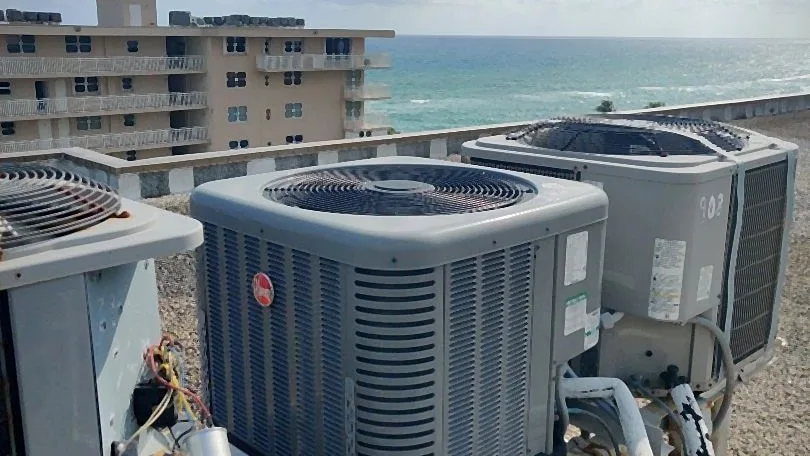
What kind of AC system does a 55-plus condo usually have?
Cooling a condo in a 55-plus community is not a smaller version of cooling a house; it runs by a different set of rules. The equipment itself is often a different type than what goes into a single-family home, any work usually needs board approval and a certificate of insurance before a technician can even get in the building, and the people living there tend to be home for more of the day, which changes how many hours the system actually runs. None of that is a downside so much as a different set of realities, and understanding them is what keeps a condo comfortable without a surprise at the association meeting.
It depends heavily on the building's age and layout. Many older Florida condo buildings, including a large share of active-adult communities built through the 1970s to 1990s, use packaged or through-the-wall units that combine the indoor and outdoor components into a single unit mounted at the exterior wall, rather than a split system with a separate outdoor condenser. Some newer or renovated buildings have moved to compact split or ductless systems where the layout allows it. The type installed in your unit is often dictated by what the building was designed for and what the association permits, more than by personal preference, so it is worth confirming what you actually have before assuming a repair or replacement will look like a typical house job.
A condo built for daytime occupancy is asking more of its system, hour for hour, than a house that gets a rest while everyone is at work.
United A/C & RefrigerationWhy does daytime occupancy change how these systems should be sized and run?
A household where everyone works during the day gives a system a natural rest period; a home occupied all day does not. Many residents in 55-plus communities are home for much or all of the day, which means the system logs more run hours than the same-sized unit would in a working household, and consistent, steady comfort matters more than a system that is only asked to perform well for a few evening hours. That has real implications for sizing and for how tightly a system should be maintained, since there is less downtime built into the daily cycle to compensate for a unit running below its capacity.
What does the approval process look like for repair or replacement?
Most 55-plus condo associations require some combination of board notification, a certificate of insurance from the contractor, and scheduling within building rules before any AC work begins, and many restrict work to certain hours or days out of consideration for neighbors on shared walls. This adds a step a single-family homeowner does not have to think about, and it is worth building that lead time into the plan rather than discovering it the day equipment fails. On a replacement, confirming what the association requires before scheduling saves a delay once the crew is already on site.
Are there special comfort and health considerations here?
Often, yes. Many residents in active-adult communities are more sensitive to heat, and consistent humidity control affects comfort and, for some, respiratory health more directly than it would for a younger household. Filtration and indoor air quality become a more meaningful conversation in this setting, and it is reasonable to ask about air quality options alongside a standard repair or replacement rather than treating it as a separate purchase later.
What should I know before replacing an aging package unit?
Much of this housing stock dates to the same building boom, which means a large share of original package units are approaching or past a reasonable service life around the same time across a given building. That is worth knowing both for planning your own replacement and for understanding why a neighbor's unit may be failing around the same time yours starts acting up — it is often the building's age doing the same thing to multiple units, not a sign anything was done wrong.
Access is also worth planning for early. A through-wall unit often has to be removed and replaced from an exterior walkway, balcony, or a shared building space, which can mean coordinating a freight elevator reservation, protecting hallway finishes, or working within hours the association sets for noise. None of that changes the underlying repair or replacement, but it does change the timeline, and it is easier to plan around than to discover the morning a crew arrives.
Active-adult communities across Broward and southern Palm Beach
Broward and southern Palm Beach County have a long history of large 55-plus condo communities — developments like Century Village in Deerfield Beach and Pembroke Pines, Kings Point in Tamarac and Delray Beach, and Wynmoor in Coconut Creek, among many others, house tens of thousands of residents in buildings that mostly went up decades ago. Each community sets its own association rules for contractor access, insurance requirements, and permitted work hours, and those rules genuinely differ from one property to the next even within the same city, so what applied at a friend's building is not a safe assumption for your own. The equipment mix also varies by building phase and renovation history within the same community — older sections often still run original package units where newer or updated buildings may have split systems. Because so much of this housing was built in a similar window, we see building-wide patterns in what starts failing and when, which is part of why we ask about the specific community and building before quoting any work, rather than treating every condo the same way we would a single-family house.
Serving Broward County and southern Palm Beach County from our shop in Deerfield Beach.
Questions and answers
Can I replace my package unit with a split system in a 55-plus condo?
Sometimes, but it depends entirely on the building's design and what the association allows. Some buildings can accommodate a split or ductless conversion; others are built in a way that makes a package unit the only practical option, or the association simply does not permit the change. This needs to be confirmed for your specific building before assuming either option is available.
Does the AC in my unit belong to me or the association?
This varies by community and is usually spelled out in the association documents — some buildings treat the AC as the unit owner's responsibility entirely, others share responsibility for certain components. It is worth checking your specific association's rules, since it affects who arranges and pays for repairs.
Why does my condo feel humid even though the thermostat says it's cool?
Package and through-wall units in older buildings can struggle to remove humidity as effectively as a properly sized split system, especially if the unit is oversized for the space or aging. Consistent daytime occupancy also means the unit is asked to keep up continuously rather than getting a rest, which can leave humidity control lagging behind temperature control.
How long does the approval process usually take before work can start?
It varies widely by association, from a quick same-week sign-off to a longer process requiring board notification and a certificate of insurance on file. It is worth asking your association directly and building that time into your plans, particularly if a unit is showing early signs of trouble rather than waiting for a full failure.
Is it normal for several units in my building to need AC work around the same time?
Yes, and it is not a coincidence to worry about. A large share of the units in an older 55-plus building were often installed in the same general era, so age-related failures tend to cluster across a building rather than happen in isolation. It is a reasonable prompt to have your own unit evaluated if neighbors are starting to replace theirs.
Should I ask about air quality when I'm getting AC work done anyway?
It is worth raising, especially in a community where residents may have heat or respiratory sensitivities. Filtration and humidity control options can often be added alongside a repair or replacement rather than as a separate later project, and the assistant can help you think through whether it makes sense for your situation.
How we know this
This advice comes from what our technicians actually find on service calls in Broward County and southern Palm Beach — not from national HVAC copy. Salt-air corrosion on the barrier island, drain lines that block every wet season, and equipment running nine months a year are local realities, and they change the right answer.
Worth disclosing: we install Amana equipment, so we are not an independent reviewer. Where a brand or product is discussed we say what it is good and bad at, and we will tell you when the honest answer is to repair what you have or do nothing yet.
Talk to a technician
Have a question this raised? The assistant answers what it can, takes your details, and hands you to a real person who confirms the day and time.