
Why western Broward stays hot after dark
Ask anyone who has driven from the beach to Weston or Coral Springs on a summer evening: the air out west just does not cool off the same way. Here is the real reason, and what it means for how hard your AC works after sunset.
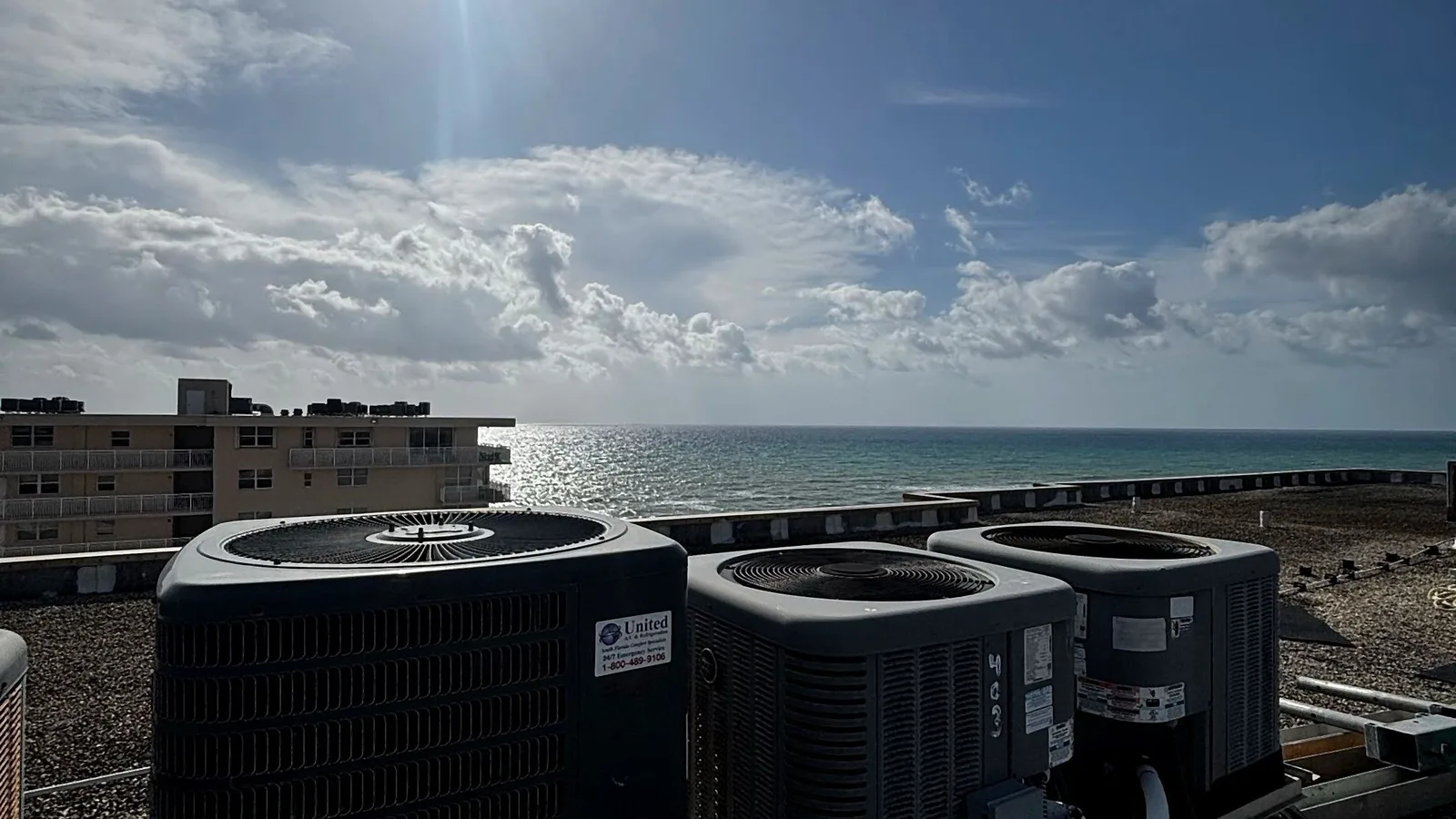
Why doesn't the ocean breeze reach the western suburbs?
There is a real, physical reason a summer evening in Weston or Coral Springs feels stickier and warmer than the same hour at the beach, and it has nothing to do with imagination. Two effects stack on top of each other in western Broward: the sea breeze that gives coastal neighborhoods their evening relief loses most of its punch by the time it travels inland, and the newer development that defines much of the west holds daytime heat in pavement and rooftops well past sunset. Together they push the evening cooling load higher than most people expect, and that has a direct effect on how an AC system should be sized and run.
The sea breeze that cools the coast each afternoon and evening is a shallow layer of air, and it weakens steadily as it moves inland, fighting friction from buildings and the rising heat coming off the ground itself. By the time that breeze would reach Weston, Pembroke Pines, Coral Springs, or Parkland, most of its cooling effect has already been spent closer to the water. Coastal Fort Lauderdale and Hollywood get a genuine temperature break as the sun goes down; communities fifteen or twenty miles west largely do not, and the gap can be several degrees on a still summer evening.
The sea breeze that gives the coast its evening relief has largely spent itself by the time it reaches the western suburbs.
United A/C & RefrigerationIs western Broward really an urban heat island?
In the practical sense, yes. A heat island forms wherever pavement, rooftops, and hardscape replace natural ground cover, because those materials absorb heat all day and release it slowly after dark instead of cooling quickly like open land or mature tree canopy does.
Newer development, younger landscaping
Much of western Broward was built out more recently than the older eastern neighborhoods, which means wide roads, large parking areas, tile roofs, and rock or mulch landscaping dominate, while the trees planted alongside them are still young and provide a fraction of the shade a decades-old canopy gives an established coastal block. The result is a landscape that soaks up heat efficiently all day and gives it back slowly through the evening.
What does this mean for how hard your AC runs at night?
It means the evening is not the break a thermostat schedule often assumes it is. A system programmed to ease off after the afternoon peak can find itself fighting a house that is still absorbing heat from a hot slab, a sun-warmed roof, and outside air that has not actually cooled much, well into the evening hours. This is one more reason an accurate load calculation for a western Broward home should account for the local evening conditions rather than a generic regional average, and it is worth discussing directly during a replacement so the new system is sized for the evening load you actually have, not the one a coastal home enjoys.
Do west-facing rooms make the evening worse?
Often, yes. A room that takes direct afternoon sun through west-facing windows keeps radiating that absorbed heat back into the space for hours after the sun is down, which is exactly the period the rest of the house is also fighting the heat-island effect outside. Homes with large west-facing glass, common in many newer western developments built for views or curb appeal, can see a noticeably harder evening pull in the room behind that glass than the rest of the house. Zoning, window treatments, and, in stubborn cases, a dedicated ductless unit for that room are the practical fixes rather than asking one central system to fight it alone.
What can a homeowner actually do about it?
A few things move the needle. Attic insulation and ventilation matter more here than the SEER rating alone, because they slow how much of that soaked-up roof heat migrates into the living space after dark. A programmable thermostat that pre-cools before the evening heat-island effect kicks in, rather than reacting to it, smooths the load. And keeping the system at full capacity through regular maintenance matters more in a climate where the evening never fully lets a system rest — a system running at reduced capacity has less margin out here than it would somewhere that actually cools down at night.
The coast-to-inland gap across Broward
Drive from the beach in Fort Lauderdale, Hollywood, or Pompano out to Weston, Pembroke Pines, Coral Springs, or Parkland on a summer evening and the difference is noticeable without a thermometer. The older eastern neighborhoods, built out over decades, carry mature tree canopy that shades streets and yards and helps the ground release heat faster once the sun sets; they also sit close enough to the water to catch a real evening breeze off the ocean or the intracoastal. The newer western communities trade that for wider lots, younger landscaping, and more pavement and rooftop per acre, which holds the day's heat later into the night. Neither pattern is a flaw in the neighborhood — it is simply how South Florida's coast-to-inland geography and its development history stack up. What it means practically is that a home in Parkland or western Coral Springs is often still shedding heat at nine at night that a Hollywood or Pompano home let go of an hour after sunset, and the cooling system has to be sized and run with that in mind rather than assumed to behave the same everywhere in the county.
Serving Broward County and southern Palm Beach County from our shop in Deerfield Beach.
Questions and answers
Is it actually hotter in western Broward, or does it just feel that way?
Both are real. The air temperature itself is often a few degrees warmer in the evening out west because the sea breeze that cools the coast weakens before it arrives, and the feel is amplified by pavement, rooftops, and younger landscaping releasing stored heat after dark, which coastal neighborhoods with mature canopy and an ocean breeze do not experience to the same degree.
Should my AC be sized differently because I live out west?
It is worth discussing during a load calculation rather than assuming a generic regional figure covers it. A home with significant west-facing glass, newer construction, and limited shade can carry a genuinely higher evening load than an older, tree-shaded coastal home, and a proper sizing conversation accounts for that rather than guessing.
Will planting trees actually help my cooling bill?
Over time, yes, though it is a long game. Mature shade trees measurably reduce the heat a home's roof and walls absorb during the day, which lowers both the daytime and evening cooling load. It will not change anything this summer, but a homeowner planning to stay in a newer western home for years is investing in exactly the shade older eastern neighborhoods already have.
Does the heat-island effect make my system wear out faster?
It can contribute. More run hours in the evening, on top of the standard South Florida daytime load, add up over a system's life the same way any extra run time does. It is one more reason maintenance and correct sizing matter more here than in a climate where equipment gets a real overnight rest.
Why does my west-facing bedroom never cool down at night?
Glass and walls that absorbed direct afternoon sun keep radiating that heat back into the room for hours afterward, right as the rest of the neighborhood is also still shedding heat from pavement and rooftops. Window treatments, added shade, or a dedicated zone for that room are usually more effective than asking the whole-house system to compensate.
Does this affect humidity too, not just temperature?
Indirectly, yes. A system working harder into the evening to overcome the heat-island effect needs to keep running long enough to also pull humidity out of the air, and a system that is undersized for the actual evening load can leave a home feeling both warm and clammy well after sunset. Tell the assistant about your home's orientation and layout and we can talk through it.
How we know this
This advice comes from what our technicians actually find on service calls in Broward County and southern Palm Beach — not from national HVAC copy. Salt-air corrosion on the barrier island, drain lines that block every wet season, and equipment running nine months a year are local realities, and they change the right answer.
Worth disclosing: we install Amana equipment, so we are not an independent reviewer. Where a brand or product is discussed we say what it is good and bad at, and we will tell you when the honest answer is to repair what you have or do nothing yet.
Talk to a technician
Have a question this raised? The assistant answers what it can, takes your details, and hands you to a real person who confirms the day and time.