
Lighthouse Point AC Repair & Service, for the canal-front city.
A compact city of single-family homes threaded with canals, where pulling moisture out of the house matters as much as the number showing on the thermostat. About 11,000 residents, housing that is predominantly 1950s–1970s.

Why humidity outranks heat here
A compact, almost entirely single-family city laced with canals. Waterfront homes everywhere means humidity and salt without the high-rise density of its neighbors.
Because canals reach into nearly every block, the air over this city carries moisture that never entirely leaves. Heat is the obvious problem and the easier one, since any system with capacity will drop the temperature. Removing water vapor is slower work, and it only happens while the equipment is genuinely running, which is why an oversized unit satisfies the thermostat, shuts off early, and leaves a house cold and clammy at once. Owners tend to describe that as a musty feeling rather than a cooling fault, so it goes unreported for years. Adequate run time is the remedy, which makes the sizing question genuinely important, alongside dedicated moisture control where the load justifies it.
Houses built in the 50s and 60s on canal lots sit in permanent humidity. Their original systems were sized for temperature alone, which is why so many feel cold and clammy at the same time.
Nearly every home sits on or near a navigable canal with direct Intracoastal access.
ZIP code 33064.
Single-family houses on waterfront lots
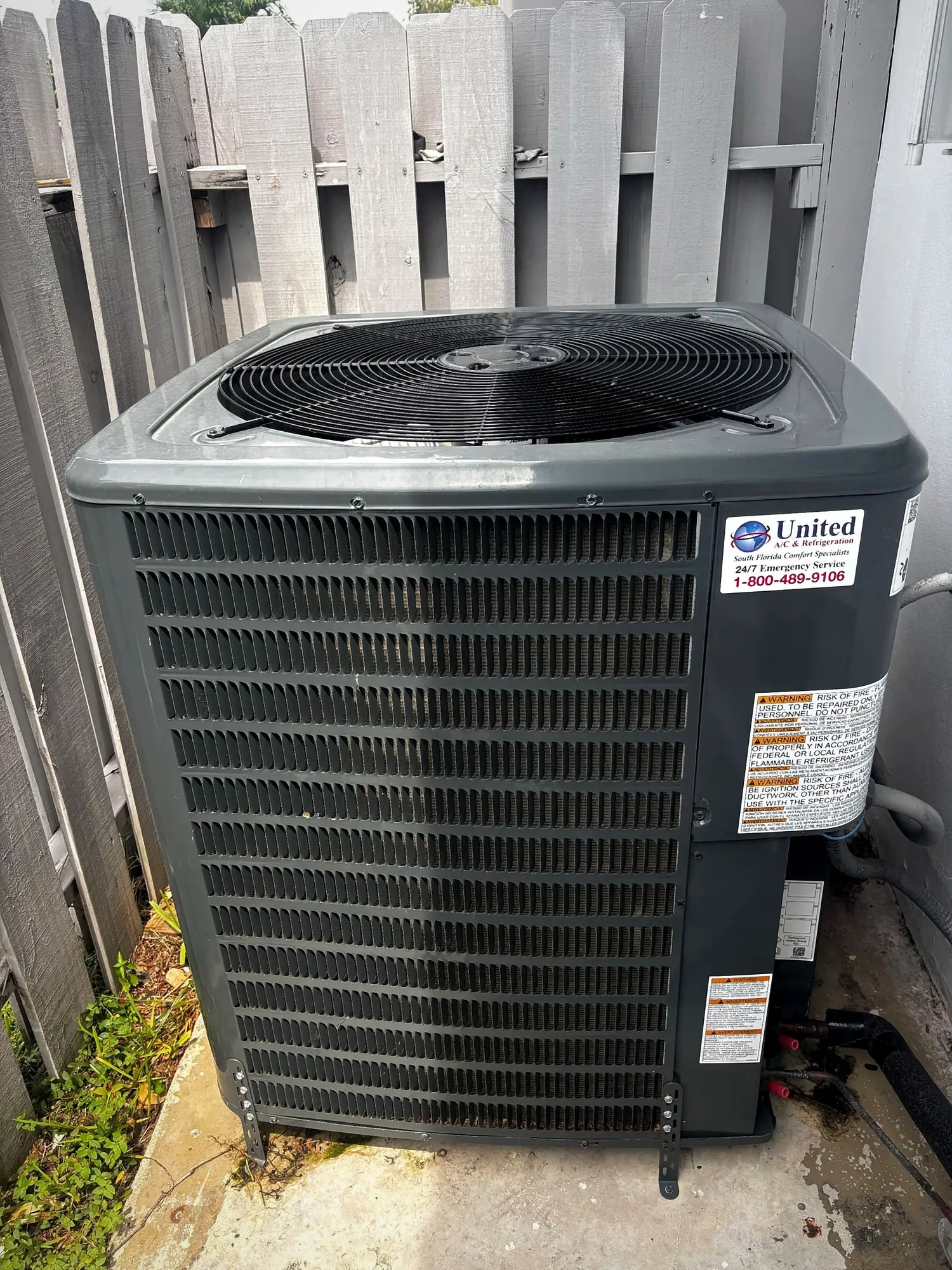
Almost all of the housing is detached and owner-occupied, built between the 1950s and the 1970s on lots that back onto water. Those houses generally put the air handler in an interior closet and the condenser in a side yard, which makes both reachable without a lift and simplifies the work considerably compared with the towers up in Hillsboro Beach. The complications sit elsewhere. Original ducts run through hot attic space and, where insulation has compressed over decades, they sweat and lose air. Drain lines matter more here as well, since a system pulling this much water needs somewhere dependable to send it, and a blocked line finds the ceiling.
A city built on canals
Nearly every street here touches water. That means persistent humidity load, and systems that must dehumidify well — not just blow cold air — to keep a house genuinely comfortable.
Lighthouse Point is overwhelmingly houses people live in year-round, so equipment runs hard and steadily. Maintenance pays off here more than almost anywhere.
We are minutes away in Deerfield Beach. For a city this size, that proximity is the difference between waiting and being handled.
the Hillsboro Inlet Lighthouse, the city marina and Frank McDonough Park — 4 miles out.
Steady homes, steady equipment wear
Year-round occupancy shapes the calls we get. Equipment in this city rarely sits idle, so it accumulates hours steadily instead of resting for months and then being shocked back into service, and wear shows up as gradual decline rather than sudden failure. That makes upkeep unusually worthwhile, because a system caught drifting is a tune-up and a corrected charge instead of a replacement conversation. Salt still reaches equipment nearer the inlet, less aggressively than out on the sand but enough to warrant attention to the outdoor coil. Our technicians come to the house, which in a city this compact means short travel and flexible timing. If the place feels damp or one room lags behind the rest, describe it to the assistant rather than guessing at the cause.
Across Lighthouse Point.
The canal district, Venetian Isles, Coral Key and Lake Placid share one profile: detached houses from the same building decades, equipment sitting in closets and side yards, water close by. A technician who has worked one has largely worked the others. Where they differ is small and practical. Lot orientation, how much mature shade a property has kept, and how directly a house faces open water all change how hard a condenser works through a long afternoon.
Lighthouse Point neighborhoods
All areasYour Lighthouse Point neighbors.
★★★★★ 4.7 on Google
House always felt damp on the canal. They explained the difference between cooling and dehumidifying and sorted it properly.
They are right up the road and it shows — quick to arrive, familiar with the area. Our go-to now.
Clear pricing, clean work, no mess left behind. Exactly what you want in your own home.
Common questions from Lighthouse Point.
A Lighthouse Point street or ZIP is all it needs.
Does living on a canal affect my AC?
It affects humidity most. Waterfront homes carry a heavier moisture load, so a system that only cools without dehumidifying properly will leave the house feeling clammy even at a low thermostat setting.
Do you handle the whole city?
Yes — Lighthouse Point is compact and entirely within our core area, from the canal district and Venetian Isles through to the neighborhoods near the marina.
How does salt exposure compare to the beach towns?
Somewhat gentler than true oceanfront, but still real, especially closer to the inlet. Waterfront equipment here benefits from the same coil care we recommend along the coast.
Would a dehumidifier help, or should I replace the air conditioner?
Both are legitimate answers, and the right one depends on why the house is holding moisture. If the air conditioner is oversized and cycling off too quickly, correctly sized equipment fixes the cause outright. If the equipment is already right and the load is simply heavy, a whole-house dehumidifier working alongside it is the sounder investment. We measure indoor humidity and actual run time before recommending either, because guessing between the two wastes the owner's money.
Should I leave the fan running continuously to even out the rooms?
It is a common instinct and in a waterfront house it usually backfires. Continuous fan operation blows air across a coil that is still wet after the compressor stops, which re-evaporates that water and sends it straight back into the rooms you just dried out. Leave the fan on automatic. Where temperatures differ noticeably between rooms, the cause is nearly always airflow or duct balance, and that is worth diagnosing properly.
Which Lighthouse Point streets are in range?
the canal district, Venetian Isles, Coral Key and Lake Placid — ZIP code 33064. We are 4 miles out, running it with Pompano Beach, Deerfield Beach and Hillsboro Beach.

Lighthouse Point’s local AC team.
A canal city where humidity is the real opponent. We fix how the house feels, not just what the thermostat reads.