
Labor Day week: replacement season
Labor Day gets marketed as a deal weekend for everything from mattresses to cars, and cooling equipment gets swept into that same pitch. Here is the honest version: why this particular week is genuinely a sensible time to plan a replacement, separate from whatever any ad claims about a specific offer.
Why is Labor Day actually a sensible time to think about replacement?
Every appliance category runs a Labor Day sale, and air conditioning is no exception, which makes it easy to be skeptical of any post built around the holiday. The skepticism is fair. But underneath the marketing calendar, there is a real, practical reason early September is a sensible time to think about replacing a cooling system in South Florida: it is the first calm moment after the hardest months a system will face all year, which means you finally have clear information about how the equipment actually performed. Whether any specific offer exists right now is a question for the assistant to answer honestly, not a claim this page will make. What follows is the case for the timing itself.
Because you now have real evidence. By early September, a system has just finished the most demanding stretch of the year — the sustained heat and humidity of June through August — and however it performed during that stretch is the clearest picture you will get of its true condition. A system that struggled, ran constantly, or needed repairs during peak summer has told you something real, and that information is freshest right now.
The backlog eases
Scheduling pressure that builds through the hottest months typically loosens in early fall as emergency no-cooling calls taper off. That generally means more flexibility to plan a replacement properly — getting a correct load calculation, comparing options, and choosing installation timing — rather than making a rushed decision during a breakdown in July.
A season of margin before next summer
A system installed in September has months of milder weather to settle in before it faces its first real peak-load summer. That is a gentler start than a system installed under emergency pressure in August, and it gives you time to notice and address any adjustment issues well before the stakes are highest.
The best reason to replace a system in September is what this past summer just told you about it, not the date on the calendar.
United A/C & RefrigerationIs a Labor Day sale actually a good deal, or just marketing?
It depends entirely on the specifics, and this page will not guess at them. Retail calendars attach sales to every major holiday regardless of whether the underlying economics changed, and cooling equipment is not exempt from that pattern. The honest answer is that current promotions, when they exist, are something the assistant can tell you about directly — ask, and you will get a straight answer about what is actually available right now, not a number printed months in advance on a page that cannot know what will be true when you read it.
What actually determines value
The real savings in a replacement come from correct sizing, a clean installation, and equipment matched to how hard you actually run your system — not from the week on the calendar you signed the paperwork. A rushed decision made because a sale ends Monday is a worse outcome than a well-planned replacement made on your own timeline, whatever the promotional calendar says.
How do I know if my system actually needs replacing, not just repairing?
The clearest signal is how this past summer went. A system that needed one or more repairs during peak season, that ran constantly without quite keeping the house comfortable, or that is old enough that parts are becoming harder to source, is showing real signs rather than hypothetical ones. Age alone is a rough guide — most cooling equipment in this climate, run as hard as it is here, starts becoming a harder case for repair somewhere in its second decade.
When repair still makes more sense
A system that had one isolated issue and otherwise performed well all summer is usually still a repair candidate, not a replacement one. The honest test is whether the summer's problems were a single fixable event or a pattern — repeated calls, rising energy use, or a technician noting that parts are becoming difficult to find. If it is the latter, early fall is a good time to start that conversation before another peak season arrives.
What should I actually do to plan a replacement this month?
Start with an honest assessment rather than a purchase decision. A proper walk-through looks at how the current system performed this summer, the condition of the ductwork, the size and layout of the home, and what level of equipment actually makes sense — not the biggest number on a brochure. That assessment is the same whether or not a promotion happens to be running.
From there, ask specifically about timing, current availability, and whatever offers exist, and get it in writing rather than relying on what an advertisement implied. A good replacement quote lays out the real tradeoffs plainly, and our efficiency calculator can help you think through what level of equipment is worth it for how you actually use the system, separate from any sale.
What early September looks like for South Florida cooling systems
By Labor Day, a South Florida system has already logged more run hours than most of the country will see all year, and it shows. The wet season is still active into fall, so humidity load has not really let up even as the peak heat starts to ease slightly, which means a struggling system does not get much of a break before the next round begins. Homes across Broward and southern Palm Beach vary widely in what this reveals — a mid-century house with original ductwork often shows its age clearly by September, while a newer build in a master-planned community may be showing early wear in less obvious ways, like rising humidity indoors rather than outright failure. Coastal properties add their own signature: outdoor units near the water that made it through summer often did so while quietly losing electrical components to salt exposure, issues that surface as intermittent problems rather than a single dramatic failure. Early fall, before the next wet season fully takes hold, is a reasonable window to address any of it while the pressure is off.
Serving Broward County and southern Palm Beach County from our shop in Deerfield Beach.
Questions and answers
Is Labor Day actually a good time to buy an AC, or is that just a sales gimmick?
The timing itself has real merit, separate from any marketing: you have fresh information about how the system handled peak summer, and scheduling tends to be more flexible than during July and August. Whether a specific sale is worthwhile depends on the actual offer, which is worth confirming directly rather than assuming from advertising.
What promotions are currently available?
This page will not state a figure, because promotions change and a fixed number here would likely be wrong by the time you read it. Ask the assistant directly and you will get an honest, current answer about what is actually available right now.
My AC made it through summer fine. Is there still a reason to replace it around Labor Day?
If it genuinely performed well all summer with no repairs and reasonable energy use, there is no urgency to replace it just because of the season. Early fall is a good time to plan ahead if the system is aging or you want to compare options, but a system that is working should keep working.
Is fall a better time to install than summer?
For most homeowners, yes. Scheduling is generally more flexible once the emergency no-cooling calls of peak summer taper off, which allows more time for proper sizing and planning. A fall-installed system also gets months to settle in before its first full peak season, rather than being pushed straight into extreme demand.
How do I compare a repair versus a replacement after a rough summer?
Look at the pattern, not a single event. One isolated repair on an otherwise solid summer usually still favors repair. Repeated calls, a technician noting hard-to-source parts, or a system that never quite kept the house comfortable despite running constantly are signs worth taking seriously as you weigh replacement.
Should I wait for a sale or just replace the system when I know it needs it?
If a system genuinely needs replacing, waiting on a hypothetical sale to save on the sticker price can cost more in the meantime through inefficiency, repairs, or a rushed decision if it fails suddenly. Ask what is currently available, but let the actual condition of the system, not the calendar, drive the timing.
How we know this
This advice comes from what our technicians actually find on service calls in Broward County and southern Palm Beach — not from national HVAC copy. Salt-air corrosion on the barrier island, drain lines that block every wet season, and equipment running nine months a year are local realities, and they change the right answer.
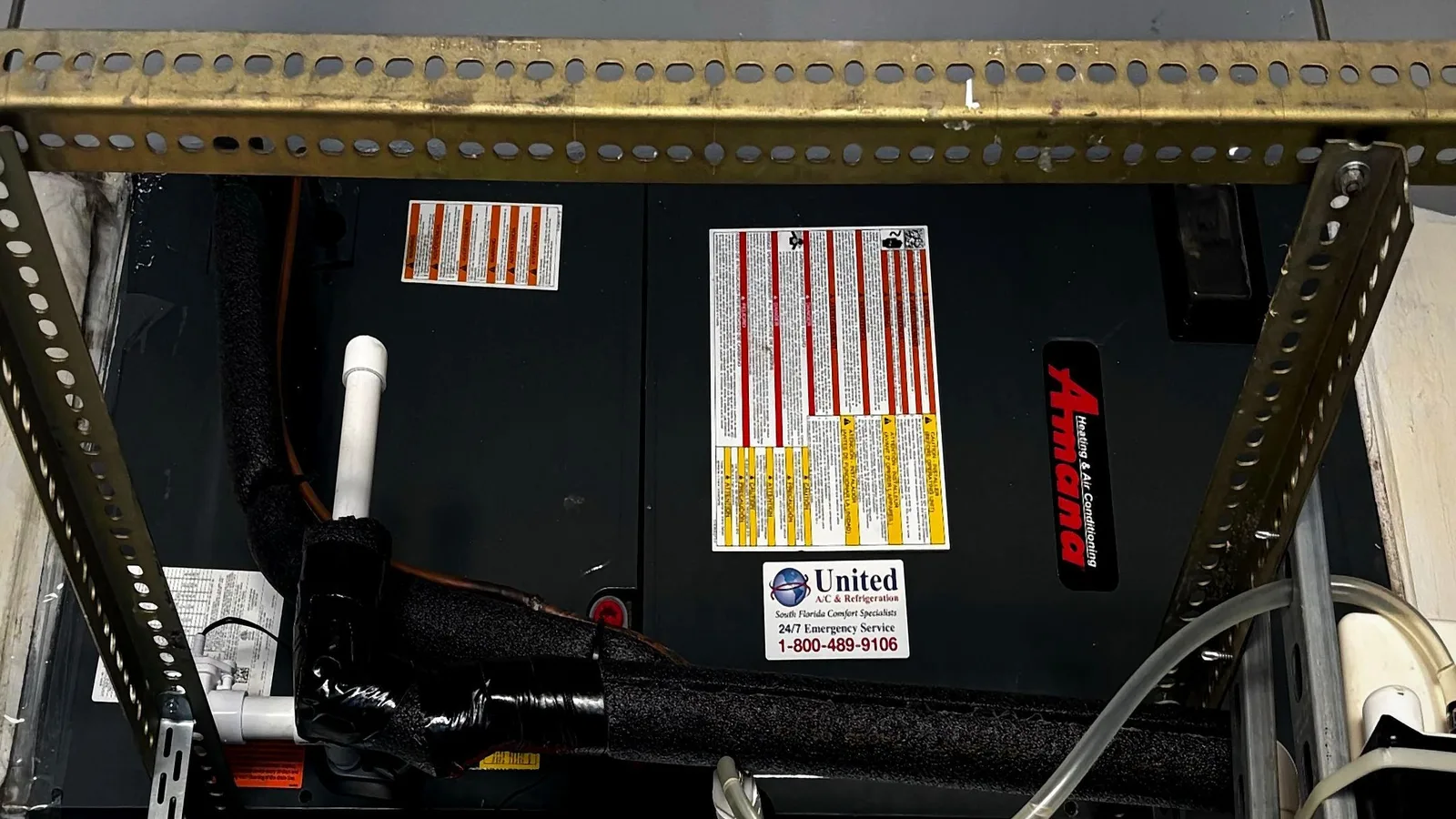
Worth disclosing: we install Amana equipment, so we are not an independent reviewer. Where a brand or product is discussed we say what it is good and bad at, and we will tell you when the honest answer is to repair what you have or do nothing yet.
Talk to a technician
Have a question this raised? The assistant answers what it can, takes your details, and hands you to a real person who confirms the day and time.