
Rooftop unit maintenance for retail
A rooftop package unit works out of sight and mostly out of mind, which is exactly why it fails without warning. Here is what real maintenance on one actually covers, how often a retail space needs it, and the roof-specific problems that get missed from the sales floor.
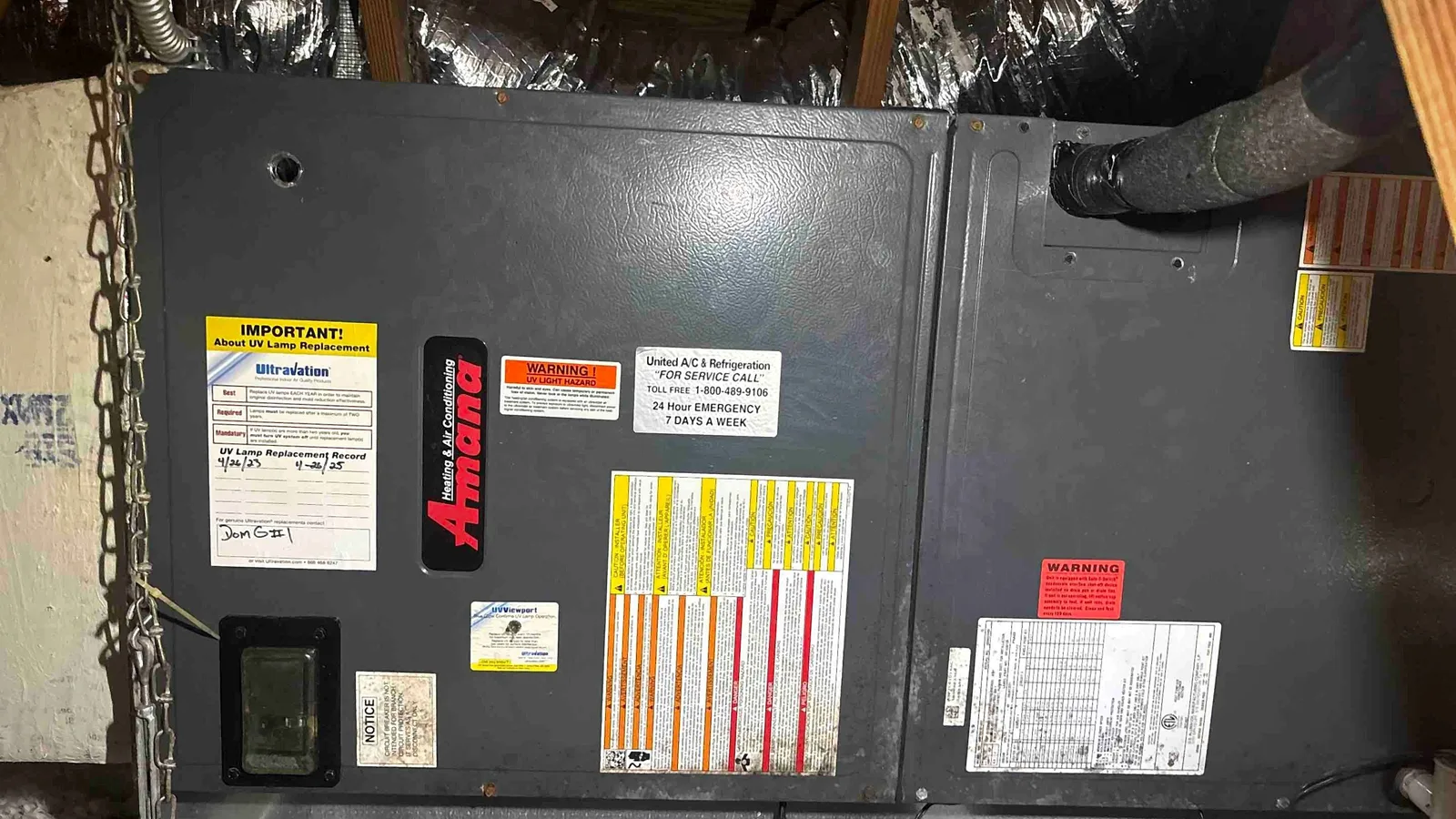
What does rooftop maintenance actually cover?
A rooftop package unit is easy to forget precisely because it sits above the ceiling tiles, out of every customer's line of sight, doing its job quietly until it does not. For a retail space, that failure rarely happens gently — it tends to show up as a hot sales floor on a Saturday afternoon. Real rooftop maintenance covers more than most owners assume, and a meaningful share of it has nothing to do with the mechanical equipment at all. Here is what a proper visit actually checks, on what schedule, and what gets missed when maintenance treats the unit and the roof as separate problems.
A thorough visit checks the refrigerant circuit, the electrical components, the airflow path, and the condition of the roof curb the unit sits on — four categories that fail in different ways and on different timelines.
The refrigeration side
Coil condition, refrigerant charge, and compressor operation get checked against the unit's expected readings. A coil coated in dust, pollen, and airborne debris from the roof surface loses its ability to reject or absorb heat efficiently, which is one of the most common and most preventable causes of a unit that runs constantly without keeping up.
The electrical and control side
Contactors, capacitors, and control boards take a beating from constant cycling and, on an exposed rooftop, from heat and moisture that indoor equipment never sees. A worn contactor or a failing capacitor is a leading cause of a unit that trips out mid-afternoon rather than failing cleanly.
The airflow side
Filters, belts on older units, blower wheels, and economizer dampers all affect how much conditioned air actually reaches the sales floor. A unit can be mechanically sound and still underperform badly if the air path to the ducts is restricted.
A rooftop unit rarely fails cleanly; it usually announces itself first as a rising utility bill, months before anyone notices the heat.
United A/C & RefrigerationHow often should a retail rooftop unit be serviced?
Twice a year is the baseline most retail spaces should plan around, with a spring visit ahead of the heaviest cooling season and a fall visit to catch anything that stressed the system over the summer. A retail store that runs extended hours, keeps its doors propped for foot traffic, or sits in a location with heavier roof debris or salt exposure benefits from more frequent checks than that baseline suggests.
The honest driver of frequency is run hours, not the calendar. A unit conditioning a space open twelve or more hours a day, seven days a week, accumulates wear far faster than a system in a building open weekday business hours only, and a maintenance schedule that ignores that difference under-serves the harder-working unit. A standing maintenance plan is generally the simplest way to keep a retail unit on the right cadence without tracking it manually.
What roof-specific issues get missed?
A maintenance visit that only opens the unit's access panels misses problems that live entirely outside the equipment itself, and these are some of the more consequential ones we find.
Curb flashing and roof penetration
The curb a rooftop unit sits on penetrates the roof membrane, and flashing around that penetration degrades over time from sun and weather. A failed seal there causes a roof leak long before it causes an equipment problem, and it is easy to miss unless someone is specifically looking at the curb rather than just the unit bolted to it.
Condensate drainage
A clogged or improperly sloped condensate line can back up onto the roof or, worse, into the building below, and it is a common cause of interior water damage that gets blamed on the roof rather than traced to the unit sitting on it.
Foot traffic damage
Anyone accessing the roof for other reasons — a sign installer, another trade, storm debris cleanup — can inadvertently damage ductwork, wiring, or the curb seal itself. A maintenance visit is often the only regular set of eyes that would catch this before it becomes a bigger repair.
What happens if maintenance gets skipped?
The first sign is rarely a dead unit; it is a rising utility bill and a sales floor that never quite feels right, months or a season before anything actually fails. A dirty coil, a low refrigerant charge from a small undetected leak, or a restricted air path all force the unit to run longer to hold the same setpoint, which shows up on the power bill well before it shows up as no cooling at all.
By the time a neglected rooftop unit does fail outright, the failure is often more expensive to fix than it would have been to prevent, because components stressed for months — a compressor working against a dirty coil, a motor bearing that was never lubricated — tend to fail harder than ones caught early. Regular preventive service is the difference between catching a failing capacitor on a scheduled visit and losing cooling on a Saturday with a sales floor full of customers.
What South Florida does to a rooftop unit
A rooftop unit here works harder and ages faster than the same equipment almost anywhere else in the country, for reasons specific to sitting exposed on a South Florida roof. Sun load on a dark roof surface pushes ambient temperatures around the unit well above the surrounding air, forcing the condenser to reject heat into air that is already hotter than what a wall-mounted or ground-level unit would see. Coastal properties add salt-laden air into the mix, which corrodes coil fins and electrical contacts on an exposed rooftop faster than it would on equipment tucked against a building at ground level. Storm season brings its own inspection entirely separate from routine maintenance: after any significant wind event, the curb seal, roof penetrations, and any loose panels or debris around the unit deserve a look, since storm damage to a rooftop unit often shows up first as a roof leak rather than a cooling complaint. Retail spaces that run long hours to capture South Florida's extended shopping season compound all of this with sheer run time, which is the single biggest driver of wear on any piece of cooling equipment.
Serving Broward County and southern Palm Beach County from our shop in Deerfield Beach.
Questions and answers
How long does a retail rooftop unit typically last?
It depends heavily on maintenance, exposure, and run hours rather than a single fixed lifespan. A well-maintained unit in a moderate location can run considerably longer than a neglected one in a harsh coastal or high-traffic environment. Regular maintenance is the single biggest factor an owner actually controls, more than the brand or the original installation.
Can rooftop unit problems affect the roof itself?
Yes, most commonly through the curb flashing or the condensate drain. A failed seal at the roof penetration or a backed-up drain line can cause water intrusion that shows up as an interior leak far from where the unit sits, which is why a thorough inspection looks at the roof connection, not just the equipment bolted to it.
Does an economizer need to be checked during maintenance?
Yes, where the unit has one. An economizer brings in outside air to reduce mechanical cooling load under the right conditions, and a damper stuck open or closed either wastes energy pulling in hot, humid outside air or fails to capture free cooling when conditions allow it. It is a component that is easy to overlook but affects both comfort and efficiency.
How do I know if my rooftop unit needs service now versus at the next scheduled visit?
Watch for a sales floor that struggles to hold temperature during the hottest part of the day, unusual noise from the roof, a spike in utility costs without an obvious cause, or visible water staining on ceiling tiles. Any of those is worth a call rather than waiting for the next scheduled maintenance date.
Is rooftop maintenance different from maintaining a ground-level or wall-mounted system?
The core mechanical checks are similar, but rooftop equipment adds inspection points that ground-level systems do not have: the curb and its flashing, the roof membrane condition around the unit, and greater sun and weather exposure overall. A technician servicing a rooftop unit should be checking the roof connection as part of the visit, not just the equipment itself.
How do I set up a maintenance schedule for my retail location?
Start with your operating hours and location, since both affect how often the unit actually needs attention. Tell the assistant how many rooftop units you have, your operating hours, and roughly where the building sits, and it will help you work out a sensible schedule and get it set up.
How we know this
This advice comes from what our technicians actually find on service calls in Broward County and southern Palm Beach — not from national HVAC copy. Salt-air corrosion on the barrier island, drain lines that block every wet season, and equipment running nine months a year are local realities, and they change the right answer.
Worth disclosing: we install Amana equipment, so we are not an independent reviewer. Where a brand or product is discussed we say what it is good and bad at, and we will tell you when the honest answer is to repair what you have or do nothing yet.
Talk to a technician
Have a question this raised? The assistant answers what it can, takes your details, and hands you to a real person who confirms the day and time.