
What refrigeration downtime actually costs
When a walk-in or a case goes down, the damage is rarely just the repair bill. Here are the actual components of that cost — lost product, lost revenue, health-code exposure, and the premium on emergency service — and why preventive maintenance is the cheapest insurance against all four.
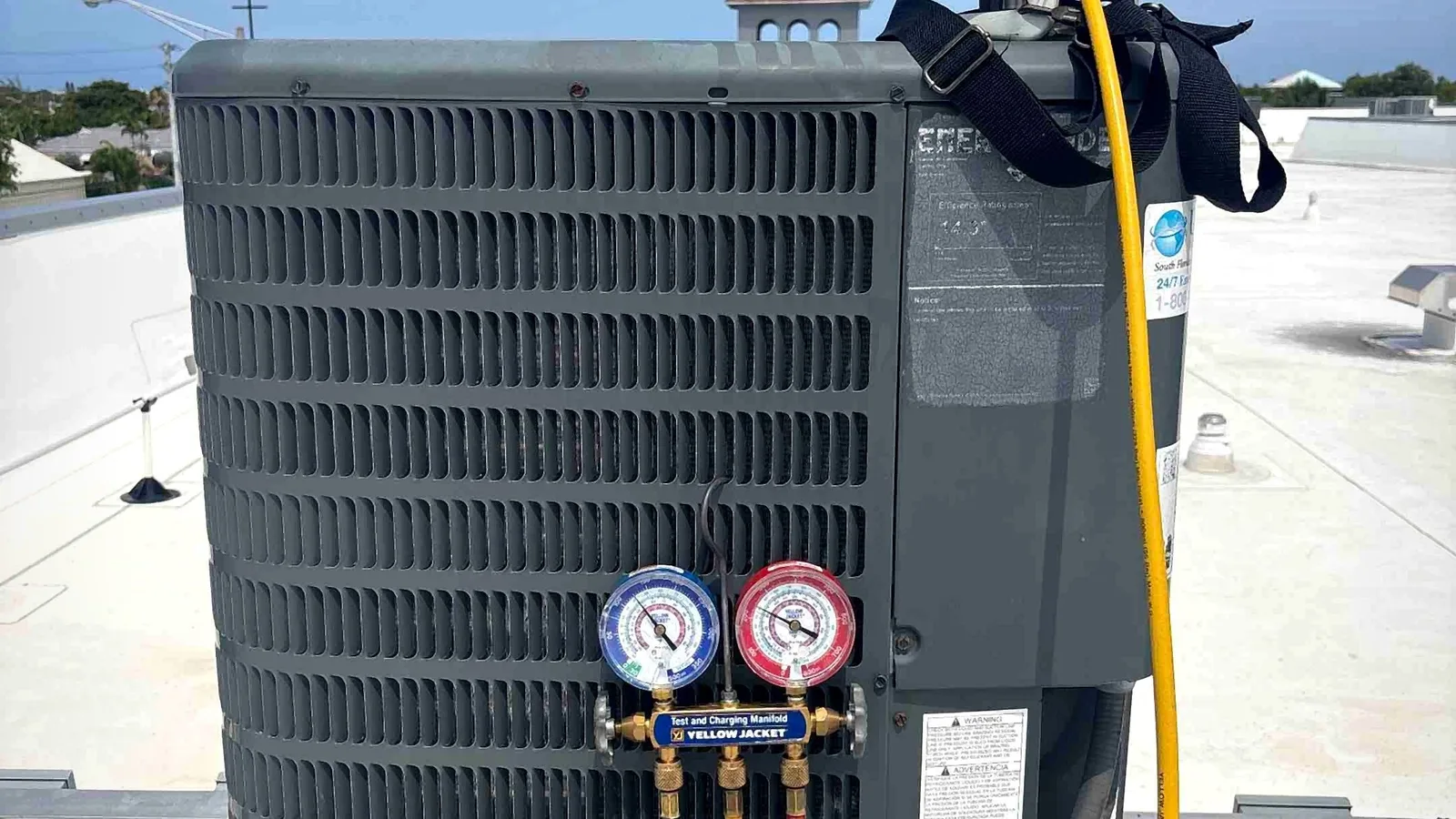
What actually happens when a walk-in or reach-in goes down?
Refrigeration downtime in a restaurant or retail kitchen is rarely just a repair. It sets off a chain of consequences that starts the moment a walk-in, reach-in, or display case stops holding temperature and does not fully end when the repair is finished. Understanding the actual components of that cost — without needing a single dollar figure to make the point — is what makes preventive maintenance an easy decision rather than a discretionary one. Here is what genuinely happens, piece by piece, when refrigeration goes down.
The clock starts immediately, and it runs whether or not anyone notices right away. Refrigerated product has a safe holding window that is measured in hours, not days, and once a unit stops maintaining temperature, every hour that passes narrows the options for what can still be safely served, moved, or salvaged.
The problem compounds while it's unnoticed
A failure discovered quickly, while temperatures are only marginally out of range, is a manageable event: product can be moved, ice can buy time, and the loss can be contained. A failure discovered hours later, after a closing shift or an overnight period, is a much larger event by the time anyone finds it, because the temperature drift has had time to compromise everything inside rather than just the most sensitive items.
It's rarely isolated to one piece of equipment
A single failed unit often means product gets redistributed into whatever cold storage remains, which stresses that equipment too and raises the odds of a second failure exactly when the kitchen can least afford one. This is part of why a single point of failure in a cold-storage plan is a real operational risk, not just a theoretical one.
Spoiled product is the cost you can see; the menu cut, the health-code exposure, and the emergency premium are the ones that add up quietly beside it.
United A/C & RefrigerationWhat does lost product actually cost a kitchen?
More than the wholesale value of what gets thrown away. Lost product is the most visible and easiest to quantify cost, but treating it as the whole cost understates the real exposure, because inventory lost to a failure is inventory that has to be replaced — often on short notice, sometimes at a worse price or from a backup supplier — before the kitchen can even get back to normal.
The scale of the loss also depends entirely on what was inside and how full the unit was. A walk-in stocked heavily ahead of a busy weekend, or a display case merchandised at full capacity, has far more at risk in a single failure than the same equipment running light. This is one honest argument for not over-stocking any single piece of equipment beyond what current business genuinely requires, particularly heading into a period where a failure would be hardest to absorb.
How does downtime affect revenue beyond the spoiled food?
Often more than the product loss itself, because a refrigeration failure frequently forces a menu cut, a temporary closure of an affected section, or an inability to serve items that depend on the equipment that failed. A kitchen missing key ingredients has to improvise a shortened menu on the fly, which affects every table for the rest of that shift, not just the items directly lost.
For a retail operation, a failed display case is a merchandising problem as much as a storage one — it takes product off the sales floor at the exact moment customers are looking for it, and an empty or covered case in a prominent spot affects the whole shopping experience, not just the missing items. Revenue lost this way rarely shows up on an inventory sheet, but it is a real and often larger component of what downtime costs than the spoiled product alone.
What's the health-code exposure?
It begins the moment holding temperatures are compromised, independent of whether the product is ultimately discarded. Food safety regulations require refrigerated and frozen product to stay within specific temperature ranges, and a documented failure — whether caught by staff or found during an inspection — creates exposure that has to be managed carefully and honestly, generally with clear temperature logs and a documented decision about what was kept and what was discarded.
This is also where guessing is the most expensive mistake a kitchen can make. Product that sat outside safe temperature for an uncertain length of time is a genuine risk to serve, and the conservative call — discard rather than gamble — is almost always the right one even though it feels like compounding the loss. A kitchen with a working temperature-monitoring habit and a documented response plan is in a far better position, both for safety and for any inspection conversation, than one improvising in the moment.
Why does emergency service cost more than scheduled repair?
For the same reason any rush work costs more than planned work: after-hours availability, faster response, and prioritizing one job ahead of a normal schedule all carry a premium over a routine appointment made in advance. That premium is not arbitrary — it reflects the real cost of holding capacity in reserve for emergencies and responding immediately rather than on a planned route.
The more important point is that emergency premiums are avoidable in a way that spoiled product during an active failure is not. A problem caught during routine preventive service, before it becomes a full failure, is fixed on a scheduled visit at a normal rate, with no product at risk and no rush involved. The gap between a scheduled repair and an emergency one is, in a very real sense, the price of not having caught the problem earlier.
Why South Florida raises the stakes on downtime
Two things specific to this region make refrigeration downtime a bigger risk here than in a milder climate. The first is storm season: a hurricane or severe storm that knocks out power for even a matter of hours can take out every piece of refrigeration in a kitchen simultaneously, which is a fundamentally different event than a single unit failing on its own, and it is the single most common cause of a total-loss refrigeration event in this region. A generator sized to carry critical refrigeration through an outage, and a documented plan for what happens if one is not available, is worth having in place before storm season rather than during it. The second is the ordinary summer heat and humidity load, which pushes every piece of refrigeration equipment harder for most of the year and shortens the margin between a minor fault and a real failure — a compressor or coil already working near its limit in South Florida's climate has less room to absorb a small problem before it becomes downtime. Both factors point toward the same conclusion: in this climate, the cost of skipping preventive maintenance is genuinely higher than it would be somewhere with a milder season and fewer storm-driven outages.
Serving Broward County and southern Palm Beach County from our shop in Deerfield Beach.
Questions and answers
What's the single biggest hidden cost of refrigeration downtime?
For most kitchens it is lost revenue from menu limits or a closed section, not the spoiled product itself, because that loss keeps accumulating for as long as the equipment is down, well past the value of what was inside it. Product loss is visible and easy to count; revenue loss from a shortened menu or an empty display case is larger and easier to overlook.
Does a short refrigeration outage still create health-code risk?
It can, and the length of the outage matters less than whether holding temperatures were actually maintained during it. Even a relatively brief failure can push product outside a safe range depending on the unit and how full it was. The safe approach is to check and document temperatures whenever an outage occurs, rather than assume a short one was harmless.
Is it worth paying for emergency service, or should I just wait?
That depends entirely on what's at risk. If product is actively at risk of loss or a health-code issue, the premium on emergency service is almost always smaller than the cost of the loss it prevents. If the affected equipment is empty or the failure is minor, waiting for a scheduled visit is often the more sensible call. The honest answer depends on what is actually inside the unit right now.
How does preventive maintenance actually reduce downtime cost?
By catching the failures that lead to downtime before they happen, at a scheduled, non-emergency rate, with no product at risk. A worn capacitor or a slow refrigerant leak found on a routine visit is a minor repair; the same problem found because a walk-in failed overnight is a full downtime event with product loss, potential health-code exposure, and an emergency-rate repair all at once.
Should I have a backup plan for a total refrigeration failure?
Yes, and it is worth having before you need it rather than improvising during an active failure. A documented plan — where product can be moved, whether ice or a backup cooler is available, who to call, and what the decision process is for discarding product — turns a chaotic event into a manageable one and meaningfully limits the downstream cost.
How do I reduce my risk of a storm-driven refrigeration failure?
Start with a generator sized to carry your critical refrigeration through an outage, and pair it with a maintenance schedule that keeps your equipment in good condition heading into storm season, since a system already under strain has less margin to survive an outage cleanly. Tell the assistant about your equipment and your backup power situation, and it will help you think through what's missing.
How we know this
This advice comes from what our technicians actually find on service calls in Broward County and southern Palm Beach — not from national HVAC copy. Salt-air corrosion on the barrier island, drain lines that block every wet season, and equipment running nine months a year are local realities, and they change the right answer.
Worth disclosing: we install Amana equipment, so we are not an independent reviewer. Where a brand or product is discussed we say what it is good and bad at, and we will tell you when the honest answer is to repair what you have or do nothing yet.
Talk to a technician
Have a question this raised? The assistant answers what it can, takes your details, and hands you to a real person who confirms the day and time.