
Kitchen grease and condenser coils
A condenser coil near a working kitchen collects more than dust. Airborne grease from cooking exhaust settles on it, holds dirt against the metal, and cuts efficiency faster than in almost any other commercial setting. Here is why it happens and how it's handled differently.
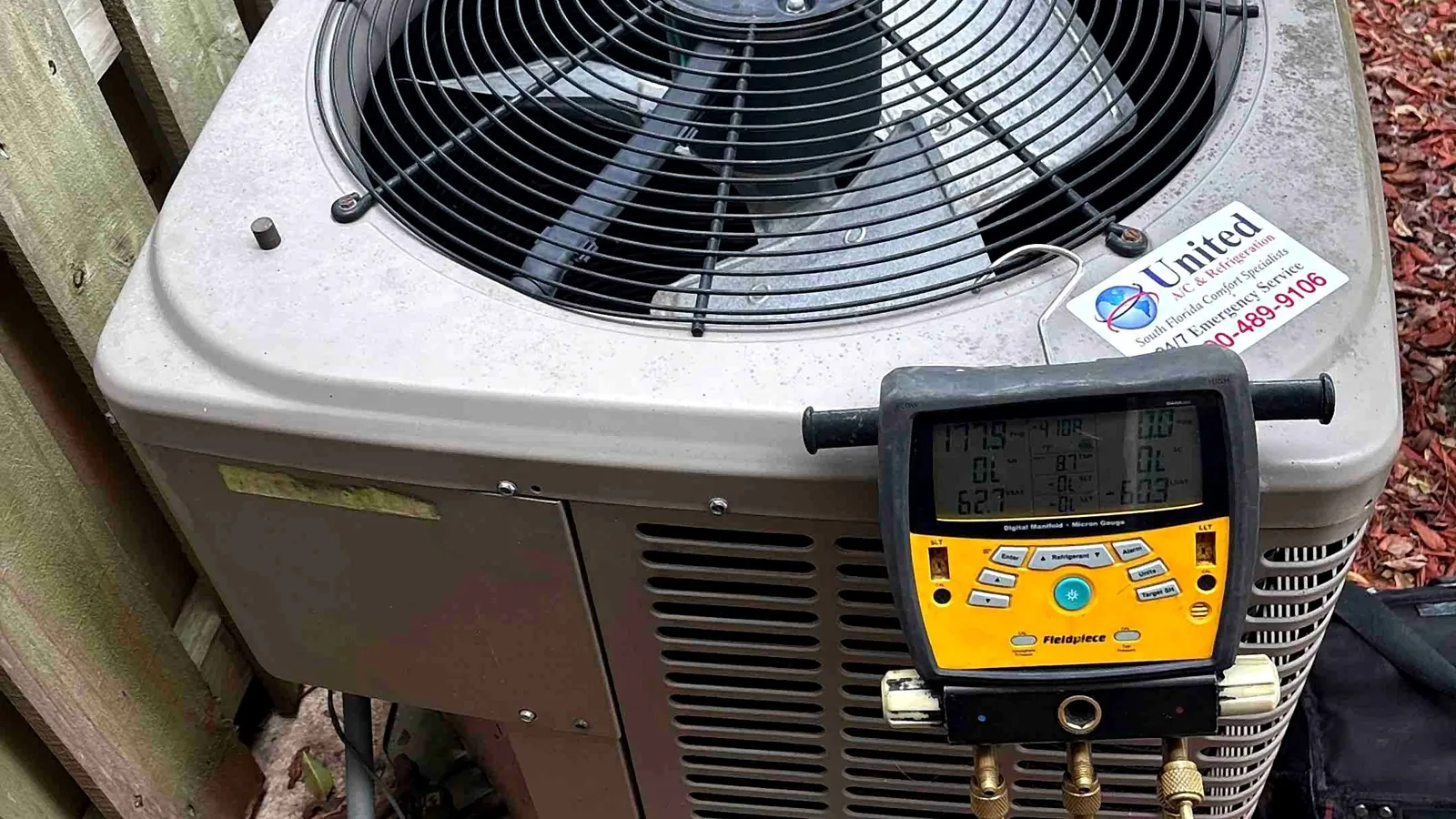
Why do commercial kitchen coils get dirty faster?
A condenser coil sitting near a working commercial kitchen ages differently than the same coil anywhere else. Cooking exhaust carries fine airborne grease well beyond the hood itself, and that grease does not simply sit on a coil's fins the way ordinary dust does — it holds, hardens, and traps everything that lands on it afterward. The result is a coil that loses efficiency faster than a comparable unit in a retail store or an office, and one that needs a different cleaning approach entirely. Here is what actually happens and how a kitchen environment changes the maintenance answer.
Cooking exhaust carries an aerosol of oil and grease particulates that a residential or retail environment never produces, and that aerosol travels well past the hood before it fully settles. Any condensing unit within that plume's reach — whether it is serving the kitchen's air conditioning or a nearby walk-in or reach-in — picks up a film of grease on every fin it passes over.
Grease changes how dirt behaves on a coil
Plain dust on a coil is relatively easy to rinse or blow off, because it sits loosely on the surface. Grease acts as an adhesive: it catches dust, kitchen exhaust residue, and airborne debris and binds it to the fin surface, where normal airflow or a light rinse cannot dislodge it. Over weeks, that combination hardens into a coating that behaves almost like insulation across the coil.
It happens on both refrigeration and HVAC coils
This is not limited to walk-in and reach-in condensers. Any condensing unit — including the kitchen's own air conditioning equipment — sitting downwind of an exhaust discharge point is exposed to the same grease-laden air and ages the same way, which is why a kitchen's whole outdoor equipment lineup often shows coil problems together rather than one unit at a time.
Grease does not sit loosely on a coil the way dust does; it holds, hardens, and catches everything that lands on it after.
United A/C & RefrigerationWhere does the grease actually come from?
Almost always from the kitchen's own exhaust system, specifically the point where the hood discharges filtered air outside the building. Even a well-maintained hood and grease filter system passes some fine particulate through, and that discharge point becomes a steady, continuous source of grease-laden air for anything positioned near it.
Fryers and open flat-tops produce the heaviest particulate load, so a kitchen running a lot of fried or high-heat cooking sees this effect more aggressively than one that does mostly light prep. Wind direction and the physical distance between the exhaust discharge and any condensing unit — a rooftop package unit, a refrigeration condenser, an ice machine's remote unit — determines how much of that grease actually lands on the coil versus dispersing into open air. A unit positioned directly downwind and close to a discharge point will need attention far more often than one positioned even a modest distance away.
What does a grease-coated coil actually do to performance?
It reduces the coil's ability to transfer heat, which is the entire job a condenser coil exists to do. A layer of grease and trapped debris across the fins acts as insulation, forcing the refrigeration or air-conditioning system to work harder and run longer to move the same amount of heat — and eventually it cannot keep up at all.
For refrigeration equipment, this shows up as a walk-in or reach-in that runs warmer than it should, or a compressor that runs almost continuously trying to compensate. For a kitchen's HVAC condensing unit, it shows up as a sales floor or dining room that never quite cools down on a busy, hot afternoon, even though the unit is clearly running. In both cases, the coil is often blamed last, because the symptom looks like a refrigerant or capacity problem rather than a fouled coil — which is exactly why kitchen equipment benefits from someone who checks the coil specifically rather than assuming the more common causes apply. Regular refrigeration service for a working kitchen should treat coil condition as a routine check, not an afterthought.
How is a grease-coated coil cleaned differently?
A standard coil cleaner formulated for dust and pollen does not reliably cut through baked-on kitchen grease, and attempting a normal rinse on a heavily grease-fouled coil often just redistributes the film rather than removing it. Kitchen coils generally need a degreasing solution designed to break down oil residue, applied and given proper dwell time before rinsing, and on a coil that has gone a long time between cleanings, more than one pass is often necessary.
This is also a case where more frequent, lighter cleaning genuinely beats letting grease build up and attempting one deep clean later. Once grease has hardened and trapped several cleaning cycles' worth of debris, a coil can require aggressive cleaning that risks fin damage if it is not done carefully, whereas a coil cleaned on a shorter interval never gets to that point.
Where should new equipment be placed to avoid this?
As far from the hood exhaust discharge point as the kitchen's layout reasonably allows, and ideally not directly downwind of it. This is worth thinking through before a new walk-in condensing unit, rooftop package unit, or ice machine is installed, because the placement decision made once during construction or a remodel affects how often that equipment needs coil service for the rest of its life. A unit installed thoughtfully away from the exhaust path can go considerably longer between cleanings than one installed for convenience directly in the plume. Where relocation is not practical, planning a shorter, disciplined cleaning interval from the start is the honest alternative.
Why grease and South Florida's climate compound each other
Humidity changes how grease behaves on a coil here compared with a drier climate. Airborne moisture keeps grease film softer and stickier for longer, which means it continues catching dust and debris rather than drying into a brittle, easier-to-remove layer the way it might elsewhere — the combination builds thicker, faster than either factor would alone. Coastal kitchens add a second contaminant into the same film: salt-laden air settles into the same grease coating and accelerates corrosion on the fins and electrical contacts underneath it, a combination that is measurably harder on a coil than either grease or salt on its own. Storm season adds a practical complication rather than a chemical one: after any period where exhaust fans or maintenance schedules were disrupted, a kitchen's coils deserve a check before the next stretch of hot, humid weather asks them to work hard again. A kitchen running fryers and high-heat cooking through a South Florida summer, with the coastal air and humidity working against every coil in the lineup, is the exact environment where a deliberate cleaning interval — not just a reactive one — earns its keep.
Serving Broward County and southern Palm Beach County from our shop in Deerfield Beach.
Questions and answers
How often should a restaurant clean its outdoor condenser coils?
More often than a non-kitchen commercial space, and the exact interval depends on how much frying and high-heat cooking the kitchen does and how close the condensing units sit to the exhaust discharge. A kitchen running fryers heavily and positioned near its own exhaust plume should plan on a noticeably shorter interval than the standard commercial schedule, sometimes several times a year rather than once or twice.
Can I clean a grease-coated coil myself?
Light, frequent surface cleaning is reasonable for kitchen staff to handle as part of routine upkeep, but a coil with established grease buildup typically needs a proper degreasing solution and careful handling to avoid damaging the fins. If a rinse alone is not visibly improving the coil, it has likely moved past what a simple hose-down can fix.
Does grease buildup on a coil ever cause a safety issue, not just an efficiency one?
Grease accumulation anywhere in a kitchen's exhaust and equipment environment is a housekeeping and fire-safety concern in general terms, separate from the efficiency loss on a coil. Keeping equipment clean is part of good kitchen practice broadly, alongside the standard hood, filter, and duct cleaning schedule that commercial kitchens already maintain for that reason.
Is an ice machine's condenser affected by kitchen grease the same way?
Yes, if it sits near the exhaust path. Any condensing unit exposed to the same grease-laden air ages the same way regardless of what it is cooling or freezing, and an ice machine losing coil efficiency shows up as reduced ice production or a machine that runs longer to make the same amount, much like a refrigeration unit running warmer.
How do I know if my coil problem is grease or just normal dust and pollen?
A grease-fouled coil typically looks and feels different on inspection — a sticky or tacky film rather than a loose dusty layer, often with a visible sheen. If your kitchen sits near its own exhaust discharge or a neighboring kitchen's, grease is the more likely explanation for a coil that seems to foul faster than expected.
Should I have my coils inspected as part of regular refrigeration service?
Yes, and for a working kitchen it is worth asking specifically that coil condition be checked and addressed as part of any refrigeration or HVAC maintenance visit, rather than assumed to be fine because the equipment is still running. Tell the assistant about your kitchen's cooking volume and equipment layout, and it will help you set up a cleaning interval that actually fits.
How we know this
This advice comes from what our technicians actually find on service calls in Broward County and southern Palm Beach — not from national HVAC copy. Salt-air corrosion on the barrier island, drain lines that block every wet season, and equipment running nine months a year are local realities, and they change the right answer.
Worth disclosing: we install Amana equipment, so we are not an independent reviewer. Where a brand or product is discussed we say what it is good and bad at, and we will tell you when the honest answer is to repair what you have or do nothing yet.
Talk to a technician
Have a question this raised? The assistant answers what it can, takes your details, and hands you to a real person who confirms the day and time.