
Keeping a vacation rental's AC ready between guests
A rental has no grace period: the AC has to be right for the guest arriving in an hour, not eventually. Here is what a fast, reliable turnover check needs to cover during spring break season and beyond, and what to build into a standing routine.
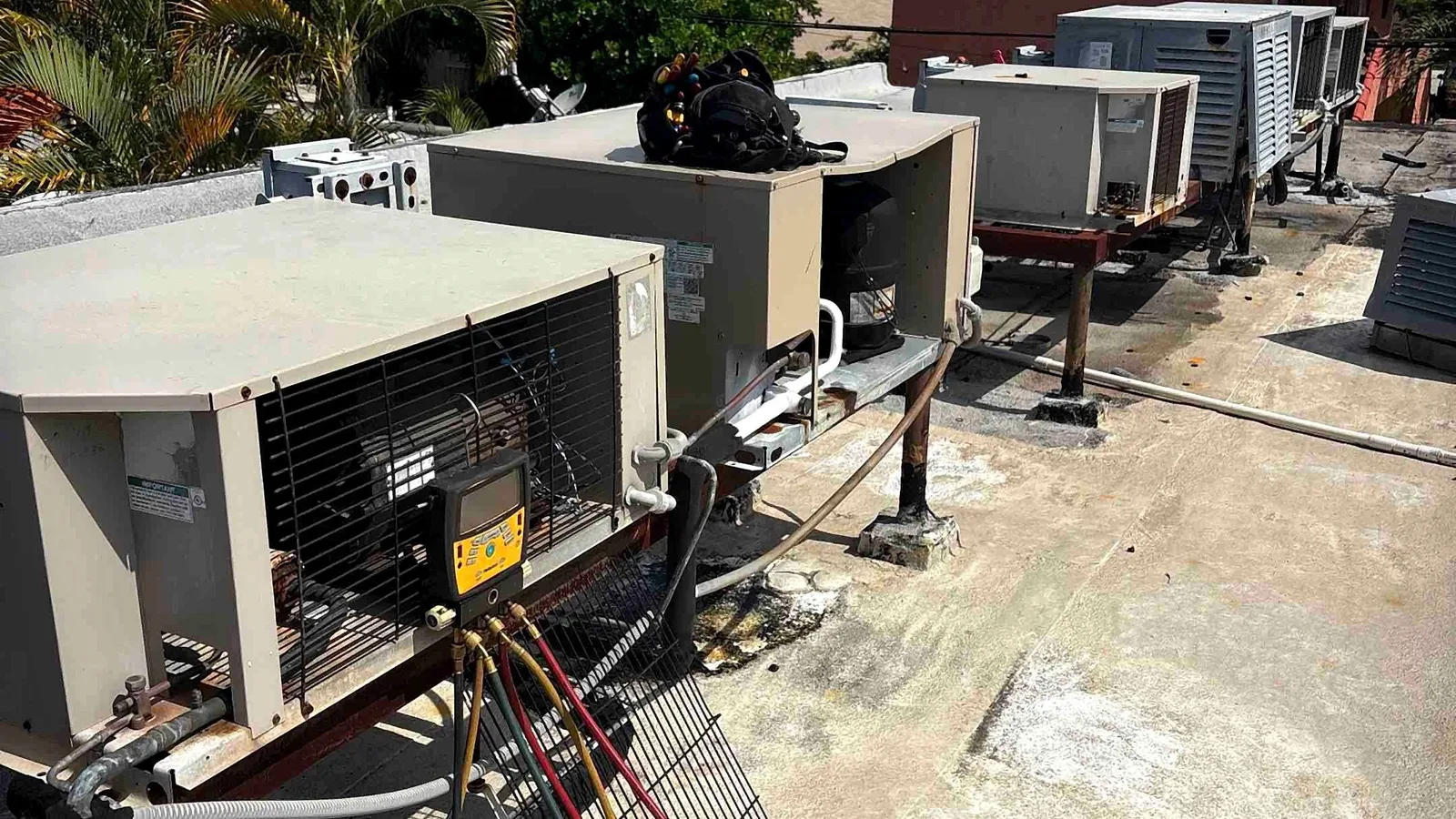
What actually goes wrong with AC between rental guests?
A vacation rental does not get the luxury of a slow diagnosis. A guest books a house expecting it cool on arrival, and if the air conditioner is blowing warm or the house still smells of the last thermostat setting, the review is written before the technician ever gets a call. Spring break compresses this problem into a few frantic weeks of back-to-back bookings, sometimes with only hours between checkout and check-in. A short, consistent turnover routine, built around the handful of things that actually go wrong in a rental, does more to protect the calendar than any single emergency repair.
Most rental AC complaints trace back to a handful of repeat causes, nearly all connected to how differently a rental gets used compared with a full-time home. Guests set thermostats to extremes, switch fan modes, or put the system in vacation or hold settings that quietly override the normal schedule and are still in effect when the next guest checks in.
Occupancy swings the system was not designed around
A house that sits empty at a mild setting for two days, then suddenly holds eight people with the front door propped open during cleaning, asks far more of a system in a single afternoon than steady daily living does. Filters clog faster with higher turnover and more luggage dust moving through the house. Condensate drains, which clog gradually in any home, clog faster under that kind of intermittent heavy use, and a clogged drain during a full house is exactly the kind of thing that turns into a ceiling stain and a bad review at the same time.
A guest does not care why the AC is not working; the review gets written either way.
United A/C & RefrigerationWhat belongs on a fast, repeatable turnover check?
A turnover check has to be fast enough to fit inside a cleaning window, which means it should be a short, memorized routine rather than a judgment call made fresh each time.
The five-minute version
Reset the thermostat to the house's standard occupied setting rather than whatever the departing guest left it on, confirm the system is set to cool and not fan-only, and stand in the house long enough to feel whether it is actually pulling the temperature down. Check the filter on a fixed schedule tied to the season rather than to memory — spring break's back-to-back bookings wear one out faster than the same house would in a quiet month. A quick look at the outdoor unit for anything blocking airflow, and a glance at the drain pan or drain line if the property has a history of clogging, rounds out a check that a cleaning crew can genuinely complete between guests.
What to escalate instead of guessing at
If the house is not noticeably cooling down within a reasonable window, or the thermostat is set correctly and the system still is not responding, that is the point to call rather than hope the next guest does not notice. Our repair team can prioritize a rental turnaround when the booking calendar does not allow for delay.
How does spring break specifically strain a rental's system?
Spring break concentrates a rental's hardest months into a few compressed weeks. Bookings run back to back with little or no vacancy between them, which means the system rarely gets the lighter, mild-setting rest period it would see in a slower season. More occupants means more heat load from bodies, electronics, and cooking, more moisture from showers and cooking, and more door-opening as groups move luggage in and out.
Why problems surface now rather than later
A system with a marginal issue — a slightly low refrigerant charge, a capacitor nearing the end of its life, a filter overdue for a change — can coast through a quiet month without anyone noticing. Put it through three or four weeks of full-occupancy turnovers and the same marginal issue becomes a mid-stay complaint. This is precisely why a pre-season inspection matters more for a rental than a full-time home: the system does not get gradually worse and give warning, it gets asked to perform hardest exactly when the booking calendar has the least room for downtime.
Should a rental property be on a maintenance schedule instead of reactive repairs?
For a rental that books through spring break and summer, yes, a standing maintenance schedule usually makes more financial and operational sense than waiting for something to fail mid-booking. The stakes of a breakdown are different for a rental than for a full-time home — a homeowner can open windows and wait a day for a repair, a guest paying for a week cannot, and a bad review costs future bookings on top of the repair itself.
What a standing schedule changes
A property on a regular maintenance schedule gets its coil, refrigerant charge, and electrical components checked before the peak booking season rather than after a guest complaint forces the issue, and it gives the owner or manager a documented history to point to when deciding whether an aging system is worth one more season. For a property that turns over dozens of times a year, that predictability is worth more than it would be in a house that only has to please its own residents.
Why South Florida rentals feel this harder than most
South Florida's rental market sits directly on top of its hardest cooling months, which is not a coincidence — the same March-through-summer stretch that fills spring break bookings is the stretch when Broward and southern Palm Beach systems are working their hardest anyway. A beachfront or intracoastal rental adds another layer: salt-laden air is harder on an outdoor unit's coil and electrical components than it is a few miles inland, so a property that is also fielding constant guest turnover is asking a compromised system to perform at its worst possible moment. Condo and townhome rentals bring their own wrinkle, since HOA rules and shared equipment access can slow down an emergency repair in a way a standalone house does not have to worry about. None of this means a rental needs different equipment than a full-time home, but it does mean the margin for a marginal system is thinner. A property manager juggling a full spring break calendar does not have the luxury of finding out the hard way that a system was already close to the edge.
Serving Broward County and southern Palm Beach County from our shop in Deerfield Beach.
Questions and answers
How often should filters be changed in a rental with constant guest turnover?
More often than a full-time home, and tied to occupancy rather than a fixed calendar date. A property running back-to-back bookings during spring break or summer moves far more air, and dust, through the system than the same house would with one steady family. Checking the filter at every turnover during peak season, and replacing it well before it looks fully clogged, is the safer default.
What thermostat setting should a rental be left at between guests?
A moderate, pre-set temperature that keeps the house comfortably cool without running the system at its extreme, rather than off or turned up high to save on run time between bookings. Leaving it off invites humidity and odor problems in an empty house, and turning it up too far means it is playing catch-up when the next guest is due to arrive. A consistent house-standard setting, reset at every turnover, avoids both problems.
Can a rental's AC actually cool a house fast enough for a same-day turnover?
A healthy, correctly sized system generally can, especially if the thermostat is reset as soon as cleaning begins rather than right before the guest walks in. A system that is struggling to do this — taking hours to bring the house down after a short vacancy — is usually telling you something is already wrong with it, not that same-day turnovers are inherently unreasonable to expect.
Should every rental property carry a maintenance agreement, even a smaller one?
It depends on how hard the property is booked, but for anything running through spring break and summer at real occupancy, it is usually worth it. A lightly booked property that sits empty much of the year has less urgency, though even then a documented annual check protects against a costly surprise. The busier the calendar, the more a standing schedule pays for itself in avoided mid-stay breakdowns.
What is the single most common guest complaint tied to AC?
The house not being cool at check-in, and it is almost always tied to either a thermostat left on the wrong setting by the previous guest or a system that was not given enough time to catch up after a vacancy. Both are preventable with a consistent turnover routine rather than an equipment upgrade, which is why the checklist matters as much as the hardware.
How quickly can a repair be handled during a packed spring break calendar?
We understand that a rental on a live booking does not have the flexibility a full-time home does, and we prioritize accordingly when a call comes in on an occupied or about-to-turn property. Tell the assistant that it is a rental with a guest arriving or in the house, and it will help route the request with that urgency in mind.
How we know this
This advice comes from what our technicians actually find on service calls in Broward County and southern Palm Beach — not from national HVAC copy. Salt-air corrosion on the barrier island, drain lines that block every wet season, and equipment running nine months a year are local realities, and they change the right answer.
Worth disclosing: we install Amana equipment, so we are not an independent reviewer. Where a brand or product is discussed we say what it is good and bad at, and we will tell you when the honest answer is to repair what you have or do nothing yet.
Talk to a technician
Have a question this raised? The assistant answers what it can, takes your details, and hands you to a real person who confirms the day and time.