
Bringing an AC back to life after snowbird season
A house that sat mostly empty for months is not the same as one lived in daily, and neither is the air conditioner that kept it barely ticking over. Here is what to check before and after the first full week back.
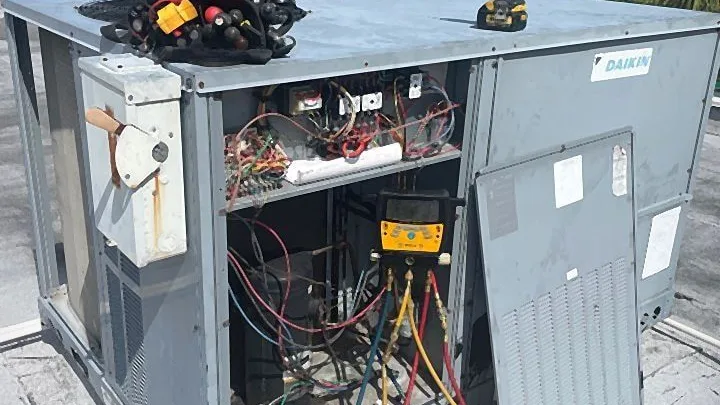
What actually happens to an AC left running unattended for months?
For a seasonal resident, arrival day in South Florida usually means unpacking, running errands, and reopening a house that has been minding itself for months. The air conditioner rarely makes the first-day list, mostly because it never actually shut off — it was left holding a warm, humid house at some manageable setting the whole time, unattended and unmaintained. That gap between running and being cared for is where the season's real risks build up quietly: humidity, mildew, a clogged drain, or a filter that has not seen daylight since spring. A short check in the first week back heads off a problem before it becomes a summer-long one.
A system left to run itself for months does not fail outright most of the time; it degrades quietly. Nobody is changing the filter on schedule, so it is likely well overdue by the time you walk back in. Nobody is checking the condensate drain, which clogs gradually with algae and dust even in a system nobody is using hard, and a slow drip that would have been noticed and reported by a resident can instead sit unnoticed against a wall or ceiling for months.
The setting itself matters
Many seasonal residents leave the thermostat at a higher hold temperature to save on run time while away, which is reasonable, but a warmer, more humid house for months is also a more hospitable environment for mold and mildew than a normally cooled one. The system was doing the minimum job asked of it the entire time; the question on return is whether the minimum job left anything behind.
The system never stopped running while you were gone; it just stopped being checked on.
United A/C & RefrigerationWhat should I check in the first day back before trusting the AC?
A handful of checks in the first hours back tell you most of what you need to know. Replace the filter regardless of how it looks, since months of unattended use is reason enough on its own. Walk the thermostat through its settings and change its batteries if it uses them, since a dead thermostat battery in an empty house can leave a system running in a fallback mode nobody chose.
Listen, look, and smell
Step outside and confirm the outdoor unit is running cleanly, without a struggling or grinding sound, and clear of anything that may have nested or grown around it during a quiet season — leaves, debris, or in some cases small animals drawn to a warm, undisturbed unit. Indoors, a musty smell that does not clear within a day of normal cooling is worth taking seriously rather than attributing to a closed-up house; it can point to standing water at the drain pan or growth inside the ductwork. None of these checks require a technician, but together they tell you whether the system earned your trust over the months you were gone.
Is a musty smell after months away normal, or a sign of a problem?
A closed-up house smell is normal for the first day and should fade quickly once the system has run a full cycle or two with fresh air moving through. A smell that lingers, or that specifically resembles mildew rather than simple staleness, is a different matter and usually traces back to moisture somewhere in the system or the ductwork rather than the house itself.
Where it tends to come from
A condensate drain that partially clogged during the unattended months, a drain pan that has been sitting with standing water, or ductwork that picked up moisture during a period when the system was cycling on a wide, humid-house hold setting are the usual sources. None of these are dramatic failures, but left alone they get worse rather than better, and mold growth inside ductwork is a genuine indoor air quality concern worth having looked at rather than masked with an air freshener.
Should the AC be inspected professionally every return season, even if nothing seems wrong?
For a home that sits empty for a real stretch of the year, yes, an annual return-season inspection makes more sense than waiting to see if something goes wrong. The months of unattended running are exactly the period when small issues — a slowly failing capacitor, a drain edging toward a clog, a refrigerant level drifting down from a slow leak — have the most time to develop without anyone noticing.
Timing it around your own calendar
A seasonal resident is in a good position to schedule this differently than a full-time homeowner: an inspection booked for the first week or two of return catches whatever built up over the empty months before it becomes a mid-season problem, rather than following the same spring-and-fall rhythm a year-round household would use. It is worth asking specifically for a seasonal or return-season check, since it should include a closer look at the drain and coil than a routine tune-up on a system that has been in daily use the whole time. Our maintenance visits can be scheduled around an arrival date rather than a fixed calendar month.
What months of a South Florida wet season does to an empty house
The months a seasonal resident is typically away — roughly May through October — are the wettest and most humid stretch of the South Florida year, which is precisely the period an empty house is least equipped to handle on its own. Afternoon storms roll through Broward and southern Palm Beach almost daily in the deep summer, and the same humidity load that makes a lived-in home's AC work hard all day is working on an empty house too, just with nobody there to notice condensation forming somewhere it should not. Hurricane season runs through the same window, and a storm-related power outage while the home is unattended can mean a system sitting off, and a house sitting sealed and humid, for days at a stretch — a scenario worth discussing with a neighbor or property watcher rather than assuming the house rode it out fine. None of this means a seasonal home is doomed to problems every year; it means the empty months carry real humidity risk in this specific climate, and the return trip is the right moment to check rather than assume.
Serving Broward County and southern Palm Beach County from our shop in Deerfield Beach.
Questions and answers
Should I turn my AC off completely while away for the season, or leave it running?
Leaving it running at a warmer hold setting is generally safer than shutting it off entirely. A system left off for months in a sealed South Florida house allows humidity to climb unchecked, which creates real conditions for mold and mildew. A moderate hold setting keeps the house dehumidified enough to avoid that, even if it is not running as hard as it would with someone home.
How long should I wait after arriving before trusting the AC is working properly?
Give it a day or two of normal cycling once you have changed the filter and confirmed the thermostat is set correctly. A house that has been on a warm hold for months takes some time to fully recover its normal comfort and humidity level, and that adjustment period is expected. What is not expected is a smell or dampness that has not improved by the second or third day, which is the point to have it looked at.
Can pests get into an outdoor unit while a house is empty for months?
It happens more often than people expect. An outdoor unit that sits with reduced activity for months, especially one with any gaps around the base or panels, can attract insects or small animals looking for shelter. A quick visual check on arrival, and a listen for anything unusual when the system cycles on, catches most of it before it becomes an electrical or airflow problem.
Is it normal for the house to feel humid even with the AC running when I first arrive?
Some humidity lag on the first day back is normal; temperature drops faster than humidity does, especially in a house that has been on a wide hold setting for months. It should noticeably improve within a day or two of steady, normal operation. If the house still feels clammy after several days of the system running normally, that points at something specific — often a drain or airflow issue — rather than simply needing more time.
Should I have someone check on the house's AC while I am away for the season?
It is a good precaution if you can arrange it, particularly during hurricane season when a storm-related power outage could leave the house sealed and humid for an extended stretch with nobody aware. A neighbor or property watcher checking that the system is running and the house is not showing signs of moisture is inexpensive peace of mind for a home that otherwise goes unsupervised for months.
What is the first thing I should replace or check when I get back, before anything else?
The filter, without exception. Whatever condition it is in, it has gone unchanged for however long you were away, and a fresh filter is the cheapest and fastest way to make sure the system is not fighting restricted airflow while you assess everything else. Everything after that — the drain, the thermostat, the smell test — follows naturally once the filter is handled.
How we know this
This advice comes from what our technicians actually find on service calls in Broward County and southern Palm Beach — not from national HVAC copy. Salt-air corrosion on the barrier island, drain lines that block every wet season, and equipment running nine months a year are local realities, and they change the right answer.
Worth disclosing: we install Amana equipment, so we are not an independent reviewer. Where a brand or product is discussed we say what it is good and bad at, and we will tell you when the honest answer is to repair what you have or do nothing yet.
Talk to a technician
Have a question this raised? The assistant answers what it can, takes your details, and hands you to a real person who confirms the day and time.