
Flooded AC equipment: what can actually be saved
Floodwater reaching an air conditioner is one of the more clear-cut situations in this business. What follows is an honest look at what actually happens to equipment that has been underwater, and what is realistic to save.
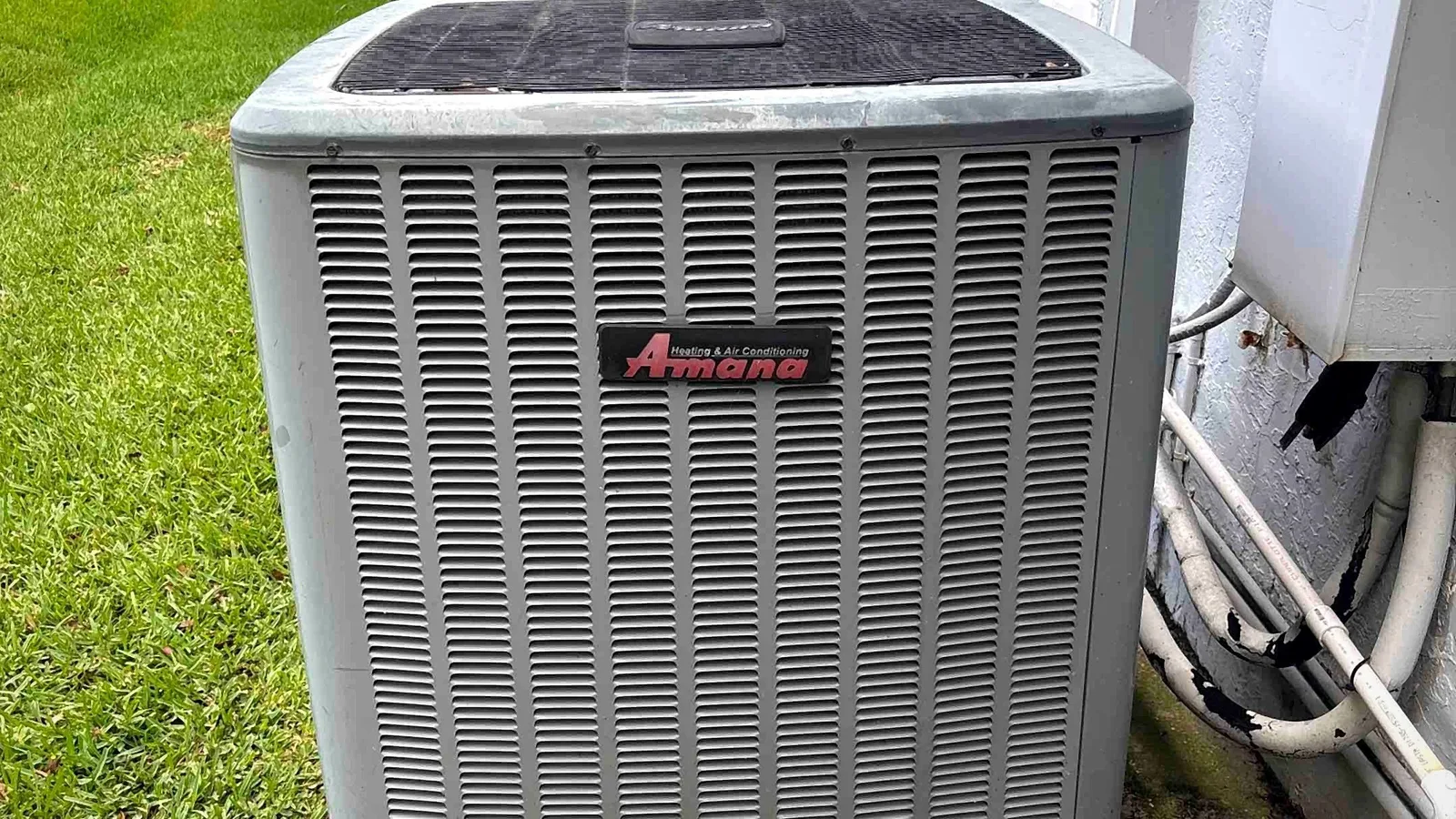
Why can a submerged compressor not just be dried out and restarted?
Floodwater and cooling equipment do not mix, and there is no version of this topic that benefits from being softened. A homeowner who has just had water in the house is usually hoping the AC survived along with everything else, and sometimes it did. But when a compressor, motor, or electrical component has actually been underwater, the honest answer is usually replacement, not repair, and pretending otherwise to save money in the moment tends to cost more later in the form of a system that fails again within weeks or, worse, an electrical fault that was never safe to restart in the first place.
Because water does more than sit on the surface. It gets into the sealed motor windings, the bearings, and the internal wiring, and drying the outside does nothing for what happened inside. A compressor is a sealed unit built to keep contaminants out permanently, not to be opened, dried, and resealed after a flood. Once floodwater has entered it, corrosion begins immediately on internal components that cannot be inspected or cleaned without destroying the unit in the process.
The same logic applies to motors and control boards
Fan motors, control boards, and capacitors that were submerged carry the same problem: corrosion and mineral deposits from the water start working on the internal contacts and windings right away, and the damage is often progressive rather than immediate. A motor might run for a few days or weeks after a flood before failing, which can create the false impression that it survived. Attempting to run submerged equipment also carries a real electrical safety risk, not just a reliability one.
A submerged compressor is not a repair decision; it is a replacement decision that looks better the sooner it is made honestly.
United A/C & RefrigerationHow can I tell how far the water actually reached?
Look for a water line, a visible tide mark of dirt, sediment, or discoloration on the outdoor unit's cabinet or the indoor air handler that shows exactly how high the water got. That line is more reliable than memory, especially if you were not home when the flooding happened, and it is the first thing worth photographing before any cleanup starts.
Above versus below the critical components
Where that line falls relative to the unit's electrical compartment and compressor matters enormously. Water that reached only the lower cabinet or the base of an elevated outdoor unit, without reaching the compressor or the wiring compartment, leaves real room for the equipment to be assessed and potentially saved. Water that reached or exceeded the compressor housing or the electrical compartment puts the equipment squarely in replacement territory, almost regardless of how briefly it was submerged.
What about the indoor air handler and the ductwork?
An indoor air handler set on the floor of a garage or ground-floor closet is exposed to the same flooding as anything else at that level, and the same submersion rules apply to its blower motor and control board. An air handler mounted in an attic or on a raised platform is much less likely to have been reached by rising floodwater, even in a home that flooded significantly at ground level.
Ductwork carries its own separate problem
Ductwork that ran through a flooded space, particularly flexible or fiberglass-lined duct, tends to hold moisture and contamination in a way that is difficult to fully clean, which creates an ongoing mold and air quality risk even if the equipment connected to it technically still runs. Flooded duct sections are usually a replace, not clean, situation, and running a system through contaminated duct pushes that contamination through the whole house.
What should I do before starting any cleanup?
Document everything before you touch anything. Photograph the water line on every piece of equipment, the surrounding damage, and the equipment's data tag if it is still legible, all before cleanup, drying fans, or debris removal begin. Insurance claims for flood-related equipment loss depend heavily on this documentation, and it is far easier to gather in the first day than to reconstruct afterward from memory.
Do not attempt to restart anything that was submerged
Even if power is available and the equipment looks dry on the outside, do not attempt to run a compressor, motor, or control board that was submerged, for both safety and cost reasons. A technician assessing the equipment afterward can often tell more from an unpowered inspection than from watching a submerged system get run to failure, and an electrical fault in wet equipment is a real hazard, not a theoretical one.
What does an honest assessment actually decide?
An honest assessment separates what was genuinely reached by water from what merely sat near it, and calls the outcome accordingly rather than defaulting to full replacement out of caution or to partial repair out of hope. Equipment above the waterline, once inspected and confirmed dry and undamaged, can often be returned to service exactly as it was. Equipment at or below the line, particularly anything involving the compressor or main electrical components, is almost always a replacement conversation, and a reputable assessment says so plainly rather than attempting a repair that is unlikely to hold.
What this means for planning ahead
If a home is in a flood-prone area, raising the outdoor unit on a taller stand and setting the indoor air handler on an elevated platform, in the attic, or above documented past flood lines is one of the more effective ways to reduce the odds of facing this exact decision again after the next event.
Flooding risk varies block by block in this part of Florida
South Florida's flat topography means flooding does not respect neighborhood boundaries the way hills and drainage elsewhere in the country do. A low-lying block a mile from any canal can flood as readily as one directly on the water during a heavy storm or an unusually high tide. Older homes throughout Broward and southern Palm Beach, particularly those built before raised outdoor equipment became standard practice, often still have their outdoor condenser sitting low on an original ground pad, which puts it at real risk during the kind of prolonged heavy rain and drainage backup this region sees several times most wet seasons, separate from named storms entirely. Canal-front and low-lying inland neighborhoods see this as often as coastal ones; proximity to the ocean is not actually the best predictor of flood exposure here, drainage and elevation are. Homeowners in any of these areas are reasonable to ask about raising equipment during a replacement, since the cost of doing so once is far smaller than the cost of losing a system to water more than once.
Serving Broward County and southern Palm Beach County from our shop in Deerfield Beach.
Questions and answers
My AC still runs after the flood. Does that mean it is fine?
Not necessarily, and this is one of the more misleading signs in a flooded system. Water-damaged motors and electrical components can run for days or weeks before corrosion causes them to fail, which creates false confidence. If the water line shows the compressor or electrical compartment was reached, an inspection is worth having even if the system currently seems to work.
Will my insurance cover a flooded AC system?
That depends on your specific policy and whether flood coverage was included, which is a question for your insurer rather than something to assume either way. What helps regardless of the answer is thorough documentation, photographs of the water line and the equipment before any cleanup, taken as early as possible.
Can a flooded outdoor unit be cleaned and reused if it was not fully submerged?
Sometimes, yes, if the water stayed below the compressor and electrical compartment. An assessment focused on where exactly the water line fell, rather than a blanket rule, is the right way to decide, and equipment that was truly untouched by water above its base has a real chance of being fine after inspection.
Is it safe to just plug the unit back in to see if it works?
No. Testing submerged or possibly water-damaged electrical equipment by simply powering it up carries real safety risk, including shock and fire, on top of the risk of causing further damage to components that might otherwise have been assessed safely. Have it inspected unpowered first.
Do I need to replace the ductwork too, or just the equipment?
If floodwater reached the ductwork itself, especially flexible or fiberglass-lined duct, replacing that section is usually necessary alongside any equipment work, since flooded duct material is difficult to fully clean and becomes an ongoing air-quality problem. Duct that stayed dry, even if connected equipment was replaced, does not automatically need replacing.
How can I prevent this from happening again?
Elevating the outdoor unit on a taller stand and setting any indoor equipment above known flood lines, in the attic, or on a raised platform meaningfully reduces the risk for the next flood event. It is worth raising during any future replacement, particularly for a home in a low-lying or flood-prone area.
How we know this
This advice comes from what our technicians actually find on service calls in Broward County and southern Palm Beach — not from national HVAC copy. Salt-air corrosion on the barrier island, drain lines that block every wet season, and equipment running nine months a year are local realities, and they change the right answer.
Worth disclosing: we install Amana equipment, so we are not an independent reviewer. Where a brand or product is discussed we say what it is good and bad at, and we will tell you when the honest answer is to repair what you have or do nothing yet.
Talk to a technician
Have a question this raised? The assistant answers what it can, takes your details, and hands you to a real person who confirms the day and time.