
What a replacement does to your power bill
The claim that a new AC lowers your electric bill is true, but the mechanism behind it gets skipped in most explanations. Here is what actually changes — efficiency, run hours, and humidity control — and how to estimate the effect on your own home rather than take anyone's word for it.
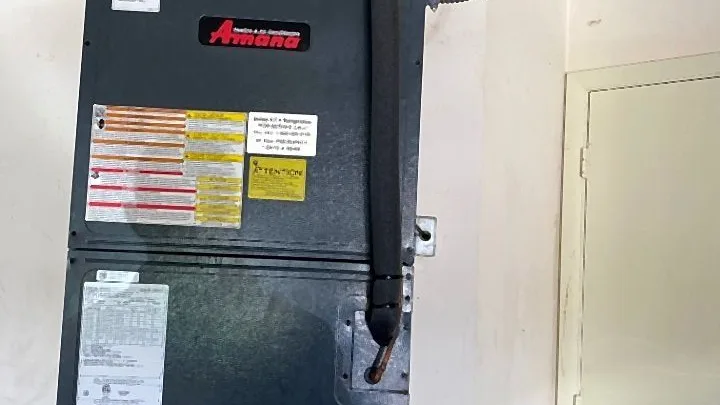
Why does an aging AC cost more to run than a new one?
A modern air conditioner uses less electricity to produce the same cooling as an old one, and in a climate that runs the system nearly year-round, that difference compounds into a real, ongoing change in the cooling portion of a power bill. What gets lost in most explanations is the mechanism — why exactly a newer system pulls less power for the same result. Understanding that, rather than taking a number on faith, is what lets you judge whether a replacement makes sense for your own house and your own bill, not a hypothetical average one.
An air conditioner loses efficiency gradually as it ages, well before it fails outright. Coils accumulate dirt and corrosion that reduce heat transfer, refrigerant charge drifts from slow leaks, fan motors and blowers wear and move less air for the same electricity, and mechanical tolerances loosen throughout the system. None of these show up as a single dramatic failure. They show up as a system that runs longer to reach the same temperature, which means more electricity for the same result.
The bill creeps before the breakdown does
This is why an aging unit's effect on a power bill is usually gradual rather than sudden — a slow climb that is easy to attribute to a hot summer rather than a system quietly working harder for the same outcome. By the time a system is old enough to be a real candidate for replacement, it is often already costing more to run than its rated efficiency ever suggested it would.
The cooling share of the bill is the one a replacement actually touches, and in this climate that share is doing most of the work.
United A/C & RefrigerationWhere exactly do the savings come from?
Three places, and they compound rather than stack simply. The first is raw efficiency: a modern system extracts more cooling from each unit of electricity than an older one, purely from better compressors, coils, and refrigerants. The second is run-time behavior: a correctly sized new system cycles on and off cleanly, reaching the target temperature and stopping, instead of running long, labored cycles the way a tired or mismatched system does.
The third factor is humidity, and it matters more here than the temperature does
A system that removes humidity properly does not need to run the air as cold to feel comfortable, and it does not leave a house feeling clammy at a lower thermostat setting. An oversized or worn system often blasts cold air in short bursts without ever running long enough to pull real moisture out of the air, which pushes households to set the thermostat colder just to feel comfortable — using more electricity to compensate for humidity the system failed to remove.
Does a bigger, more powerful system lower the bill faster?
No, and oversizing is one of the more common ways a replacement fails to deliver the savings it should. A system sized larger than the home actually needs cools the air quickly and shuts off before it has run long enough to remove humidity properly, which leaves the house feeling cold and damp rather than genuinely comfortable. It also short-cycles, and starting and stopping repeatedly uses more electricity than a correctly sized system running longer, gentler cycles.
Sizing is a calculation, not a guess
The equipment that actually lowers a bill is the one matched to the home through a proper load calculation — square footage, insulation, window exposure, and duct condition all factor in — not the biggest unit that will fit. This is one of the clearest places where the honest answer runs against the instinct to buy more capacity.
How much of my power bill is even the air conditioner?
In a climate that runs cooling for most of the year, it is typically the single largest line item on a residential power bill, well ahead of lighting, appliances, or water heating in most homes. That is exactly why the efficiency of the cooling system has an outsized effect here compared with a four-season climate, where the AC only carries part of the year's electrical load. It also means a new system will not touch the rest of the bill — the parts unrelated to cooling stay whatever they were. What changes is the cooling share specifically, and in this climate that share is large enough for the difference to be noticeable across a full year of running the system nearly constantly.
What else affects whether the savings actually show up?
The installation, more than the equipment's rating on its own. A correctly charged system, ductwork that is not leaking cooled air into the attic, and a thermostat set sensibly rather than fought with all have a real effect on whether a new system's efficiency reaches the bill or leaks away before it gets there. Leaky attic ducts in particular can waste a meaningful share of the air a system worked to cool, which shows up as a bill that improved less than expected even with genuinely better equipment.
Behavior matters too
A household that sets the thermostat colder than necessary, closes vents in ways that unbalance airflow, or skips routine maintenance on the new system will not see the full benefit of the upgrade either. The equipment sets the ceiling on efficiency; the installation and the way it is run decide how close the household actually gets to it.
Why the effect shows up faster in South Florida
Efficiency differences are multiplied by how many hours a system actually runs, and in Broward and southern Palm Beach that number is high almost regardless of the season. A system here can be working from spring into the end of the year, often through long stretches of the day rather than a few hours in the evening, so the gap between an aging unit and a properly sized modern one is not an abstract, once-a-year comparison — it shows up across thousands of run hours annually instead of a few hundred. The humidity load compounds it: our air carries far more moisture than a drier climate, so a system that struggles to dehumidify runs longer, colder cycles to compensate, and that struggle costs electricity on top of whatever the raw temperature difference already demands. This is also why sizing and installation quality matter as much here as the equipment's rating on the box — a correctly sized system in a well-sealed South Florida home does the humidity job efficiently, where an oversized or leaky one fights the climate the whole time it runs.
Serving Broward County and southern Palm Beach County from our shop in Deerfield Beach.
Questions and answers
How do I know if my AC is costing me more to run than it should?
The clearest signs are a bill that has climbed gradually without a clear cause, a system that runs longer than it used to for the same comfort, or a house that feels less consistently cool or more humid than it did a few years ago. None of these prove the system needs replacing on their own, but together they are worth having assessed rather than assumed away.
Will a new AC lower every part of my electric bill?
No, only the cooling portion. Lighting, appliances, water heating, and everything else on the bill are unaffected by an air conditioner replacement. In a climate where cooling is typically the largest single line item, that portion still matters a great deal, but it is honest to be specific about what actually changes.
Does a higher efficiency rating always mean a lower bill?
Only if the rest of the installation lets the system reach its rated efficiency. Correct sizing, a proper refrigerant charge, and sealed ductwork all have to be right for the number on the equipment to translate into the number on the bill. A high-rated system installed poorly can underperform a properly installed mid-tier one.
Can I estimate what a replacement would do to my own bill?
Yes, and that is a better approach than relying on a generic promise. Our efficiency estimator lets you work from your own system's age and usage rather than an average household, which is the only honest way to judge what a replacement would actually change for your home.
Why does my house feel humid even when the AC is running constantly?
That usually points at a system that is oversized, low on refrigerant, or otherwise not running long enough per cycle to pull moisture out of the air, even while it keeps the temperature down. Fixing the humidity problem, not just the temperature, is often what actually improves comfort and lets a household stop overcooling to compensate.
Is it worth replacing an AC that still cools the house fine?
It depends on the system's age and how it is running, not just whether it currently keeps the house cool. A unit can still cool a home adequately while running far less efficiently than it once did. An honest assessment of its condition and run behavior is a better guide than whether it technically still works today.
How we know this
This advice comes from what our technicians actually find on service calls in Broward County and southern Palm Beach — not from national HVAC copy. Salt-air corrosion on the barrier island, drain lines that block every wet season, and equipment running nine months a year are local realities, and they change the right answer.
Worth disclosing: we install Amana equipment, so we are not an independent reviewer. Where a brand or product is discussed we say what it is good and bad at, and we will tell you when the honest answer is to repair what you have or do nothing yet.
Talk to a technician
Have a question this raised? The assistant answers what it can, takes your details, and hands you to a real person who confirms the day and time.