
AC running but not cooling
The fan is on, the thermostat says it is calling for cooling, and the temperature in the house will not move. Here is how to tell whether the system has actually stopped cooling or is simply falling behind, and what usually causes each.
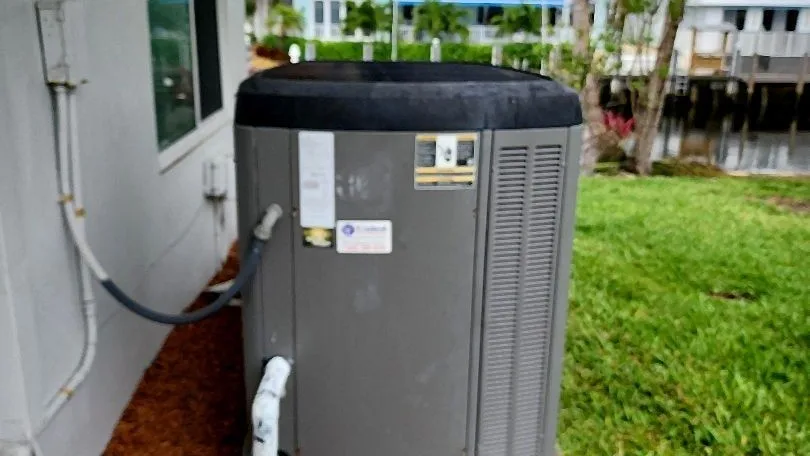
How do I know if the system is cooling at all?
There is an important difference between an air conditioner that is running and doing nothing, and one that is running and simply losing the fight against a South Florida afternoon. Both feel the same from the couch — the house stays warm — but they call for different responses. One is a fault that needs fixing. The other might just be a system nearing the edge of its capacity on the hottest day of the week. Telling them apart takes one simple test, a look at the outdoor unit, and an honest read of how the problem has been trending over the past few weeks.
Put a thermometer, or even your hand, at a supply vent and then at the return grille, the larger vent that pulls air back into the system. A properly working air conditioner drops the temperature between those two points by roughly fifteen to twenty degrees.
Reading the result
A gap under ten degrees means the system is barely cooling the air that passes through it, even if the fan is moving plenty of that air. A gap in the normal range but a house that still will not cool usually points somewhere else entirely — the system is doing its job, but something else in the house is working against it, such as a much larger heat load than usual or a thermostat set incorrectly.
Why this test beats guessing
It takes thirty seconds and immediately separates a real cooling fault from a system that is simply overmatched, which changes what you should do next far more usefully than watching the vents and hoping.
A system at half its refrigerant charge does not stop cooling — it cools weakly, which is exactly what a running-but-not-cooling complaint feels like from the couch.
United A/C & RefrigerationWhat stops the outdoor unit from cooling properly?
Almost every running-but-not-cooling case traces back to the outdoor half of the system failing to move heat out of the house, even while the compressor is technically running.
A coil coated in dirt or grass clippings
The outdoor coil has to reject heat into the outside air, and a coil caked in dust, grass clippings, or salt residue cannot do that efficiently. The compressor works harder, the pressures rise, and the amount of cooling delivered per minute of runtime drops — often gradually enough that nobody notices until it is significant.
A compressor losing strength
An aging compressor can lose pumping capacity well before it fails outright, moving refrigerant more slowly and delivering noticeably less cooling on the hottest days while still seeming to run normally. This kind of gradual decline is harder to self-diagnose than a sudden stop, because there is no single moment where anything obviously broke.
Restricted airflow across the outdoor unit
Shrubs, a fence, or storage crowding the condenser starve it of the airflow it needs to shed heat, and this is one of the few causes a homeowner can fix in five minutes by clearing at least two feet of open space around it.
Is a refrigerant leak the reason my AC is not cooling?
It is one of the more common reasons, and it is the one that gets misdiagnosed the most, because a system can run for weeks on a slow leak, cooling a little less every day until someone finally notices.
Why a slow leak is easy to miss
Refrigerant does not get used up by normal operation. If the charge is low, refrigerant has escaped somewhere in the coil or the line set, and the amount of cooling the system can produce drops in proportion to how much has leaked out. A system at half charge does not stop cooling; it cools weakly, which is exactly the running-but-not-cooling complaint.
Why topping it off is not the fix
Adding refrigerant without finding the leak restores cooling temporarily and guarantees the same call again in a few months. A proper repair finds the leak, seals it, and then charges the system to the correct level, verified against the temperatures the system is actually producing rather than a guess.
Could the system just be falling behind, not broken?
Yes, and this is worth ruling out honestly before assuming something has failed. On the most extreme South Florida afternoons, a system that is otherwise healthy can struggle to hold the last two or three degrees against the heat and humidity pouring in through windows, doors, and an attic that has been soaking up sun since morning.
What falling behind looks like
The house cools well in the morning, holds steady through midday, and slowly loses ground from mid-afternoon into early evening, then catches back up after sunset. That daily rhythm, rather than a flat inability to cool at any point, suggests capacity rather than a fault.
When it is not just the weather
If the same pattern shows up on a mild day, or the gap between indoor and outdoor temperature keeps growing week over week, that is not just South Florida being South Florida — it is a system genuinely losing capacity, and it is worth having it looked at before it gets worse.
What does a technician check first?
A methodical diagnosis starts with the same information you can gather yourself and then goes further with tools a homeowner does not have.
After confirming the temperature drop across the coil, a technician checks the electrical side — the capacitor, the contactor, the compressor’s running amperage — because a weak component here can mimic a refrigerant problem by starving the compressor of the power it needs to pump properly. Only then do gauges go on to measure the system’s actual pressures against what the outdoor temperature calls for, which is how a leak, an overcharge, or a genuinely failing compressor get told apart from each other. Skipping straight to refrigerant, or replacing parts without measuring anything, is how a simple problem turns into an expensive guessing exercise. Routine maintenance catches the early, gradual version of most of these faults, which is the version that is cheapest to fix.
Why capacity loss shows up faster in this climate
A system anywhere loses a little capacity as it ages, but in Broward and southern Palm Beach that decline gets tested constantly rather than occasionally. Running eight or nine months a year, often through long afternoons in the mid-90s with heavy humidity, means a system here rarely gets an easy day to hide a developing problem. A unit that would coast along for another year in a milder climate shows its weakness here on the first genuinely brutal stretch of summer, because there is no margin left once the load gets serious. Salt air along the coast adds its own version of the problem, corroding the outdoor coil’s fins and the electrical contacts that keep the compressor running at full strength, which is why a beachfront system and an inland one on the same install date can be in noticeably different condition a few years later. It is also why a running-but-not-cooling call in July is so often the same underlying issue that has been quietly building since spring — the heat just finally caught up with it.
Serving Broward County and southern Palm Beach County from our shop in Deerfield Beach.
Questions and answers
Why is my AC running constantly but the house never gets cool?
Constant running with little or no temperature drop usually means the system has lost most of its cooling capacity — commonly a significant refrigerant leak, a badly fouled outdoor coil, or a compressor that is struggling. It is different from a system that runs long but does eventually catch up; that pattern points at capacity being overwhelmed by heat, this one points at the system itself.
Is it normal for my AC to struggle on the hottest days?
A slight loss of ground on the very worst afternoons, followed by catching back up in the evening, is a normal daily rhythm in this climate. A system that struggles the same way on a mild day, or that never catches up at all, has moved past normal and is worth having checked.
Can a dirty outdoor unit really stop it from cooling?
Yes, more than most homeowners expect. A coil caked in dirt, grass clippings, or salt cannot shed heat efficiently, which raises the system’s pressures and can noticeably cut its cooling output even while everything else runs normally. Clearing debris and vegetation from around the unit and having the coil professionally cleaned often restores real capacity.
How do I know if it needs refrigerant or a whole new part?
You will not know for certain without gauges, which is exactly why this is not a guessing job. A technician measures the system’s actual pressures against the outdoor temperature to tell a refrigerant leak apart from a failing compressor or a bad capacitor, since more than one of these can produce the same weak-cooling symptom.
Does a refrigerant top-up fix it permanently?
No. Refrigerant is not consumed by normal operation, so a low charge always means a leak. Adding refrigerant without finding and sealing that leak restores cooling for a while and guarantees the same complaint returns, often within months, after paying for refrigerant a second time.
What should I tell the assistant about my AC not cooling?
Whether the house cools at all or just slowly loses ground on hot afternoons, how long this has been happening, and whether you have checked the temperature at a vent. That picture helps sort a capacity issue from a real fault and get the right kind of visit scheduled.
How we know this
This advice comes from what our technicians actually find on service calls in Broward County and southern Palm Beach — not from national HVAC copy. Salt-air corrosion on the barrier island, drain lines that block every wet season, and equipment running nine months a year are local realities, and they change the right answer.
Worth disclosing: we install Amana equipment, so we are not an independent reviewer. Where a brand or product is discussed we say what it is good and bad at, and we will tell you when the honest answer is to repair what you have or do nothing yet.
Talk to a technician
Have a question this raised? The assistant answers what it can, takes your details, and hands you to a real person who confirms the day and time.