
A post-summer check after months of nonstop cooling
A South Florida system usually finishes summer having just run the hardest stretch of its year. Here is the check that takes stock of what that season actually did, before the wear turns into a spring surprise.
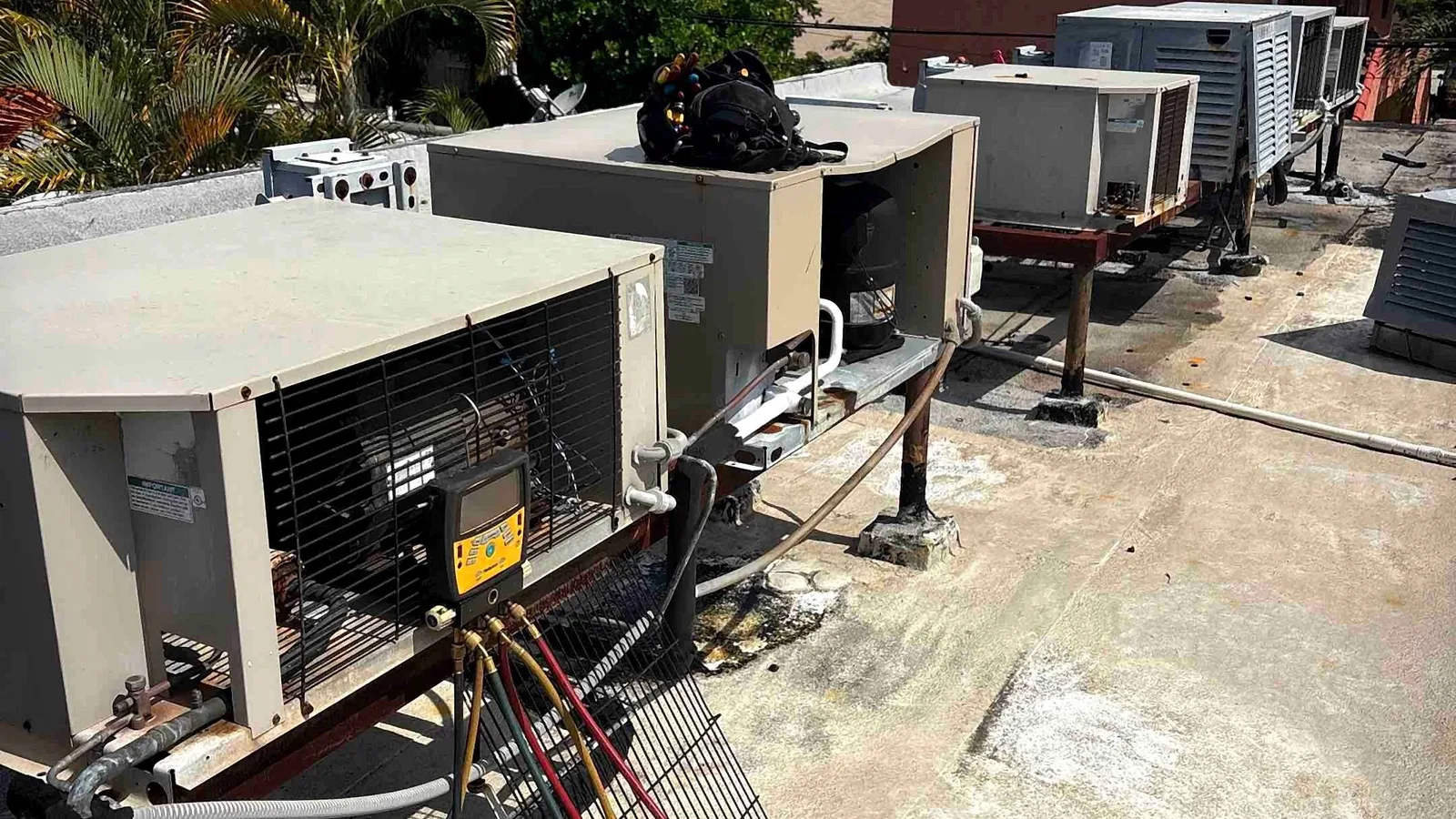
What does a full South Florida summer actually do to a system?
By the time South Florida's heat finally loosens its grip, a cooling system has usually just finished the hardest stretch of its year, months of long daily run times, storm season humidity, and afternoons where the compressor barely got a rest. A post-summer check is less about preparing for what is coming and more about taking stock of what the system just went through. Catching the wear now, while the pressure is off, is how a hard season does not quietly set up a failure the following spring.
Run time is the honest answer. A system here can log several times the cooling hours of the same equipment in a milder climate, and every part that fails from wear rather than from a single event, capacitors, contactors, fan motor bearings, belts on older equipment, is that much further along after a summer like this one than it would be anywhere else. None of that shows up as a dramatic symptom; it shows up as a part that is a little closer to the end of its life than it was in May.
Storm season adds its own wear
Hurricane season overlaps almost entirely with the hardest cooling months, and wind-driven debris, heavy rain, and the odd close call with a storm all leave their mark on the outdoor unit specifically, the same storm-season wear covered in our hurricane readiness timeline, on top of the ordinary wear of a long run.
The condensate system works overtime too
A summer this humid also means the drain line and pan have been carrying far more water than they would in a drier stretch of weather, since the system is pulling moisture out of the air almost continuously rather than in short bursts. Algae and buildup that accumulate gradually in a milder season can pack in noticeably faster after months of heavy condensate flow, which is one more reason the line is worth a look now rather than assuming it coasted through unaffected.
Surviving a South Florida summer and coming through it undamaged are not always the same thing.
United A/C & RefrigerationWhat should I actually look at once the heat eases up?
Start outside. Clear the condenser of anything that settled around it over the summer, including grass clippings, seed pods, and storm debris, and look for anything that shifted or leaned during heavy weather. Inside, pull the filter and note how quickly it loaded up over the summer compared with earlier in the year, since that tells you whether the current change schedule actually matched how hard the system ran.
Listen for what changed
A system that developed a new sound, a longer run cycle, or a struggle to keep up on the hottest afternoons during the summer is worth mentioning specifically when scheduling a check, rather than letting it fade from memory once the weather cools. Those details point a technician straight at the part that is actually wearing rather than starting from scratch.
Did my system actually keep up this summer, or did it just survive?
There is a real difference between a system that cooled comfortably and one that technically ran the whole season without quite getting the house cold, and the second is worth paying attention to. A system that ran close to continuously on the hottest afternoons, left the house a degree or two warmer than the thermostat setting, or left it feeling humid despite the temperature reading fine, the same gap covered in our piece on humidity control beyond the thermostat, was working at or past its comfortable limit all summer.
That pattern is worth having looked at honestly rather than accepted as normal for the climate; sometimes it is a fixable airflow or charge issue, and sometimes it is a sign the equipment itself is undersized or aging out of its capacity. Either way, a technician can tell you which before the next summer asks the same question again.
Is fall a good time for maintenance, or should I wait until spring?
Fall is a genuinely good time, and arguably underused, complementing the readiness check covered in our spring pre-season checklist. The system is coming off its hardest months, so any wear from the summer is fresh and easy to find, and the milder weather that follows gives you a comfortable stretch to act on anything a check turns up without the pressure of a heat wave.
Do not wait for the next crisis
Waiting until spring to check a system that struggled all summer means living with a smaller version of the same problem through the cooler months and hoping it does not get worse before you address it. A maintenance plan that includes a visit after the hardest part of the year is the more disciplined way to catch this consistently.
Why the recovery check matters in a climate without a real off-season
Elsewhere, a system gets a genuine rest once summer ends. In Broward and southern Palm Beach, cooling season simply eases rather than stopping, so a system that came out of summer already weakened does not get much of a break before it is asked to keep working. Coastal homes carry an extra summer tax: salt-laden air combined with storm season humidity accelerates corrosion on the outdoor coil and the electrical contacts faster over these months than at any other point in the year, which is why a post-summer look is especially worth it from Hillsboro Beach down through Pompano and Deerfield. Inland, in communities like Coral Springs and Parkland, the bigger factor is usually straightforward run-time wear from a system that worked nearly around the clock through the peak months. Either way, the honest case for a fall check is that it catches what the hardest stretch of the year actually did to the equipment, rather than assuming everything that survived the summer is fine simply because it kept running. It is also, quietly, the best time of year to book one; once the peak heat breaks, service schedules loosen up considerably compared with the middle of July, so a fall visit tends to be easier to arrange on a date that suits you rather than whatever is left open.
Serving Broward County and southern Palm Beach County from our shop in Deerfield Beach.
Questions and answers
My AC ran the whole summer without breaking down. Do I still need a check?
Yes, because running without a breakdown is not the same as running without wear. Parts like capacitors and contactors weaken gradually under heavy summer use and often fail the following season, not the one that stressed them. A post-summer check catches that wear while it is still a scheduled repair rather than an emergency the next time the heat builds.
How can I tell if my system struggled this summer even though it never stopped running?
Think back to the hottest afternoons: did the house ever feel a degree or two warmer than the thermostat setting, or humid despite a normal temperature reading? Both are signs the system was working at its limit rather than comfortably keeping up, even if it never actually shut down or threw an error.
Is it normal for the filter to load up faster in summer?
Yes, heavier run time pulls more air, and more air through the filter over the same period, so it can load up faster in the peak months than a printed schedule assumes. Checking it at the end of summer, rather than only on a fixed calendar date, catches that difference.
Should I be worried about storm damage I cannot see on the outdoor unit?
It is worth a look, especially after any storm with significant wind. Debris packed into the coil, a unit that shifted slightly on its pad, or wiring disturbed by nearby storm cleanup can all go unnoticed from a distance. A post-summer check is a reasonable time to have it looked over even if nothing looks obviously wrong.
Is fall maintenance different from what happens in the spring visit?
The tasks look similar, but the purpose is different. Spring is about confirming the system is ready before the season; fall is about assessing what the season actually did to it. Doing both, roughly six months apart, covers the system from both directions rather than leaving a long gap after the hardest months.
My system feels fine right now. Why check it before there is a problem?
Because the wear that shows up as a problem next summer is usually invisible right now. A post-summer check exists specifically to find that gap between feeling fine and actually being fine, while there is still an easy season ahead to fix it in rather than a heat wave already underway.
How we know this
This advice comes from what our technicians actually find on service calls in Broward County and southern Palm Beach — not from national HVAC copy. Salt-air corrosion on the barrier island, drain lines that block every wet season, and equipment running nine months a year are local realities, and they change the right answer.
Worth disclosing: we install Amana equipment, so we are not an independent reviewer. Where a brand or product is discussed we say what it is good and bad at, and we will tell you when the honest answer is to repair what you have or do nothing yet.
Talk to a technician
Have a question this raised? The assistant answers what it can, takes your details, and hands you to a real person who confirms the day and time.