
Buying a home with an old air conditioning system
The house checks every box except the AC unit looks its age. Here is a practical checklist for evaluating an older cooling system before you close, and how to plan sensibly for what comes after.
How do I tell how old the AC really is?
An older air conditioner is one of the most common items buyers flag after a home inspection, and one of the hardest to reason about from a report alone. The system might be cooling the house perfectly well on the day you walk through it and still be a handful of years from a costly repair or a full replacement. Knowing what to check, what questions to ask the seller, and how to budget for the system you are inheriting turns a vague worry into a plan you can actually act on before or after closing.
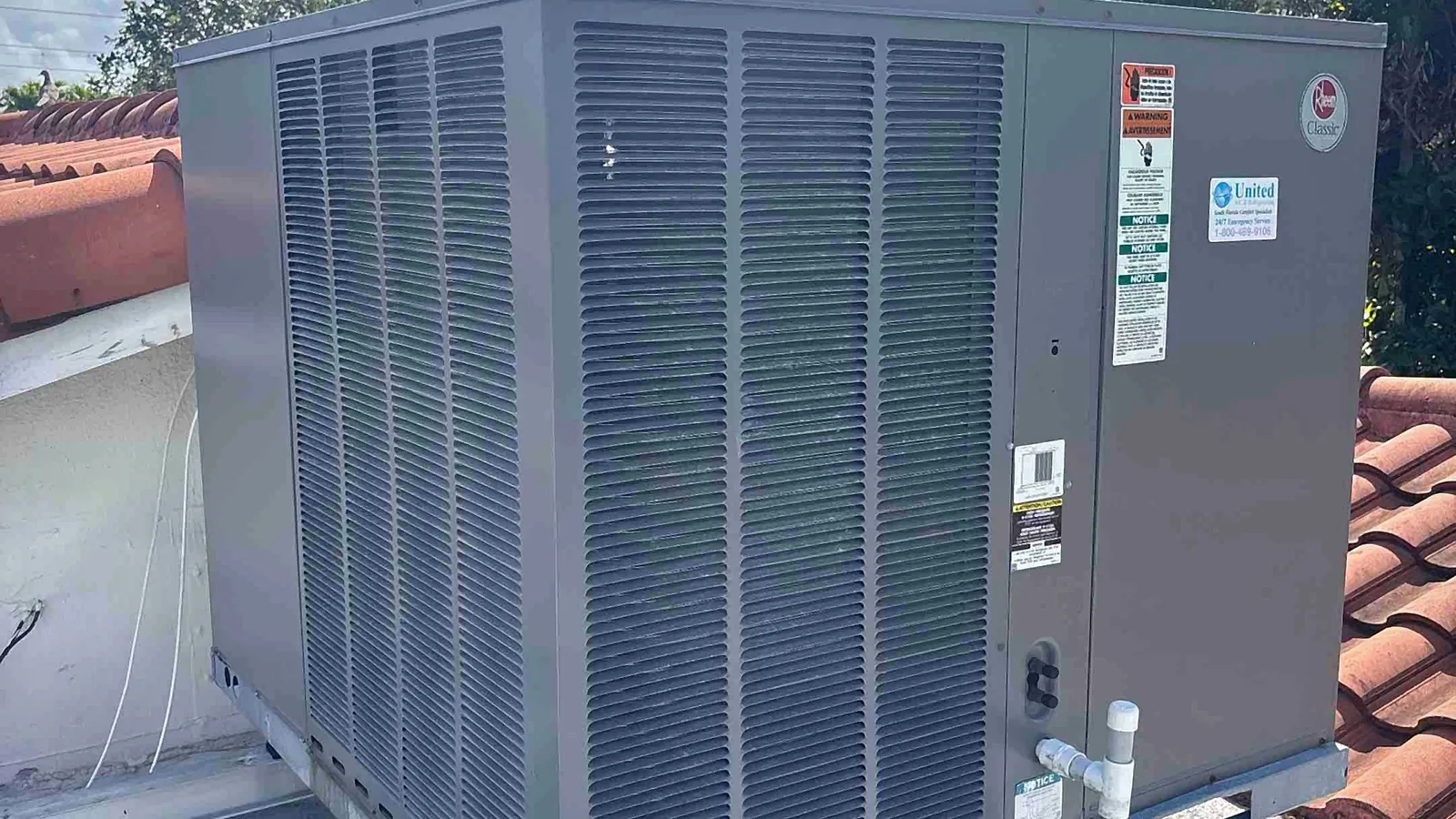
The manufacture date is stamped on the equipment nameplate, usually on the outdoor condenser, and it is more reliable than guessing from appearance or asking the seller to remember. The nameplate typically encodes the date in the serial number, and a home inspector can usually read it, or an HVAC technician can confirm it in a few minutes.
Why appearance can mislead
A well-maintained older unit can look cleaner than a neglected newer one, and coastal salt exposure can age a unit's exterior faster than its actual mechanical condition. Do not judge the system's real age or health by how tidy the outdoor unit looks; use the nameplate and, ideally, a hands-on check.
What the inspection report tells you, and what it does not
A standard home inspection notes the age, visible condition, and whether the system cools and cycles normally during a short walk-through. It is not a full diagnostic: it will not measure refrigerant charge, airflow, or the coil's actual condition. Treat the report as a reason to ask more questions, not as the final word on the equipment.
A system that cools the house fine during a showing can still be a handful of years from a costly failure, and the report alone will not tell you which.
United A/C & RefrigerationWhat questions should I ask the seller?
A short set of questions gets you most of what you need to know before you rely on the system yourself.
Service and repair history
Ask whether the seller has records of regular maintenance, and whether there have been any major repairs — a replaced compressor, a coil leak, repeat refrigerant top-offs. A system with a clean, documented service history is a meaningfully better bet than one with no records at all, even at the same age.
Recent performance
Ask directly whether the system has kept up during the hottest part of the year, and whether any rooms run noticeably warmer than others. Sellers are not always forthcoming, but a direct question sometimes surfaces an issue that a walk-through in mild weather would not reveal.
Whether it has been resized or modified
If the home has been added onto, or ductwork altered, ask whether the cooling system was ever re-evaluated for the change. A system correctly sized for the original footprint can be undersized after an addition, which shows up as a house that never quite cools evenly.
Should I get an independent AC inspection before closing?
For a system already well into its expected service life, yes — a dedicated cooling inspection goes further than a general home inspector can and gives you real numbers to plan around rather than a general age note. A technician can check refrigerant charge, measure temperature drop across the coil, inspect the coil and electrical components for corrosion, and give you an honest read on remaining life.
This is especially worth arranging if the home is on the coast, where salt air can shorten a condenser's life well below what its age alone would suggest, or if the inspection report already flagged the unit's age. The cost of an independent check is modest next to the cost of discovering a failed system in your first August in the house. It also gives you real information to bring back into negotiations if the findings are worse than expected.
Can I negotiate the AC into the deal?
Often, yes, particularly if an inspection turns up a specific issue rather than a vague age concern. Sellers are generally more receptive to a credit or repair request tied to a documented finding — a failed capacitor, a coil leak, a system that could not maintain temperature during the inspection — than to a request based only on the unit's age.
What to ask for
Depending on the finding, a repair credit, a service credit, or in the case of a system genuinely at the end of its life, a price adjustment toward replacement are all reasonable asks. Bringing a written estimate to the table, rather than a general request, tends to move negotiations faster.
When it is not worth pushing
If the system is mid-life, has a clean service history, and performed normally during the inspection, pushing hard on its eventual replacement is unlikely to succeed and can sour an otherwise smooth negotiation. Save the leverage for findings that are actually documented.
How should I budget after I move in?
Plan around the system's likely remaining life rather than trying to predict an exact failure date, which no one can do reliably. If the system is already well into its expected service life, budget as though replacement could be needed within the next few years, and set that money aside rather than hoping the unit outlasts its average.
In the meantime, starting a regular maintenance routine immediately after closing, even if the seller never kept one, is the single most useful thing you can do to extend whatever life is left in the system and to catch a developing problem before it becomes a no-cooling emergency. It also gives you an early, informed opinion on the system's real condition from someone who has actually serviced it, rather than relying on the inspection snapshot from closing day.
What an older AC means in a South Florida home specifically
Buying a home with an aging system carries more urgency here than in a climate where cooling is seasonal. A South Florida system runs eight or nine months a year, often nearly continuously through the summer, so an older unit is accumulating run hours far faster than the same equipment would elsewhere, and its remaining life shrinks accordingly. Homes near the coast add another layer: salt air corrodes the outdoor coil and electrical contacts faster than inland exposure, so a condenser in a beachfront or intracoastal property can be genuinely closer to failure than its age alone suggests, which is exactly why an independent check matters more for coastal purchases. Older mid-century homes across Broward and southern Palm Beach sometimes carry undersized or awkwardly placed equipment relative to how the house has been added onto over the years, while newer master-planned and 55-plus communities tend to have more consistent, better-documented systems. Whichever kind of home you are buying, the practical takeaway is the same: know the real condition of what you are inheriting before your first full summer in the house, not after.
Serving Broward County and southern Palm Beach County from our shop in Deerfield Beach.
Questions and answers
How do I read the manufacture date off an AC unit?
It is encoded in the serial number on the equipment nameplate, usually found on the outdoor condenser. The format varies by manufacturer, so it is not always obvious at a glance; a home inspector or HVAC technician can typically decode it in a couple of minutes if you send a photo of the nameplate or ask during a visit.
Is a 10-year-old AC a dealbreaker when buying a house?
Not on its own. A well-maintained system with a documented service history can still have meaningful life left at that age, especially inland. What matters more than the number is condition: a service history, a recent performance check, and how the system has been treated. Ask questions and, if in doubt, get an independent check before closing.
Should I ask the seller to replace the AC before closing?
Usually only if an inspection turns up a specific, documented problem rather than a general age concern. A blanket request to replace an aging-but-functioning system is a harder negotiation than one tied to a real finding. A credit toward replacement, based on a written estimate, is often more successful than asking the seller to handle it themselves.
What's the difference between a home inspection and an AC-specific inspection?
A general home inspection gives the cooling system a short visual check and notes whether it is running normally during the walk-through. A dedicated AC inspection goes further, measuring refrigerant charge, temperature drop, and the condition of the coil and electrical parts, giving you a real read on remaining life rather than just an age note.
Does an old AC affect homeowners insurance?
It can, particularly in Florida where insurers increasingly ask about the age of major systems, including cooling equipment, when underwriting or renewing a policy. An older system can affect premiums or, in some cases, coverage terms. It is worth checking with your insurance agent early in the buying process if the system is already old.
What should I do first after closing on a house with an old AC?
Get it professionally serviced right away, even if it seems to be running fine. A first maintenance visit under new ownership catches issues the previous owner may not have addressed, gives you an honest, hands-on read on the system's real condition, and starts you on a maintenance rhythm that extends whatever life remains. Ask the assistant to help get that scheduled.
How we know this
This advice comes from what our technicians actually find on service calls in Broward County and southern Palm Beach — not from national HVAC copy. Salt-air corrosion on the barrier island, drain lines that block every wet season, and equipment running nine months a year are local realities, and they change the right answer.
Worth disclosing: we install Amana equipment, so we are not an independent reviewer. Where a brand or product is discussed we say what it is good and bad at, and we will tell you when the honest answer is to repair what you have or do nothing yet.
Talk to a technician
Have a question this raised? The assistant answers what it can, takes your details, and hands you to a real person who confirms the day and time.