
Replacing the AC before you sell the house
An aging air conditioner can quietly stall a sale or shrink an offer. Here is how South Florida buyers and inspectors actually treat cooling equipment, and how to decide whether replacing it before you list is worth doing.
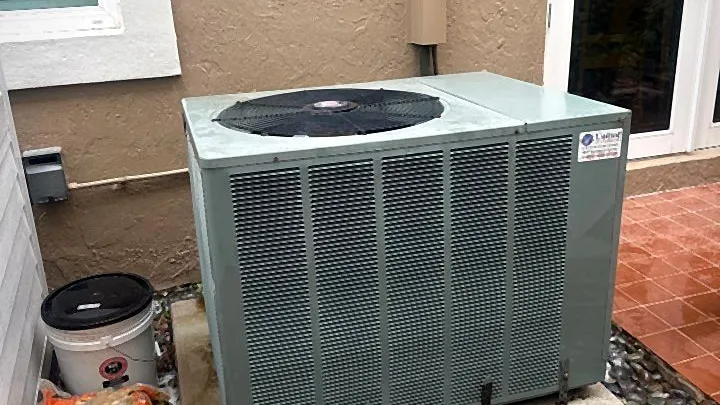
Do buyers really care how old the AC is?
A home inspection in South Florida almost always includes a close look at the air conditioner, and its age shows up in the report whether or not it is currently working fine. Buyers here know what a cooling system costs to run and to replace, and an unit nearing the end of its expected life becomes a bargaining chip even when it is still blowing cold on the day of the showing. Deciding whether to replace before you list, repair and disclose, or leave it alone depends on the system's real condition, the price point of the home, and how much negotiating room you want to protect.
Yes, and in this market more than most, because a South Florida buyer knows the system will run nearly year-round from day one. Inspectors record the manufacture date off the equipment nameplate as a matter of routine, and that date follows the listing into every offer.
What shows up in the inspection report
A home inspector is not a cooling technician and will not diagnose the system in depth, but the report will note the unit's age, visible corrosion, rust at the pan, and whether it is cooling and cycling normally during the walk-through. An older system that is running fine still gets a note flagging its age and remaining expected life, and that note becomes the buyer's opening argument.
Why age matters even to a working system
Buyers price in what they expect to spend in the first few years of ownership. A system already well into its service life reads as a near-term expense regardless of how it performs on inspection day, so it gets treated as a cost to negotiate around rather than a feature of the home.
Buyers rarely pay extra for a new air conditioner, but an old one hands them a reason to ask for money back.
United A/C & RefrigerationShould I replace it or just fix what's wrong?
It depends on what is actually wrong and how close the system is to the end of its useful life. A sound system with one fixable issue is usually worth repairing rather than replacing before a sale.
When repair is the better move
If the unit is cooling well, is reasonably recent, and has a single identifiable issue — a failing capacitor, a dirty coil, low refrigerant from a small leak — a straightforward repair plus a documented service visit often satisfies a buyer's concerns for a fraction of a replacement's cost. A clean recent service record is itself a selling point.
When replacement pays for itself
An old unit already near the end of its expected life, especially paired with visible corrosion or a history of repeat repairs, tends to get replaced by the buyer anyway right after closing — or used to knock the price down by more than a new system would have cost. In that situation, replacing before listing can protect more of the sale price than it costs, particularly in a higher-priced listing where buyers expect updated systems.
What can I do short of a full replacement?
A pre-listing service visit closes much of the gap between an unknown system and a documented one, and it costs far less than either extreme.
A maintenance check ahead of listing catches the small issues an inspector would otherwise flag — a dirty filter, a low refrigerant charge, a coil that needs cleaning — and leaves you with a service record to hand the buyer. That record answers the buyer's real question, which is not the equipment's exact age but whether it has been cared for and is likely to get them through the next few summers. Pairing that with a maintenance visit before photos and showings also means the house shows cool and comfortable, which matters more during a walk-through than most sellers expect.
Will a new AC actually raise my sale price?
It rarely adds a dollar-for-dollar premium, but it removes a negotiating point and can be the difference in a competitive, updated listing. Buyers do not typically pay extra for a new air conditioner the way they might for a renovated kitchen, but an old one gives them leverage to ask for money back, and a new one takes that leverage away.
Where it matters most
In a home already priced and staged as move-in ready, an old, near-end-of-life system stands out as the one unresolved item, and buyers will ask about it specifically. In that context, replacement protects the price the rest of the home is asking for rather than raising it on its own.
Where it matters less
In an as-is sale, an investor purchase, or a home priced to reflect needed updates, buyers already expect to handle the AC themselves, and a full replacement rarely changes their offer. Knowing which situation you are in is most of the decision.
What should I tell buyers about the system?
Straightforward disclosure of the system's age, service history, and any known issues protects you more than staying quiet. Florida sellers are expected to disclose known material defects, and a cooling system that has been limping along on a temporary fix is exactly the kind of thing that becomes a problem after closing if it was not disclosed.
If you have had recent repairs, a maintenance record, or a manufacture date handy, share it. A documented history reads as honesty to a buyer's agent and an inspector, and it heads off the assumption that an older system has been neglected. If you are unsure of the system's real condition, a service visit before you list gives you an honest answer to give buyers rather than a guess.
Why South Florida buyers scrutinize the AC specifically
A cooling system here is not a seasonal convenience; it runs eight or nine months of the year and is one of the largest single expenses a South Florida homeowner faces, so buyers treat it accordingly. Agents in Broward and southern Palm Beach routinely see AC age become a line item in negotiations, more so than in a market where cooling is a summer-only concern. Coastal listings carry an extra wrinkle: salt air shortens a condenser's service life within a mile or two of the water, so a system in an oceanfront or intracoastal home can be showing its age years before an identical unit inland, and inspectors familiar with the area know to look closer at coastal equipment. In master-planned and 55-plus communities, buyers are often comparing several similar homes at once, and a documented recent AC service or a new system becomes an easy differentiator among near-identical floor plans. None of this means every seller needs a new system before listing — it means knowing your system's real condition, and being able to show it, is worth more here than in most parts of the country.
Serving Broward County and southern Palm Beach County from our shop in Deerfield Beach.
Questions and answers
How old is too old to sell without addressing it?
There is no fixed cutoff, but a system well past the midpoint of its typical service life, especially with visible corrosion or a history of repeat repairs, is the kind buyers and inspectors flag hardest. A younger system with a clean service record rarely raises concern even if it is not brand new. What matters most is documented condition, not the number alone.
Will an inspector fail my house over an old AC?
No. A home inspection notes condition and age; it does not pass or fail a home the way a code inspection might. An old but functioning system gets documented, and buyers use that documentation to negotiate. It will not stop a sale on its own, but it does shape the conversation that follows the report.
Is it worth replacing the AC if I'm selling as-is?
Usually not. As-is buyers, including many investors, already expect to handle the mechanical systems themselves and price accordingly. Spending on a full replacement rarely returns its cost in that context. A service visit to confirm nothing is actively broken is usually the more sensible step.
Can I just disclose the AC's age and skip service before listing?
You can, and honest disclosure is what the law requires either way. But an undocumented system invites buyers to assume the worst and negotiate for a full replacement, while a recent service record often satisfies the same concern for far less. A pre-listing check is less about obligation and more about protecting your negotiating position.
Does a new AC help the home appraise higher?
Rarely by itself. Appraisals lean on comparable sales more than individual mechanical upgrades, so a new system is unlikely to move the appraised value on its own. Its real value in a sale is removing a negotiating point and supporting a move-in-ready listing, not adding directly to the number.
Should I get the system checked before I even list?
Yes, it is a low-cost way to know what you are dealing with before a buyer's inspector tells you. A pre-listing check flags anything that would otherwise surface in the inspection, gives you a service record to share, and lets you decide calmly between a repair and a replacement rather than reacting under negotiation pressure. Ask the assistant to get one scheduled.
How we know this
This advice comes from what our technicians actually find on service calls in Broward County and southern Palm Beach — not from national HVAC copy. Salt-air corrosion on the barrier island, drain lines that block every wet season, and equipment running nine months a year are local realities, and they change the right answer.
Worth disclosing: we install Amana equipment, so we are not an independent reviewer. Where a brand or product is discussed we say what it is good and bad at, and we will tell you when the honest answer is to repair what you have or do nothing yet.
Talk to a technician
Have a question this raised? The assistant answers what it can, takes your details, and hands you to a real person who confirms the day and time.